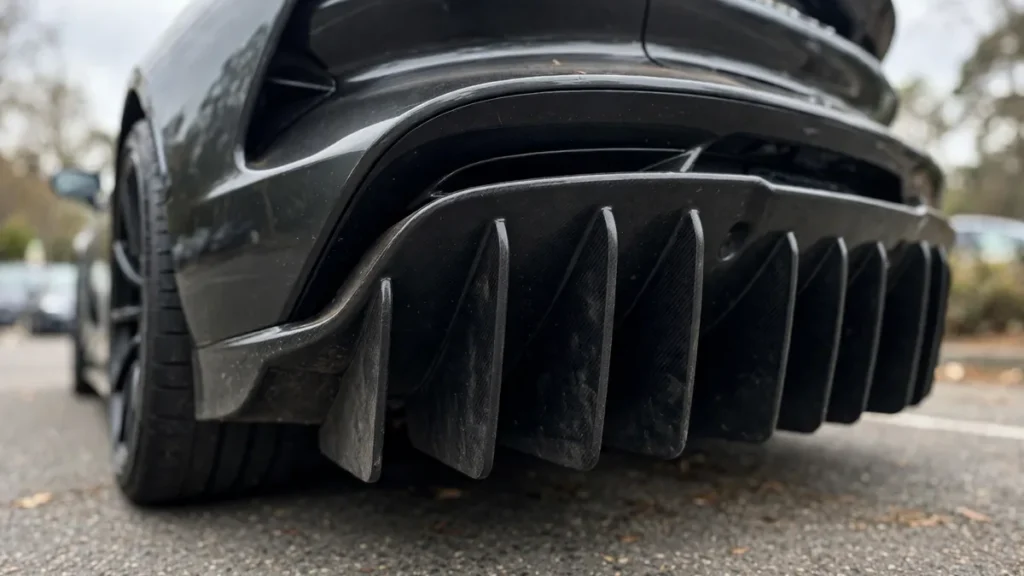
Stand behind a luxury sports car at a show and the spoiler is the first thing your eye finds. It rises from the boot lid like a wing, or lies flat and flush until the car reaches speed and it lifts into the air. The specification sheet says otherwise. A spoiler is a wing turned upside down, and its numbers describe how hard it pushes the back of the car into the road.
That push is called downforce, and it is the reason a car can corner at speeds that would throw an ordinary car off the road. The sheet records the angle of the wing, its area, the speed at which it deploys, and the downforce it produces, and those figures decide how the car behaves when it matters most.

Luxury Car Spoiler Specs at a Glance
| Specification | Typical range | What it decides |
|---|---|---|
| Wing area | 0.3 to 0.8 square metres | How much air the wing can work with |
| Angle of attack | 0 to 20 degrees, adjustable | Downforce against drag at any speed |
| Downforce at top speed | 300 to 800 kilograms | Grip of the rear tyres in fast corners |
| Deployment speed | 60 to 120 kilometres per hour | When the wing rises from the body |
| Spoiler weight | 3 to 12 kilograms | Unsprung feel and balance at the rear |
| Drag penalty | 5 to 15 percent at top speed | Top speed and fuel use the wing costs |
Wing Area: How Much Air It Can Use
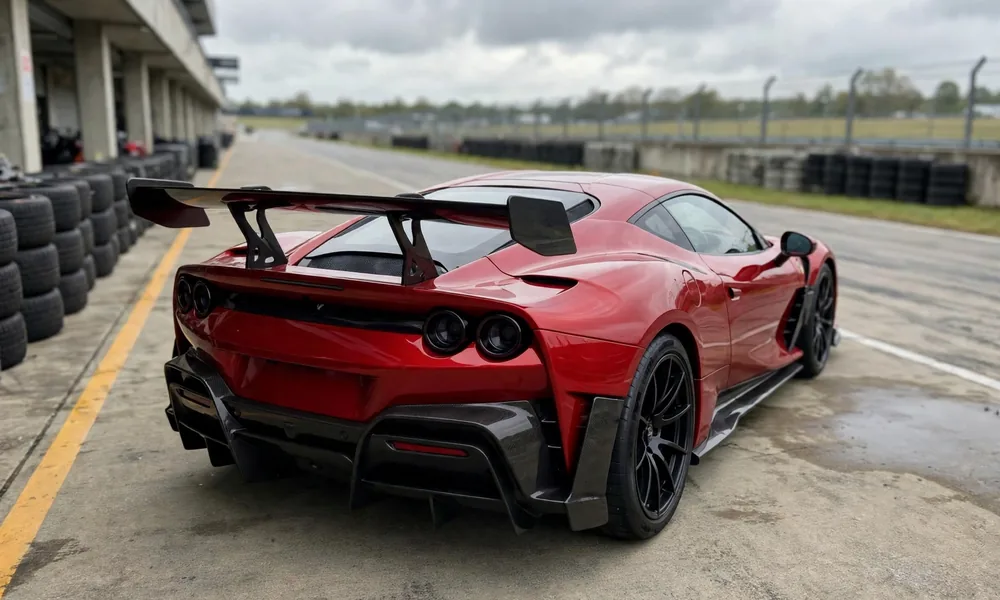
The wing area is the size of the spoiler’s working surface, usually between three tenths and eight tenths of a square metre on a luxury sports car. The shape of the wing decides what happens to that air, and the area decides how much of it the wing gets to work with.
That is why the biggest wings belong to track-focused cars, while grand tourers, the luxury cars built for long fast journeys, use smaller wings that stay flush with the bodywork until they are needed. The same balance between grip and speed shapes the whole car, and the full specification of a luxury supercar shows how the spoiler figures fit beside the power, weight, and tyre numbers.
Angle of Attack: The Trade-Off You Can See
The angle of attack is the tilt of the wing relative to the air flowing over it, and on most luxury spoilers it is adjustable, from flat at zero degrees to a steep twenty degrees. Tilt it up and the air is forced downward as it leaves the wing, which pushes the wing, and the car, downward in return. The steeper the angle, the harder the push, and the harder the drag that comes with it.
On an active spoiler the angle changes while you drive. At cruising speed the wing lies flat, saving fuel and keeping the car quiet. Under hard braking it tilts to its steepest angle, acting as an air brake that helps slow the car and keeps the rear planted. In a fast corner it settles somewhere in the middle, trading a little speed for grip. It is a wing that thinks, and the angle range on the sheet is the range of decisions it can make.

Downforce: The Weight That Is Not There
Downforce is the strangest number on the sheet, because it is weight that does not exist. A luxury sports car spoiler can press the rear of the car down with three hundred to eight hundred kilograms of force at top speed, roughly the weight of a small car, yet the car itself weighs no more than it did standing still. On a fast road car, that invisible weight can be greater than the weight of the driver and a passenger combined. That invisible weight presses the rear tyres into the road, and a tyre pressed harder grips harder, which is what lets the car corner faster without sliding.
The catch is that downforce grows with the square of speed. Double the speed and the downforce quadruples, which means the spoiler does almost nothing in town and a great deal on a motorway. A car with a strong rear wing and a weak front will feel nervous at speed, the back planted and the front light, so the spoiler figure is always read alongside the front aero numbers. The balance of the whole car is a system, and the specification of a luxury sports car shows how the front and rear figures are matched.
Deployment, Weight and the Drag Bill
Most luxury spoilers are active, which means they hide when they are not needed. The deployment speed, usually between sixty and one hundred and twenty kilometres per hour, is the speed at which the wing rises from the body. Some wings also have a manual override, a button that raises the wing for show, which is the one time the spoiler is purely decoration.
The spoiler itself weighs only three to twelve kilograms, usually carbon fibre over a light core, because weight at the very back of the car, high up and behind the rear axle, hurts handling more than weight anywhere else. The drag penalty, five to fifteen percent at top speed, is the price of the downforce, paid in fuel and in top speed. Engineers accept it because a car that corners faster is faster everywhere that matters, and because on a road car the wing spends most of its life hidden. The lightest wings depend on the lightest materials, and how a carbon fibre wheel works shows the same material thinking applied to another part that must be both strong and light.
A Rare Fact About the Spoiler
Here is a detail that surprises even people who drive these cars. On some luxury sports cars, the spoiler does not just tilt, it changes shape. The wing’s trailing edge can flex or extend, and on a few models the whole wing slides backwards as it rises, moving into cleaner air behind the car where it works harder. The wing on the back of the car is, in effect, a moving part of the bodywork, and it is still moving after the car has stopped.
What the Specs Mean for You
If you are choosing a luxury sports car, the spoiler specification tells you how the car will feel when you drive it fast. A large wing with a wide angle range means strong grip in fast corners and a car that feels planted at speed. A small, late-deploying wing means a car built for quiet cruising, where the aero stays out of the way until it is needed. Neither is wrong, but they are different cars, and the numbers are the honest record of which one you are looking at.
The next time you see a luxury sports car, watch the back as it pulls away. The spoiler is not a decoration. It is a wing, upside down, doing a job that only matters when the road gets fast, and now you know how to read it.