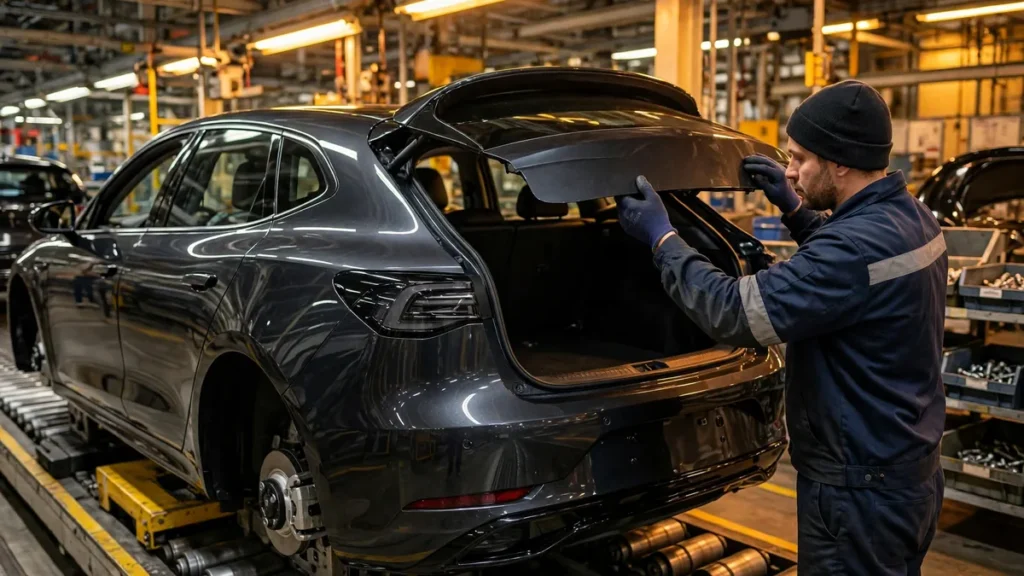
Stand beside a supercar at a motor show and the spec sheet on the little stand next to it reads like a dare: hundreds of horsepower, a top speed that would be illegal everywhere on earth, and a sprint to sixty miles an hour in less time than it takes to read the numbers. The crowd nods, the numbers are impressive, and almost nobody standing there knows what half of them actually mean for the car they would drive home.
This guide explains the numbers on a luxury supercar spec sheet in plain English: what each one means, which ones decide how the car really feels on the road, and how to tell a genuinely fast car from a merely well-marketed one.
Power and torque: the two numbers that start every argument
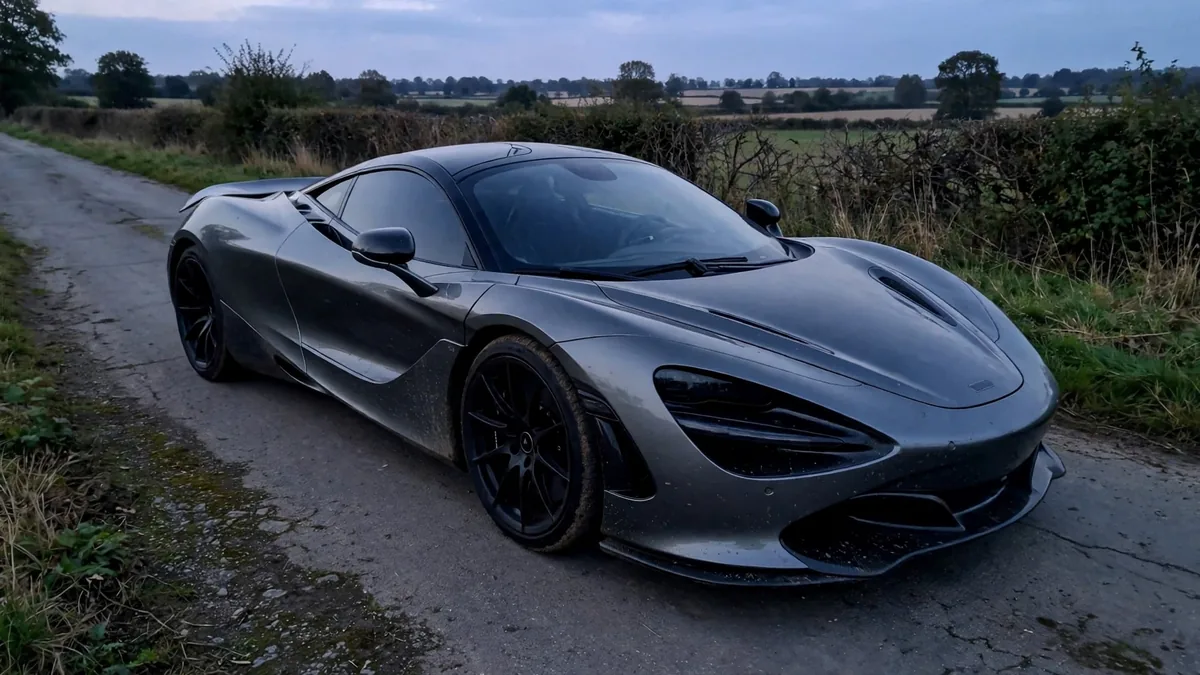
Power is the headline number, measured in horsepower or kilowatts, and it is the one every brochure prints biggest. It tells you how much work the engine can do, and a modern luxury supercar makes somewhere between five hundred and a thousand horsepower, often from a turbocharged V8 or a hybrid V6 paired with electric motors. The guide to why a luxury supercar is so expensive follows the money from the engine to the hand-built body, and the engine is where the largest part of it is spent.
Weight and power-to-weight: the number that decides everything
If power is the headline, weight is the story, because a supercar is a fight against mass. A typical luxury supercar weighs between 1,400 and 1,700 kilograms, and makers spend fortunes shaving kilograms with carbon fibre bodywork, aluminium chassis parts and even lighter glass, because every kilogram saved makes the power, the brakes and the steering work better at once. A supercar with five hundred horsepower per tonne is ferociously quick, and anything above six hundred is territory where the tyres, not the engine, become the limit. When a spec sheet hides the weight in small print, that is usually because the weight is the number the maker would rather you did not notice.
Acceleration and top speed: the numbers everyone quotes
The sprint to sixty miles an hour is the number most buyers quote first, and most luxury supercars now do it in under three seconds, some in barely more than two. A car that reaches sixty in 2.8 seconds and tops out at 210 miles an hour is not meaningfully slower in the real world than one that does it in 2.5 and reaches 220, but the brochure will still print both numbers as if the difference mattered.
Braking: the number buyers ignore and drivers remember
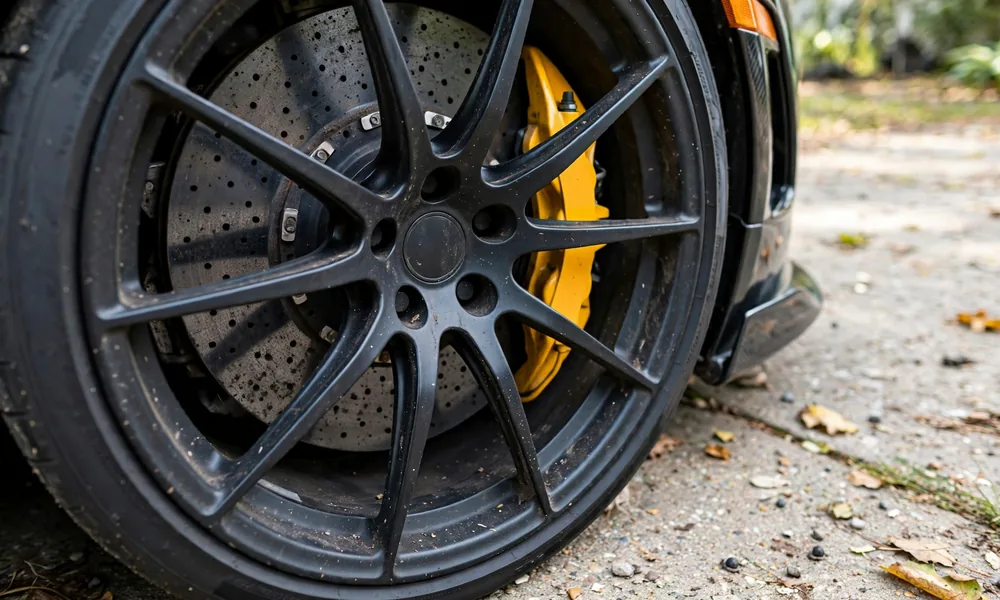
Braking is the number that separates a fast car from a safe one, and it is the one buyers read last. A supercar must stop from sixty miles an hour in about thirty metres, and it must do it again and again without the brakes fading, which is why luxury supercars use huge carbon-ceramic discs. The disc size, measured in millimetres, tells you how much heat the brakes can absorb, and the caliper count tells you how evenly the force is spread, but the real test is the second stop after a fast lap, when ordinary brakes would be smoking and a good carbon-ceramic set is barely warm. The guide to the Ferrari SF90 hybrid specs, explained shows how one famous hybrid balances electric torque with brakes that have to catch a very heavy car, and the braking numbers there are as impressive as the power figures.
Aerodynamics: downforce, drag and the air you cannot see
Aerodynamics is the part of the spec sheet that reads like physics, because it is physics: downforce, measured in kilograms, is the invisible weight the air presses onto the car at speed, and drag, given as a coefficient, is how hard the air resists the car pushing through it. The guide to the best carbon fibre uses in supercars shows where the lightweight bodywork and the aerodynamic shapes meet, because the same carbon panels that save weight are also the wings and splitters that press the car into the road.
Chassis and suspension: what the numbers hide
The last numbers describe the skeleton of the car, and they are the hardest to read because they hide the most engineering. The chassis is usually a carbon fibre monocoque, a single rigid tub that the engine, the suspension and the body all bolt onto, and its stiffness is what lets the suspension work properly instead of the body flexing over every bump. None of these numbers can be understood alone, and a car with the best power figure and the stiffest chassis can still feel nervous if the suspension tuning is wrong, which is why the numbers are only the beginning of the story.
The spec sheet at a glance
| Specification | Typical luxury figure | What it tells you |
|---|---|---|
| Power | Roughly 500 to 1,000 horsepower | How much work the engine can do at full throttle |
| Torque | Roughly 600 to 900 newton-metres | How hard it pushes at low revs, and how it feels pulling away |
| Weight | Roughly 1,400 to 1,700 kilograms | How much mass the power, brakes and tyres must manage |
| Power-to-weight | Roughly 350 to 600 horsepower per tonne | The fairest single measure of how quick the car is |
| 0 to 60 mph | Roughly 2.5 to 3.5 seconds | How violently it launches, with launch control and warm tyres |
| Top speed | Roughly 190 to 220 miles per hour | How fast it goes flat out, usually limited by tyres |
| Braking, 60 to 0 mph | Roughly 30 metres | How short it stops, and how well the brakes resist fading |
| Downforce | Several hundred kilograms at high speed | How hard the air presses the tyres into the road |
| Chassis | Carbon fibre monocoque, adaptive suspension | How stiff the body is, and how the ride adapts |

What it costs
A luxury supercar typically costs an estimated $200,000 to $500,000, depending on the engine, the chassis material, the aerodynamic package and how much of the car was built by hand. The estimate covers the car alone, not the insurance, the tyres or the servicing, which are all priced in supercar terms too, with a set of tyres and a brake service each costing thousands.
A rare fact
One detail few visitors to a motor show ever learn is that a supercar’s top speed is often decided by its tyres, not its engine. A car that could go faster on paper is held back because no tyre the maker trusts can survive the speed, and the fastest cars in the world use tyres made in tiny batches, checked by hand, and replaced after a handful of high-speed runs.
Read the spec sheet in that order, power and torque first, then weight and power-to-weight, then the sprint, the braking and the air, and the numbers stop looking like a dare and start looking like a description of a machine. The best supercars are not the ones with the biggest single number, but the ones whose numbers agree with each other, a light body with strong brakes, a powerful engine with tyres that can use it, and a chassis stiff enough to hold it all together at speed.