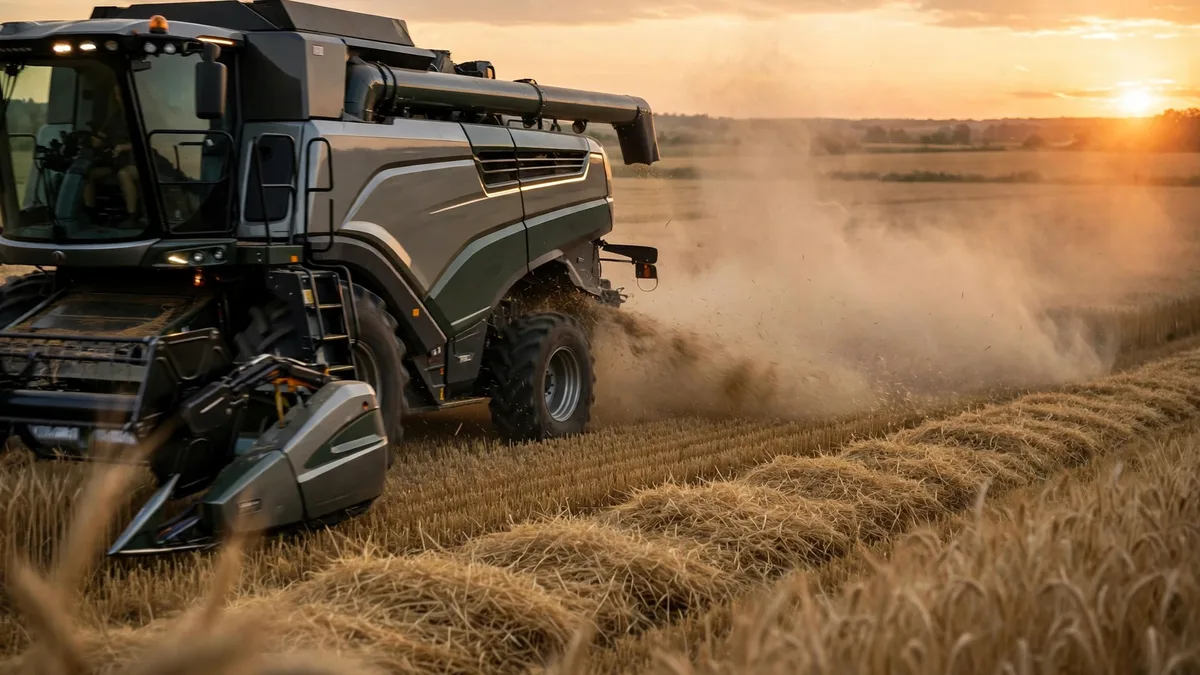
At harvest time, when the light turns gold in the late afternoon, a farm owner stands at the edge of a barley field and listens to a dealer read from a brochure. It promises a header six metres wide, a grain tank of ten thousand litres, and a battery that lasts a full day in the field. The owner understands almost none of it, because the numbers are written for engineers, not for the person whose harvest depends on them.
A luxury electric combine is a self-propelled harvester powered by batteries and electric motors, built to cut a crop, thresh the grain from the ears, clean it, and store it, all in one slow pass across the field. It is really three machines in one body. This guide reads its specification sheet line by line, in plain words.
Luxury Electric Combine Specs at a Glance
| Specification | Compact | Mid-Size | Large |
|---|---|---|---|
| Header width | 4–5 m | 5–7 m | 7–9 m |
| Grain tank | 5,000–7,000 litres | 7,000–10,000 litres | 10,000–14,000 litres |
| Threshing rotor | Single rotor | Single long rotor | Twin rotors |
| Battery | 150–250 kWh | 250–400 kWh | 400–600 kWh |
| Work hours | 6–8 hours | 8–10 hours | 10–12 hours |
| Unloading rate | 70–90 litres per second | 90–120 litres per second | 120–150 litres per second |
| Operating weight | 12–16 tonnes | 16–22 tonnes | 22–30 tonnes |
| Ground speed | Up to 20 km per hour | Up to 25 km per hour | Up to 30 km per hour |
| Cleaning area | 4–5 square metres | 5–7 square metres | 7–9 square metres |
| Cab | Air-conditioned | Air-conditioned, camera views | Panoramic, full cameras |
1. Header width: how much crop each pass takes
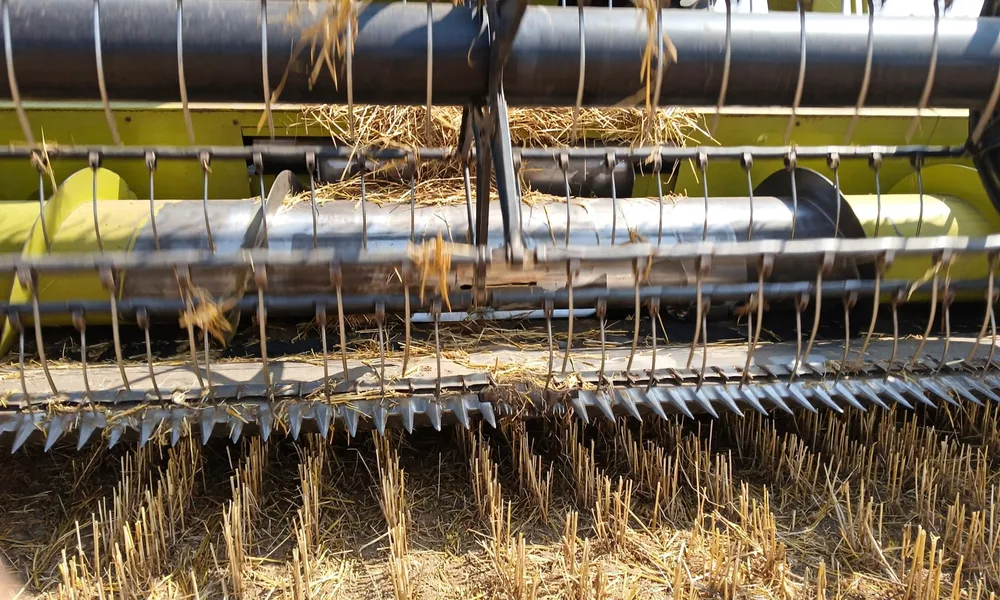
Header width is the width of the cutting frame at the front of the combine, and it decides how much of the field each pass clears. Compact combines cut four to five metres at a pass, mid-size combines five to seven metres, and large combines seven to nine metres. A wider header finishes a field faster, but it needs a wider gate and a steadier hand, because it must follow the ground without digging in. The body that carries the header is built first, as described in how a luxury electric combine is made.
2. Grain tank and unloading rate: how long before it stops
Grain tank capacity, in litres, is how much clean grain the combine can hold before it must stop and unload. Compact combines hold five thousand to seven thousand litres, mid-size seven thousand to ten thousand, and large ten thousand to fourteen thousand. Unloading rate, in litres per second, is how fast the tank empties into a trailer: seventy to ninety litres per second on a compact machine, ninety to a hundred and twenty on a mid-size, and a hundred and twenty to a hundred and fifty on a large one. A big tank with a fast unload means fewer stops, and at harvest time every stop costs grain.
3. Threshing rotor and cleaning area: the heart of the machine
The threshing rotor is the drum that rubs the grain out of the ears, and the cleaning area is the size of the sieves that separate the grain from the straw and chaff. Compact combines use a single rotor and four to five square metres of cleaning area, mid-size combines use a single long rotor and five to seven square metres, and large combines use twin rotors and seven to nine square metres. A longer rotor threshes more gently, which matters for fragile grain, and a larger cleaning area means cleaner grain at higher speeds. The chain from header to rotor to sieves is explained in how a luxury electric combine works, where each stage hands the crop to the next without losing a grain.
4. Battery capacity and working hours: the electric heart
Battery capacity, in kilowatt-hours, sets the working hours: how long the combine can harvest before it must charge. Compact combines carry a hundred and fifty to two hundred and fifty kilowatt-hours and work six to eight hours, mid-size two hundred and fifty to four hundred and work eight to ten, and large four hundred to six hundred and work ten to twelve. The battery sits low between the axles, where its weight helps the machine grip the field, and it powers everything from the wheels to the threshing rotor. Working hours depend on the crop: thick, damp wheat uses far more power than light, dry barley, and the machine wastes almost nothing while waiting.
5. Operating weight and ground speed: size on the land
Operating weight is the machine ready to work, with battery, header, and driver, and it sets the size class. Compact combines weigh twelve to sixteen tonnes, mid-size sixteen to twenty-two, and large twenty-two to thirty. Weight decides how much the machine sinks into soft ground and whether it can cross a wet field without rutting it, so luxury machines spread their weight on wide tyres or tracks. Ground speed is the fastest the combine travels between fields: up to twenty kilometres per hour for a compact machine, twenty-five for a mid-size, and thirty for a large one. In the field it moves far more slowly, at the pace the header and rotor can handle.
6. What the numbers mean in practice
Read as a set, the figures describe the harvest the machine suits. A compact combine suits a small estate where the fields are narrow and the gates are tight. A mid-size suits a large farm where the harvest is the most important week of the year. A large combine suits a vast estate where the machine must run twelve hours a day without stopping. The test is a real day in the field: the grain coming out clean, the tank filling slowly, and the battery lasting until the light fails. The same careful reading applies to its closest cousin, as why a luxury electric harvester is so expensive shows: the price follows the size of the job, not the size of the machine.
What Does a Luxury Electric Combine Cost?
A luxury electric combine typically costs about $400,000 to $900,000, depending on size, battery, and finish. A compact machine with a single rotor and a modest battery sits near the lower end, a mid-size with a long rotor and fast charging in the middle, and a large machine with twin rotors and a panoramic cab at the top. The battery is a large share of the price, so a longer working day costs more. Running costs are where it earns its price back: electricity costs far less per hour than diesel, and the quiet machine can start early near homes without complaints.
A Rare Fact
The first combine harvesters were pulled by teams of thirty horses and needed a crew of a dozen men. The first self-propelled combines arrived a century later, and the first electric ones are newer still, running on batteries instead of diesel. A modern combine still carries that history: the header is as wide as the old horse-drawn machines, and the driver sits where the teamster once stood.
A spec sheet will never tell you whether a combine feels right on a long harvest day. It will tell you whether it can cut wide enough, thresh gently enough, and work long enough for your fields. Those three answers separate a luxury electric combine from a machine that only looks strong on paper.