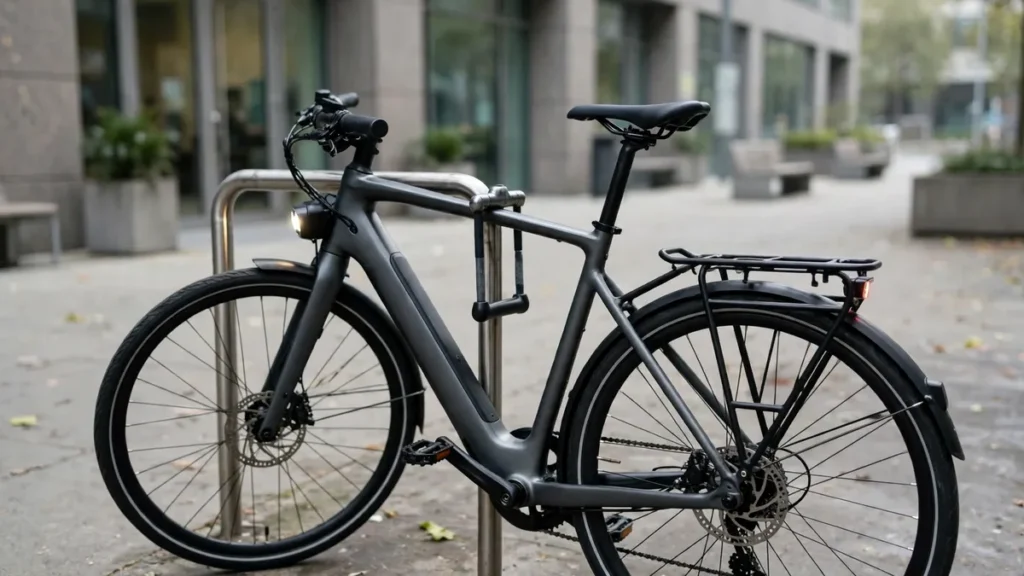
A folding bike has one job that no ordinary bike has: it has to disappear. I watched a commuter do it on a crowded train platform one morning, and the whole thing took less than twenty seconds. Handlebars down, pedals in, frame folded in half, and the bike was suddenly a neat package small enough to slide under a seat.
That trick is easy to admire and hard to engineer, especially when the bike also has a motor and a battery. The spec sheet for a luxury electric folding bike is therefore a different kind of document from a normal bike spec sheet. It is not only about speed and range. It is about weight, folded size, hinge strength and how quickly the whole thing collapses.

Reading a Luxury Electric Folding Bike Spec Sheet
Step 1: Folded size decides whether it fits your life
The most important number on a folding bike spec sheet is not the motor or the battery. It is the folded size, usually given in centimetres, and the weight. A typical luxury folding e-bike folds to roughly 80 by 65 by 40 centimetres and weighs between 16 and 22 kilograms. That is small enough for a train luggage rack, a car boot or a cupboard under the stairs, but only just. Weight matters just as much, because you will be carrying it up station steps and lifting it into the car.
Step 2: The hinge is the heart of the bike
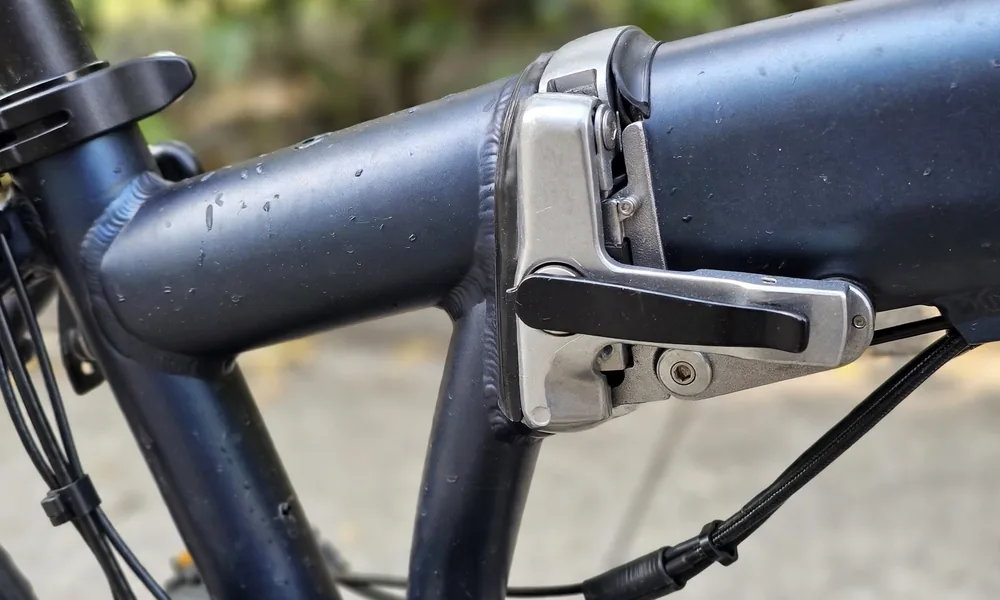
A folding bike lives or dies by its hinges, and luxury models use machined aluminium or steel joints with a positive lock that clicks firmly into place. The spec sheet may mention the hinge material, the locking mechanism and the number of folding points, usually two or three. A good hinge feels solid when locked, with no wobble or play in the frame, and it opens and closes with one hand. A bad hinge develops play after a few months, and the bike starts to feel loose and nervous.
Step 3: Motor power and where it sits
Most luxury folding e-bikes use a hub motor in the rear wheel or a small mid-drive motor, rated at 250 watts in many countries to meet road rules, with higher figures elsewhere. The motor should feel like a strong push rather than a shove, helping you away from traffic lights and up short hills without drama. A hub motor is simpler and quieter, while a mid-drive motor climbs better and uses the gears, but it adds weight near the centre of the bike. The way the motor delivers its power matters more than the headline wattage, as our guide to how a luxury electric bike works explains.
Step 4: Battery range on small wheels
Folding bikes use small wheels, usually 16 or 20 inches, and that changes how the battery behaves. Small wheels spin faster and the bike feels nimble, but it also works harder on rough roads. A typical luxury folding e-bike carries a battery of 300 to 500 watt-hours, good for roughly 30 to 60 miles of assisted riding, depending on hills, rider weight and assistance level. The battery is often hidden inside the frame or the seat post, which keeps the bike looking clean but makes it harder to remove for charging.
Step 5: Weight is a specification you carry
Every kilogram on a folding bike is a kilogram you will lift, and luxury makers fight hard to keep the weight down. Carbon fibre forks, aluminium frames and compact batteries all help, but they cost money. A bike that weighs 16 kilograms feels like a different machine from one that weighs 22, especially at the top of a flight of stairs. The engineering that keeps a folding frame light yet stiff is the same craft behind larger electric bikes, as our guide to how a luxury electric bike is made shows.

Step 6: Gears, brakes and tyres for city riding
A folding bike needs gears that work in stop-start traffic and brakes that stop a heavier-than-normal bike in the wet. Most luxury models use a hub gear or a small derailleur with seven to nine speeds, and hydraulic disc brakes are increasingly common. The tyres are small but wide, which helps with comfort and grip on city roads, and many come with puncture protection built in. Check the tyre size on the spec sheet and whether the bike comes with mudguards, because a folding bike without them will spray you on the first wet day.
Step 7: Folding time and how it rolls when folded
The spec sheet rarely states folding time, but a good luxury folder should fold in under thirty seconds once you know the sequence. More useful is whether the bike rolls on its small wheels when folded, like a suitcase, or whether you have to carry it everywhere. Some models have tiny roller wheels for exactly this purpose, and they make a real difference in a station. Also check whether the folded bike stands on its own or falls over at the slightest touch. A bike that stands neatly in a corner is a bike that will not annoy everyone in the office. The frame that makes all of this possible is a clever piece of engineering, as our guide to how a folding e-bike frame is made explains.
Luxury Electric Folding Bike Specs at a Glance
| Specification | Typical luxury figure | What it means |
|---|---|---|
| Folded size | About 80 x 65 x 40 cm | Fits a train rack, car boot or cupboard |
| Weight | 16 to 22 kilograms | Light enough to carry up station steps |
| Motor | 250 watts, hub or mid-drive | Gentle push away from lights and up hills |
| Battery | 300 to 500 watt-hours | Roughly 30 to 60 miles of assisted riding |
| Wheels | 16 or 20 inches | Nimble in traffic, needs wide tyres for comfort |
| Folding time | Under 30 seconds | Quick enough for a train platform |
What a Luxury Electric Folding Bike Costs
A luxury electric folding bike typically costs an estimated $2,500 to $6,000, depending on the frame material, the motor and the battery. Carbon fibre parts and a larger battery push the price up, while a replacement battery later can cost an estimated $400 to $900. These are estimates, not quoted prices, and they vary with the brand and the options chosen. The cheapest folder that fits your life is better than the most expensive one that does not fit in your boot.
A Rare Fact About Luxury Electric Folding Bikes
The first folding bikes were built for soldiers, not commuters. In the early twentieth century, armies wanted a bicycle that a soldier could carry over rough ground and unfold quickly, and designers built frames that split in half. The idea survived because it solved a problem that never went away: a full-size bike is awkward to store and hard to carry, while a folded one fits almost anywhere. The luxury electric folder on a modern train is the direct descendant of a machine designed to be carried into battle.
The best way to judge a luxury electric folding bike is to fold it, carry it, and ride it in that order. If it folds quickly, lifts easily and still feels solid on the road, the spec sheet was honest. A bike that only impresses when it is unfolded has missed the point of folding altogether.