The hedge came out straight as a ruler, and the only sound in the garden was the soft snip of the blades and the birds complaining from the far fence. There was no petrol smell hanging in the air, no cord to trip over, and no neighbour leaning over the fence to ask when the noise would stop.
A luxury electric hedge trimmer is a battery-powered cutting tool built for shaping hedges to a professional finish, with a long double-sided blade, a brushless motor, and a battery that outlasts a whole morning of work. Its spec sheet is a list of numbers about blade length, cutting capacity, and battery, and this is a plain translation of those numbers, and what each one means when you are choosing a trimmer for a garden that matters.

1. Blade length, and how wide a sweep it cuts
Blade length is measured in centimetres or inches, and on a luxury electric hedge trimmer it usually runs from 50 to 75 centimetres, which is 20 to 30 inches. The blade is a long steel bar with teeth on both edges, and its length decides how wide a sweep you can cut in one pass, because a longer blade covers more hedge with every stroke.
Most owners choose a 60-centimetre blade for everyday hedges, and keep the 75-centimetre blade for long, flat runs where speed matters more than reach. How the blade and the motor work together is described in how a luxury electric hedge trimmer works, where the double-sided cut and the quiet drive are explained in detail.
2. Cutting capacity, and how thick a branch it swallows
Cutting capacity is measured in millimetres, and on a luxury electric hedge trimmer it usually falls between 25 and 40 millimetres. The number is the thickest branch the teeth can close around and cut cleanly, and it is worked out from the gap between the teeth and the power of the motor behind them.
The way the blade is put together decides the finish as much as the gap does, and that craft is shown in how a luxury electric hedge trimmer is made, where the steel is cut, ground, and sharpened.
3. Motor power, and the steady snip behind the blade
Motor power is the number that decides whether the trimmer stalls in thick growth, and on a luxury electric hedge trimmer it is usually given in volts, often 40 to 80 volts, with a brushless motor underneath. The motor drives the blade back and forth several thousand times a minute, and a brushless motor keeps that rhythm steady even when the blade meets a woody stem.
The number to look for next to power is strokes per minute, because a trimmer cuts by moving its teeth past each other, and a faster stroke leaves a cleaner edge on the hedge.
4. Battery capacity, and how long the morning lasts
Battery capacity is measured in amp-hours, and on a luxury electric hedge trimmer it usually falls between 2.5 and 7.5 amp-hours, on a 40-volt or 80-volt pack. The pack clips into the back of the trimmer, locked inside a sealed housing, and it is usually the single dearest part of the whole tool, often a third of the price of the trimmer itself.
The runtime figure printed next to the battery is where the sheet gets slippery. A maker may claim two hours of trimming, but that figure is usually measured in soft new growth, with short cuts and long pauses, and with a sharp blade. The honest measure is hedges per charge, not minutes, and most owners carry a second battery. The same battery maths runs through the whole garden shed, as the numbers on luxury electric leaf blower specs explained show, where the pack is again the dearest part.
5. Weight and balance, and why light hands cut straight
Weight is measured in kilograms, and on a luxury electric hedge trimmer it usually falls between 3 and 5 kilograms with the battery fitted. The body is usually a tough glass-filled plastic over a metal frame, built to survive being set down on a stone path, and the weight decides how long you can work overhead before your shoulders give out.
The balance matters as much as the total weight, and a well-built trimmer balances just ahead of the rear handle, so the blade feels light even when the battery is full. Weight is the number to check before you buy, not after your first morning of cutting.

6. Noise, vibration, and the numbers that spare your hands
The last numbers are about noise and vibration, and they decide whether the trimmer is a pleasure or a punishment. Noise is measured in decibels, and on a luxury electric hedge trimmer it usually falls between 80 and 90 decibels, which is loud enough to need ear protection, but far quieter than a petrol trimmer at 100 decibels or more.
Vibration is measured in metres per second squared, and on a good electric trimmer it usually falls between 2 and 4, because the brushless motor runs smooth and the handle carries rubber mounts that soak up the shake. Low vibration is the number that saves your hands on a long morning, and it is one of the real reasons owners switch from petrol, because it means finishing the hedge without numb fingers.
The Specifications at a Glance
Here are the numbers that matter most on a luxury electric hedge trimmer, and what a good figure looks like for each one.
| Specification | Typical Luxury Range |
|---|---|
| Blade length | 50 to 75 centimetres, 20 to 30 inches |
| Cutting capacity | 25 to 40 millimetres |
| Battery voltage | 40 to 80 volts, lithium-ion |
| Battery capacity | 2.5 to 7.5 amp-hours |
| Motor | Brushless electric |
| Strokes per minute | 2,800 to 4,000 |
| Weight with battery | 3 to 5 kilograms |
| Noise level | 80 to 90 decibels |
| Vibration | 2 to 4 metres per second squared |
| Charging time | 30 minutes to 90 minutes |
What Does a Luxury Electric Hedge Trimmer Cost?
A luxury electric hedge trimmer is typically priced at an estimated $400 to $1,200. The smaller end of that range buys a 50-centimetre trimmer with a single 2.5 amp-hour battery, typically priced at an estimated $400 to $600, while the top end buys a 75-centimetre flagship with a large 80-volt pack, a spare battery, and a fast charger, typically priced at an estimated $900 to $1,200.
A Rare Fact
The hedge trimmer is younger than the hedge it cuts. Gardeners shaped hedges by hand with shears for centuries before the first powered trimmer appeared in the 1950s, and the great topiary gardens of Europe, with their clipped cones and peacocks, were all made with hand tools. The electric trimmer only became common once batteries grew light enough to carry, and the quiet battery version is the newest chapter in a very old craft.
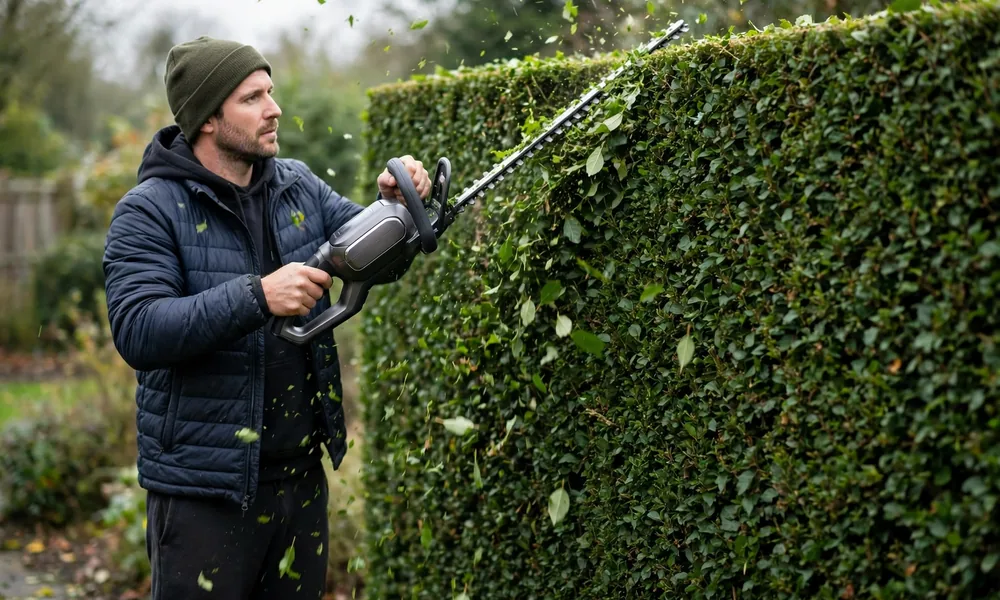
Blade length decides the sweep, cutting capacity decides the branch, strokes decide the finish, and the battery decides how much hedge you finish before lunch. Read those four first, and the rest of the sheet is detail.