Stand in a garden on a summer evening and listen: there is no roar, no smell of petrol, just a soft whirr and the neat tick of blades passing through a hedge. The top of the hedge comes out level as a tabletop, the sides as straight as walls, and the person doing it is not fighting the machine at all. That quiet ease is no accident. A luxury electric hedge trimmer is a small machine built around a single idea, that cutting should feel like guiding rather than wrestling.
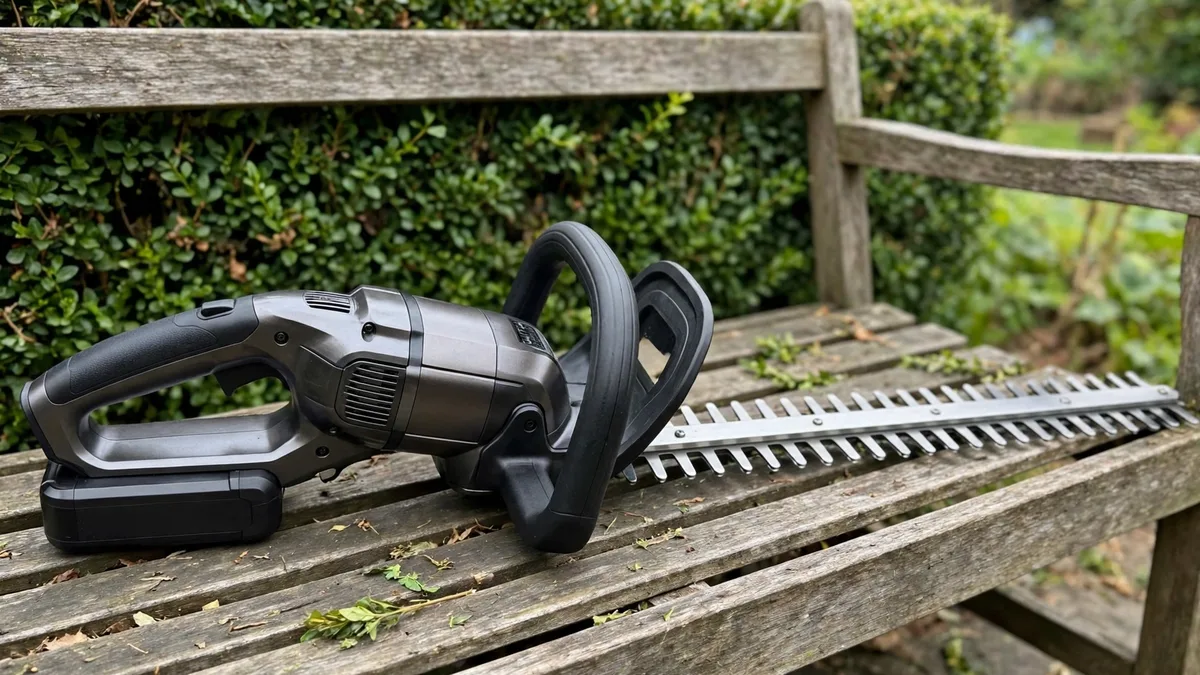
A hedge trimmer is a handheld garden tool with two long blades that slide back and forth against each other, snipping twigs and leaves as they pass. The electric luxury versions replace the petrol engine with a battery and a brushless motor, which makes them quieter, lighter and cleaner to run. Making one means getting the blades, the motor and the battery to work together in a tool that must be light enough to hold overhead for an hour. This is how it is made, from raw steel to the first cut.
How It’s Made
Step 1: Designing a tool that balances in the hand
Every hedge trimmer starts as a balance problem. Designers decide the blade length, usually between 50 and 65 centimetres, and then place the motor and battery so the tool hangs level when held by its two handles. The front handle is shaped for the guiding hand and the rear handle carries the trigger and the safety switch, both positioned so the user never has to stretch. Computer models test how the weight shifts as the blade moves through a hedge, and prototypes are handed to gardeners who report where their arms tire first. Only when the balance feels right does the design move to parts. The working version of the same tool shows what the motor has to do once it is running, and how an electric hedge trimmer works explains the cutting action in detail.
Step 2: Forging and grinding the double blades
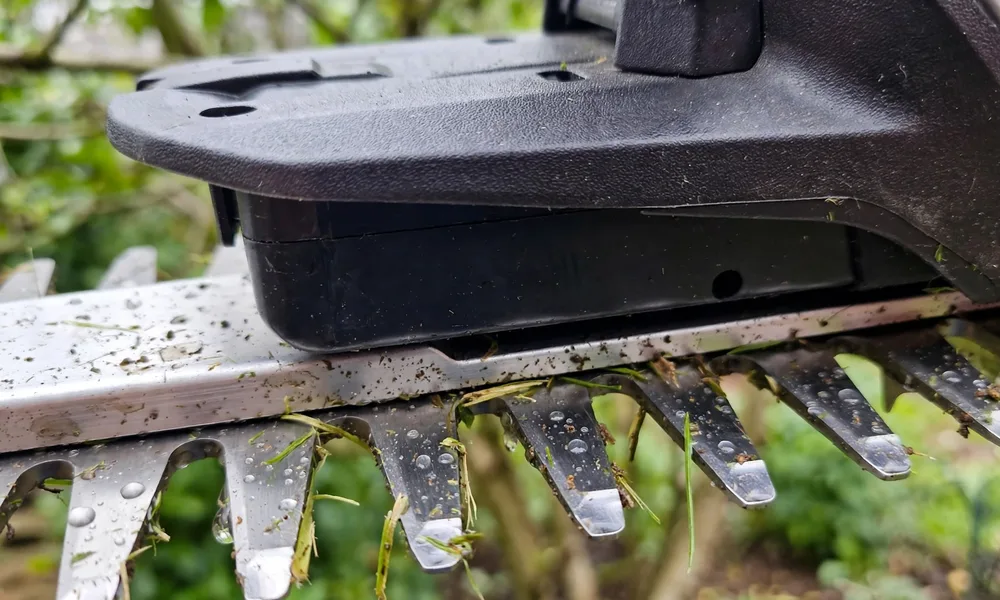
The blades are the soul of the trimmer, and they begin as flat bars of high-carbon steel. Each bar is laser-cut into a long strip with teeth along one edge, then hardened in a furnace so it holds a sharp edge through seasons of cutting. The teeth are ground on both sides to a fine, knife-like bevel, and the two blades are matched as a pair so they slide against each other with almost no gap. A thin film of oil is applied between them, and a row of bolts holds them together with just enough pressure to keep them in contact without binding. If the gap is wrong by a fraction of a millimetre, the blades either jam or leave twigs uncut.
Step 3: Moulding the housing and fitting the motor
While the blades are being finished, the body is moulded from tough, lightweight plastic, often reinforced with glass fibre so it survives drops onto stone paths. Inside, a brushless electric motor is mounted on rubber bushes that soak up vibration, and a small gearbox turns the motor’s fast spin into the slower back-and-forth stroke of the blades. The motor is sealed against dust and damp, because a hedge trimmer works in rain and among wet leaves. Wiring is routed away from the moving parts, and a thermal cut-out is fitted so the motor stops itself before it can overheat on a long, hot afternoon.

Step 4: Building the battery and the electronics
The battery is a pack of lithium-ion cells, built and tested as a sealed unit with its own management electronics. Those electronics watch every cell, balancing the charge, cutting power if the pack gets too hot, and reporting the remaining charge through a row of small lights on the housing. The pack slides into the tool with a click and locks in place, and it is designed to be shared across the maker’s whole garden range, so one battery can run a trimmer, a blower and a mower. Charging is handled by a separate dock that fills the pack in about an hour, and the pack is tested through hundreds of charge cycles before the design is approved.
Step 5: Assembly, blade guard and safety checks
On the assembly line, the blades, motor, battery housing and handles come together in a fixed order, with each joint torqued to a set value and checked. A blade guard is fitted over the teeth for storage and transport, and a tip protector is added to the end of the blade so it can touch a wall or fence without damage. The safety system is the most tested part of all: the trigger requires two hands to operate, the blades stop within a fraction of a second of the trigger being released, and a hand guard shields the front fingers from the moving teeth. The chainsaw from the same garden range is built to a similar safety standard, and how an electric chainsaw is made shows how those checks work on a more powerful tool.
Step 6: Testing the cut and the finished tool
Every finished trimmer is tested before it leaves the factory. The blades are run against a standard bundle of twigs to prove they cut cleanly without tearing, and the motor is run at full speed while engineers measure noise and vibration. The battery is charged and discharged to confirm its runtime, and the tool is dropped from bench height onto concrete to check that the housing does not crack. A sample of each batch is taken apart and inspected, and a few tools are run for hundreds of hours to find any weakness that only appears with use. Only when the cut is clean, the balance is right and the safety stops work is the trimmer boxed with its charger and guard.
Luxury Electric Hedge Trimmer Specifications
A luxury electric hedge trimmer is a light, precise tool. These are the figures makers work to, and its garden-range cousins share the same battery and motor ideas, as the electric leaf blower numbers show.
| Specification | Typical value |
|---|---|
| Blade length | 50 to 65 centimetres, double-sided reciprocating |
| Blade material | High-carbon steel, hardened and ground on both sides |
| Motor | Brushless electric motor with a reduction gearbox |
| Battery | Lithium-ion pack, typically 36 to 56 volts |
| Runtime | Around 45 to 90 minutes per charge, depending on the cut |
| Weight | Roughly 2.5 to 4 kilograms including the battery |
| Noise | Around 80 to 90 decibels, much quieter than petrol |
| Safety | Two-handed trigger, instant blade stop and hand guard |
What It Costs
A luxury electric hedge trimmer is estimated at $250 to $600, depending on blade length, battery size and whether the battery and charger are included in the box. All figures here are estimates, not quotes. The blades and the battery pack are the most expensive parts, and a spare battery can add a large share to the total. Running costs are low: there is no petrol or oil to buy, the blades need sharpening once a season, and the battery should last several years before its capacity starts to fade.
A Rare Fact
The teeth of a hedge trimmer blade are not sharpened like a knife. Each tooth is ground with a small hook on its cutting edge, so that as the blades slide past each other the hook catches a twig and pulls it into the cut instead of pushing it away. It is this tiny hook, invisible to the eye, that lets the trimmer snip cleanly instead of chewing the hedge.