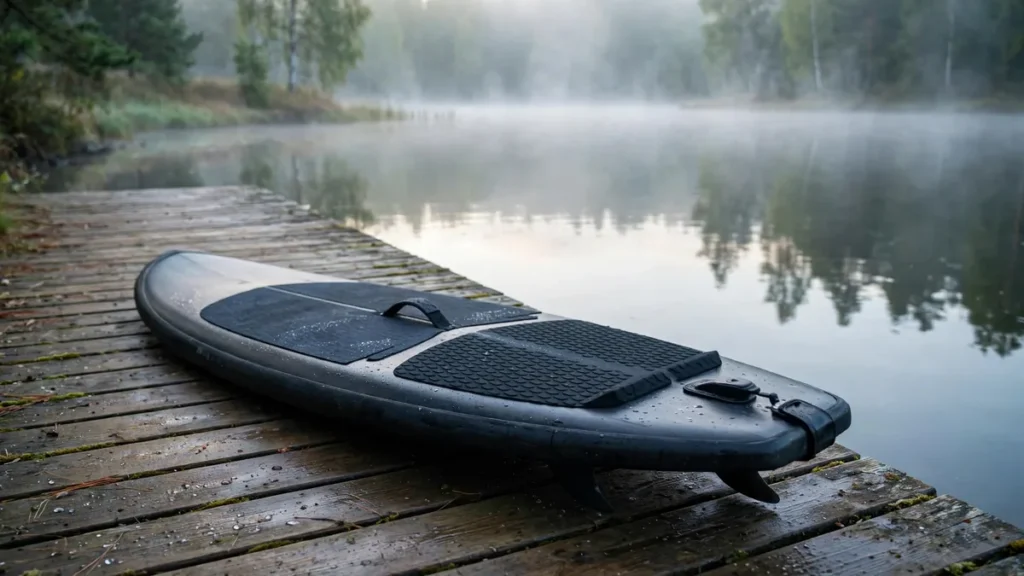
An electric surfboard looks like a trick at first glance: a board, a rider, no wave, and no tow rope, yet it moves. Stand on a quiet lake at dawn and you will see one glide past on flat water, its rider upright and relaxed, the board humming softly beneath their feet. There is no sail and no engine noise, just a small electric motor and a battery hidden inside a board that weighs less than a suitcase.
The specification sheet is where that trick stops being magic and starts being engineering. Every number on it answers a practical question: how much power the motor makes, how long the battery lasts, how fast the board goes, and how heavy a rider it can carry. A luxury model adds finer materials, a smarter controller, and a finish that turns a toy into a piece of design.
The spec sheet at a glance
| Specification | Typical luxury figure |
|---|---|
| Board length | 1.7 to 2.0 metres |
| Board width | 0.6 to 0.75 metres |
| Board weight | 24 to 34 kilograms |
| Rider weight limit | 90 to 120 kilograms |
| Motor power | 5 to 12 kilowatts |
| Battery capacity | 1.8 to 3.5 kilowatt-hours |
| Top speed | 35 to 55 kilometres per hour |
| Run time | 45 to 100 minutes |
| Charge time | 1.5 to 3 hours |
| Deck material | Carbon fibre over foam core |
| Propulsion | Electric jet or propeller pod |
| Control | Wireless handheld remote |
Those figures span a wide range because the class splits into two families: flat boards that plane across the surface, and hydrofoil boards that lift clear of the water on a wing. A hydrofoil board is usually faster and smoother, but it costs more and takes longer to learn. The numbers below are typical of the luxury end of the market, where carbon construction and larger batteries are the norm.
Board size and weight
Length and width decide how stable the board feels underfoot. A board of about 1.8 metres long and 0.7 metres wide gives a beginner enough deck to stand on comfortably, while a shorter board turns more sharply and suits a confident rider. Width matters more than length for balance: a few extra centimetres across the deck make the difference between a relaxed stance and a wobble, and luxury boards tend to be wider than racing boards for exactly that reason.
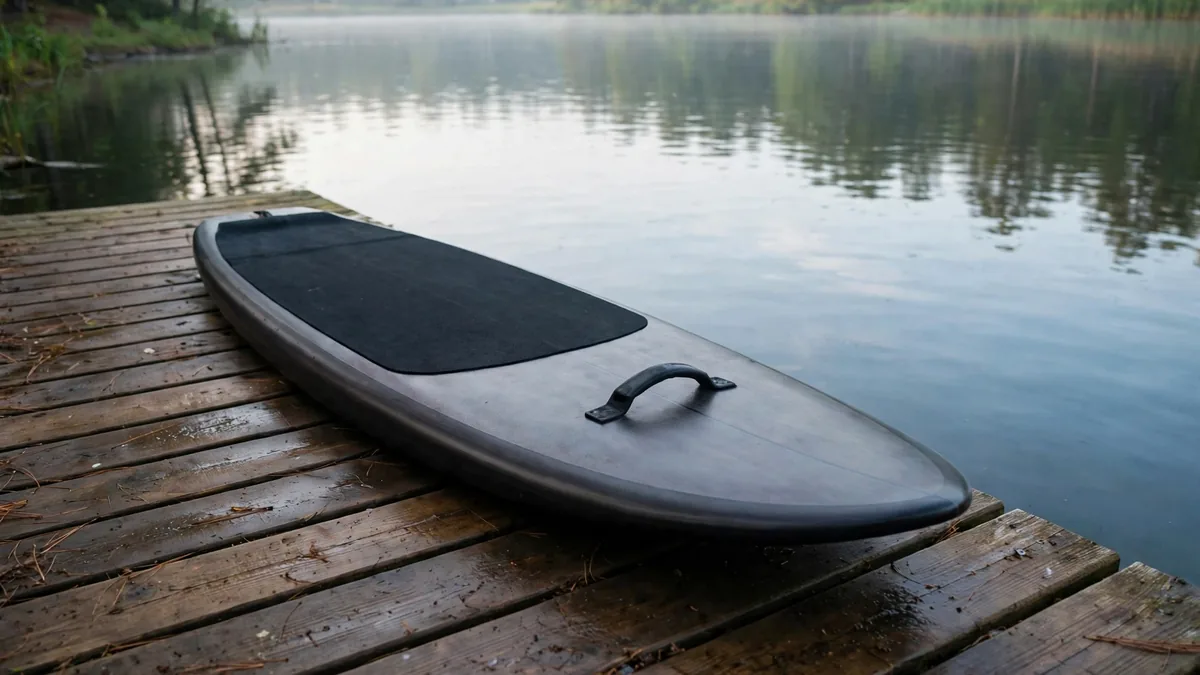
Weight is the number that decides whether the board is a pleasure to own or a chore to carry. At 24 to 34 kilograms, a luxury electric surfboard is heavy enough to need two hands and a proper carry handle, but light enough to lift onto a car roof or carry down a beach path. Carbon fibre over a foam core keeps the weight down while keeping the deck stiff, and that stiffness matters: a flexing board wastes motor power and feels vague underfoot. The definition of an electric surfboard covers the basic idea, but weight and deck size are what separate a luxury board from a cheap one before it ever touches the water.
Motor power and the battery
Motor power, measured in kilowatts, is the number that decides how quickly the board gets up to speed and how well it carries a heavy rider. Five kilowatts is enough for gentle cruising on flat water, while twelve kilowatts will pull a rider out of the water from a standing start and hold high speed against a chop. The motor sits in a sealed pod under the board, driving either a small propeller or a water jet, and the jet version is quieter and safer around swimmers, which is why luxury builders prefer it.
The battery is the heart of the board, and its capacity in kilowatt-hours decides how long the fun lasts. A 2.5 kilowatt-hour pack gives roughly an hour of mixed riding, while the largest packs stretch towards a hundred minutes at cruising speed. Riding at full throttle drains the pack far faster than cruising, so the run-time figure on a spec sheet always assumes a mix of speeds. Charging takes between ninety minutes and three hours, and the battery pack is usually removable, so a second pack can be charged while the first one is in use.

Speed and range
Top speed is the headline figure, and luxury boards reach between 35 and 55 kilometres per hour, which feels far faster on the water than it sounds on land. At that speed the board is planing hard, the wind is loud, and small waves feel like bumps in the road. Most riders spend their time between 20 and 30 kilometres per hour, where the board is stable, the battery lasts longer, and falling off is a splash rather than a crash.
Range on a surfboard is measured in minutes rather than miles, because the rider, the water, and the throttle all change the result. A heavy rider in choppy water at full speed might get forty minutes from a pack that gives an hour to a light rider cruising on a calm lake. Hydrofoil boards stretch the range further, because once the board lifts clear of the water, drag drops sharply, and the motor works far less hard for the same speed. The electric hydrofoil surfboard specs show that idea taken further, with a wing under the board that lifts it clear of the water entirely.
What the numbers mean in practice
Read together, the specifications describe a simple trade: power and battery against weight and price. A bigger motor and a bigger battery make the board faster and longer-lasting, but they also make it heavier and more expensive. The luxury choice is to spend the extra money on carbon fibre and a smarter controller, so the board carries its extra power without feeling like a barge. The controller is easy to overlook, but it decides how smoothly the power arrives, and a jerky throttle is the difference between a board that feels refined and one that feels crude.
Price
A new luxury electric surfboard typically costs between an estimated $8,000 and $18,000, depending on size, motor power, and battery capacity, with hydrofoil models at the top of that range. That estimate covers the board, the battery, the remote, and the charger, but not a spare battery, which can add an estimated $2,000 to $4,000. Used boards change hands for far less, often an estimated $4,000 to $9,000, but a buyer should check the battery health first, since a tired pack is the most expensive part to replace.
A rare fact
One of the oddest details in this class is that the fastest electric surfboards are quieter than a conversation. The motor is sealed underwater, the jet makes little noise, and there is no exhaust and no engine vibration, so the loudest sound at speed is the water itself. Riders on early morning lakes have reported gliding past fishermen who never heard them coming, and some lake authorities treat the boards more like canoes than like motorboats. That silence is part of the luxury, and it is also why the electric jet ski feels like a different machine altogether, louder, heavier, and built for a different kind of day on the water.

An electric surfboard is best judged by three numbers: the weight, the battery, and the way the power arrives. Get those right and the board disappears beneath you, leaving only the water and the ride. The rest of the specification sheet is detail, and the detail is where the luxury lives.