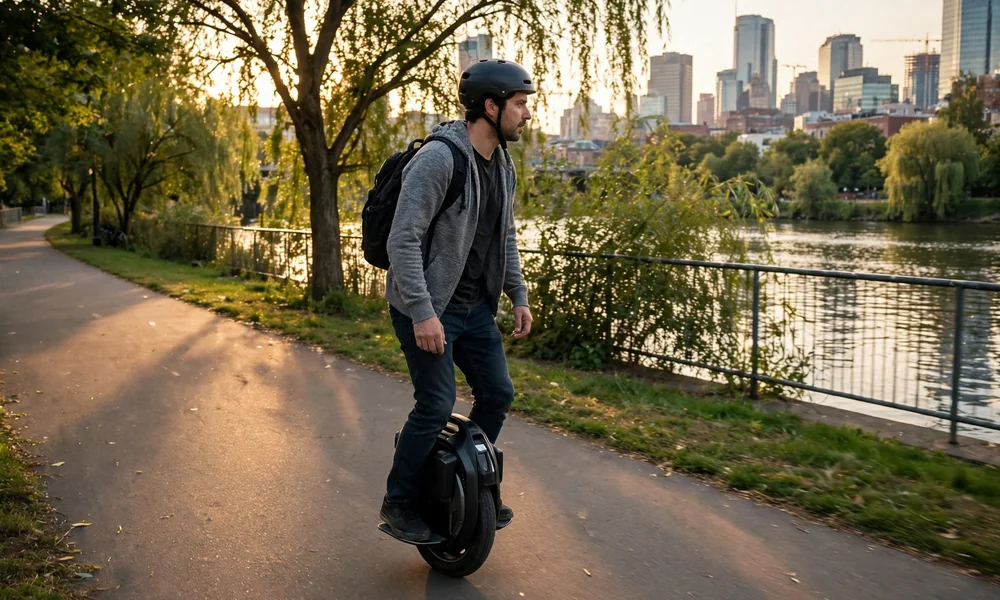
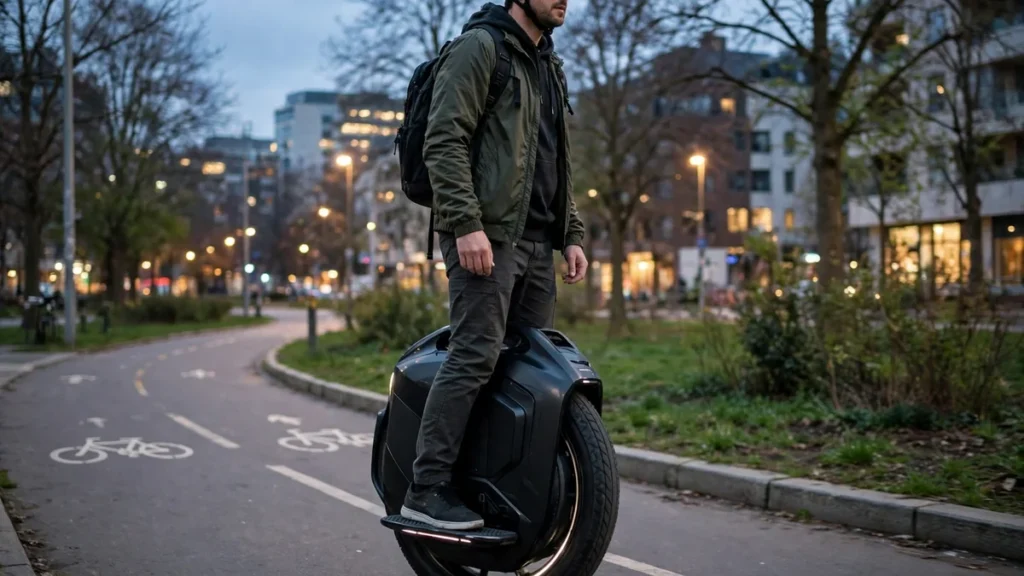
A luxury electric unicycle is a contradiction that works. It has one wheel, no handlebars, and no seat, yet it carries a rider at the speed of a city bicycle, up hills and over rough ground, for tens of kilometres on a single charge. The spec sheet is where that contradiction is explained, or, more often, where it is hidden behind a wall of numbers that look impressive and mean very little until someone translates them.
The numbers that matter are not the ones in the headline. A peak power figure tells you almost nothing on its own, because a unicycle makes its power from a motor that peaks for a few seconds at a time. Battery size in watt-hours decides how far you can go, wheel size decides how the machine handles bumps, and weight decides whether you can carry it up a flight of stairs. Read the sheet properly and a luxury electric unicycle stops being a marketing claim and becomes a machine you can judge.
Full specifications
| Specification | Typical figure |
|---|---|
| Wheel size | 16 to 22 inches |
| Motor | Brushless hub motor, 2,000 to 4,000 W peak |
| Battery capacity | 1,500 to 3,600 Wh |
| Range | 80 to 160 kilometres per charge |
| Top speed | 60 to 80 kilometres per hour |
| Climbing ability | Gradients up to around 35 degrees |
| Weight | 30 to 45 kilograms |
| Payload | Up to around 120 kilograms |
| Suspension | Hydraulic or air suspension, 80 to 130 mm travel |
| Tyre | Wide knobbly or road tyre, around 3 inches |
| Water resistance | Sealed battery and motor, IPX6 rated |
| Charging | Fast charger, 0 to 100 percent in about 3 to 5 hours |
| Display and lights | Touch display, headlight, tail light, speakers |
| Body and materials | Aluminium frame, magnesium shell, metal pedals |
| Dimensions | Around 70 cm tall, 55 cm long, 25 cm wide |
What each key spec means in practice
Battery capacity is the number that decides your daily life with the machine. Fifteen hundred to three thousand six hundred watt-hours gives a real range of roughly 80 to 160 kilometres, which covers a long commute and a weekend ride without charging. The way an electric scooter battery works explains the same trade-off at a smaller scale: a bigger battery means more miles, but also more weight and a higher price. If your daily riding fits inside the range and you can charge at home overnight, the unicycle becomes a car replacement rather than a toy.
Wheel size is the number that decides how the machine feels. A 16-inch wheel is nimble and easy to carry, but it drops into every pothole and crack. A 22-inch wheel rolls over rough ground smoothly and feels stable at speed, but it is heavier and harder to lift. Most luxury riders settle in the middle, around 18 to 20 inches, where the wheel is big enough to smooth the road and small enough to carry. The way an electric unicycle works shows why the wheel is the whole machine: the motor, the balance, and the ride all live in that one spinning circle.
Motor power is the first number everyone quotes and the least useful on its own. Two thousand to four thousand watts of peak power sounds enormous, but the peak only lasts for a few seconds, when the rider accelerates hard or climbs a steep hill. What matters more is the continuous power, the torque at low speed, and how the controller manages the motor when the battery runs low. Judge the machine by its climbing ability and by how it holds speed on a hill, not by the headline watts.
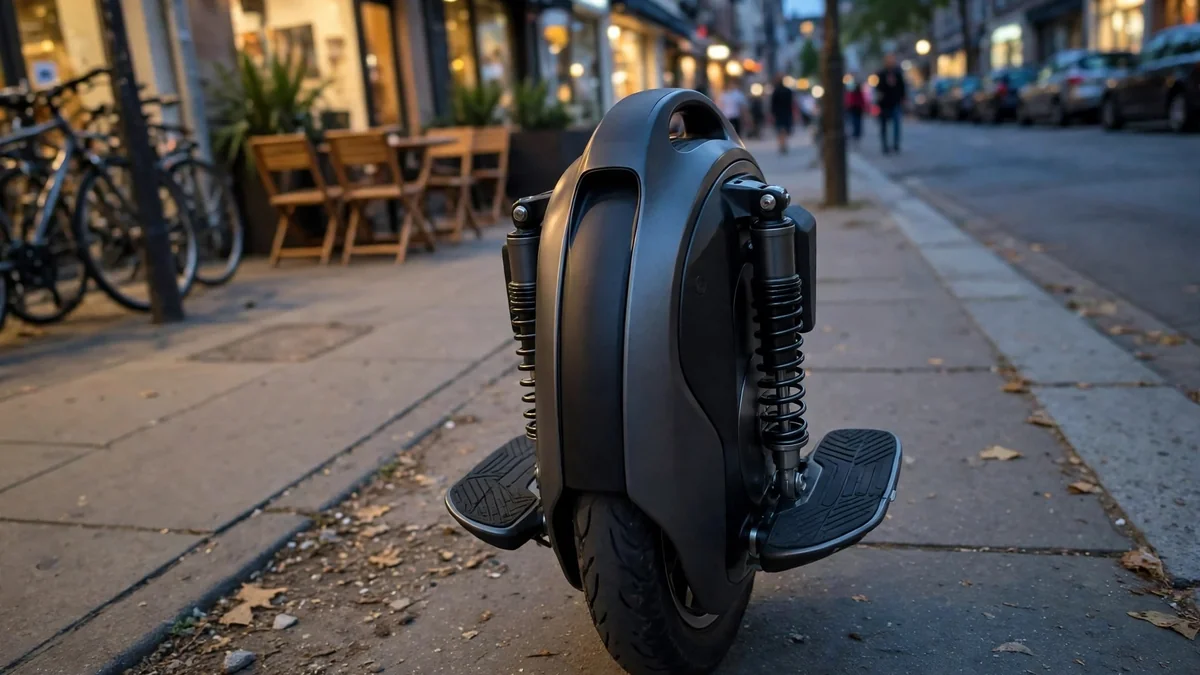
Suspension travel is where luxury unicycles are often misunderstood. Eighty to 130 millimetres of travel sounds modest next to a bicycle, but on a machine with one wheel it makes the difference between a ride that rattles your knees and one that glides. Hydraulic suspension absorbs the sharp hits from kerbs and potholes, and it also keeps the wheel in contact with the ground, which is what keeps the rider balanced. The way a luxury electric scooter is made follows the same logic on a two-wheeled machine, where the suspension and the frame are built to the same standard for the same reason: comfort that you feel in your legs after an hour of riding.
Weight is the hidden cost of everything else on the sheet. At 30 to 45 kilos, a luxury electric unicycle carries a large battery, a powerful motor and a suspension system, and that weight shows up every time you carry it up stairs, lift it into a car, or push it through a crowded station. The best machines balance that weight low and central, so the unicycle feels lighter than it is when you ride it, even if it is heavy to carry. The weight also explains the range figure: the quoted range only holds for a light rider on flat ground, and a heavier rider or a hilly route will cut it by a third or more.
Top speed is the last number worth reading carefully. Sixty to 80 kilometres per hour is fast for a machine you stand on, and most riders never use it, because the safe cruising speed is far lower. The honest way to read the figure is as a reserve: a machine that can reach 70 kilometres per hour will cruise at 40 in comfort, with power in hand for a hill or a headwind. A machine whose top speed is its cruising speed will feel strained all the time, and strained is the last thing you want from a vehicle that balances itself.

What it costs
Estimates put a luxury electric unicycle at roughly $3,000–$5,000 depending on battery size, motor power and suspension, with the largest-battery models costing $1,000 or more above the entry-level luxury machines. Running costs are low: electricity for a full charge costs well under a dollar in most places, and the only regular wear items are the tyre and the brake pads. Resale values for high-end unicycles remain strong, because the battery and the motor are the expensive parts and both last for years when they are looked after. Protective gear is another cost to count: a helmet, wrist guards and knee pads are not optional on a machine that can travel at the speed of a car.
A rare fact
Some luxury electric unicycles are quieter at full speed than a bicycle freewheeling downhill, and the reason is the motor itself. A brushless hub motor has no gears, no chain and no exhaust, so the only sound at speed is the tyre on the road and the wind. Riders often report that the first thing they notice is not the acceleration or the range, but the fact that a machine this powerful can glide through a quiet street without anyone hearing it coming.
When the unicycle leans against the wall at the end of a ride, it looks simple, just one wheel and a small body. That simplicity is the achievement. Every wire is hidden, every seal is tested, and the whole machine feels like one solid object rather than a collection of parts bolted together.