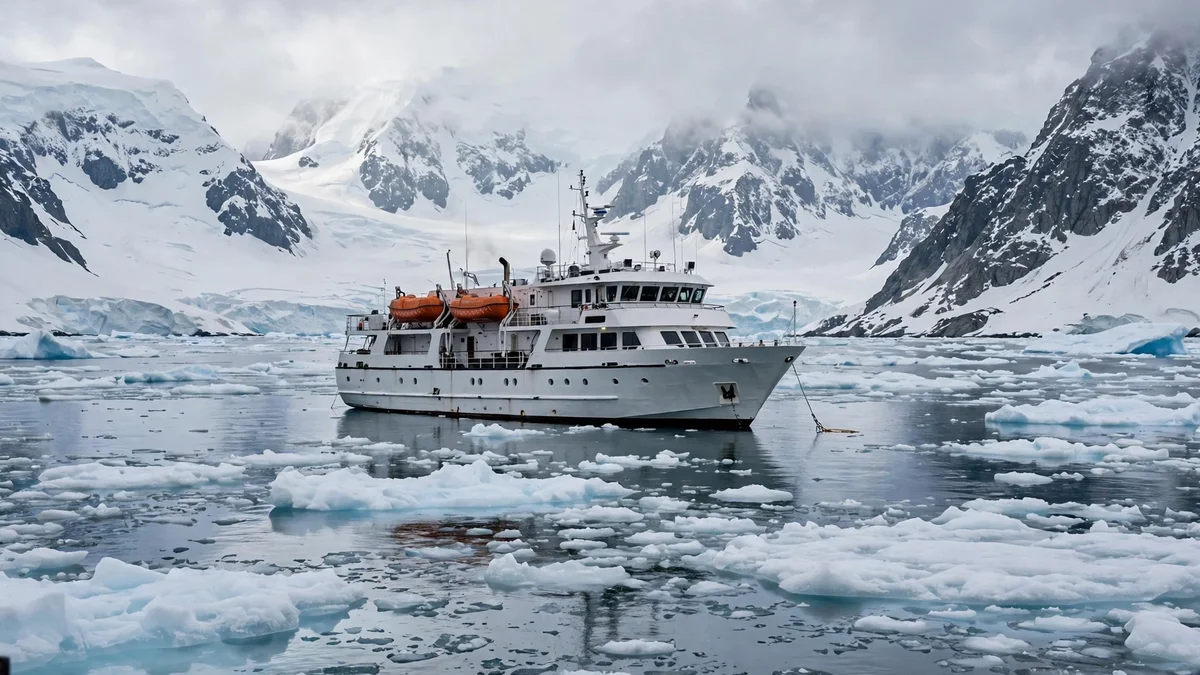
The ship was small enough that the passengers knew the crew by name, and that was the point. She pushed through brash ice in a grey Antarctic bay while the big cruise ships stayed a thousand miles north, and on the bridge the captain watched the ice charts and the wind, deciding which channel would stay open long enough to reach the penguin colony. On deck, passengers in red parkas leaned on the rail and watched a whale surface so close they could hear it breathe, and nobody asked for a casino, because the show was outside.
That is an expedition cruise ship. A luxury cruise ship is a floating city, built to carry thousands of people in comfort between big ports, but an expedition ship is built to go where the big ships cannot, and to bring a small group of curious passengers close to wild places. She is smaller, tougher and far more capable in ice, she carries Zodiac boats instead of water slides, and her luxury is in the access she gives you: the landing on a beach no one else visits, the scientist at dinner who explains what you saw that day, the cabin that is warm and quiet while the wind howls outside.
The spec sheet at a glance
| Figure | Typical luxury expedition cruise ship | What it tells you |
|---|---|---|
| Length | 100 to 180 metres | How long the ship is, and which ports it can enter |
| Gross tonnage | 8,000 to 25,000 GT | The ship’s overall size and volume |
| Passenger capacity | 100 to 250 guests | How many people travel aboard |
| Crew | 100 to 200 people | Who runs the ship, including expedition staff |
| Ice class | PC5 or PC6, Polar Class | How thick the ice the ship can safely enter |
| Service speed | 14 to 17 knots | How fast the ship cruises between landings |
| Range | 8,000 to 12,000 nautical miles | How far it can go without refuelling |
| Zodiac boats | 10 to 20 rigid inflatables | How passengers get ashore in wild places |
| Endurance | 30 to 45 days at sea | How long a voyage can last |
| Price | Roughly $100 million to $300 million to build, as an estimate | What the ship costs |
Size and capacity: small is the point
Length on an expedition cruise ship usually runs from 100 to 180 metres, which is small next to a big cruise ship, and that is deliberate. A ship of this size can enter narrow fjords, anchor in shallow bays and tie up at small polar research stations, places a 300-metre ship could never reach. The gross tonnage, 8,000 to 25,000 GT, is also modest, and it is what keeps the ship nimble: less volume means less draught, less windage and a ship that can turn in a tight channel. The floating-city version of the same numbers is set out in the guide to luxury cruise ship specs explained, where the priorities are scale and spectacle rather than access.
Ice class and the polar hull
Ice class is the most important number on an expedition ship’s spec sheet, and it is usually PC5 or PC6 under the Polar Code. The Polar Class system runs from PC1, for a ship that can break thick ice all year, down to PC7, for a ship that can enter thin summer ice, and PC5 or PC6 means the ship can operate safely in first-year ice in summer and autumn, which covers the polar cruising season. The class is not a marketing claim: it is a certificate issued by a classification society, and it decides where the ship is allowed to go and what insurance it can buy.
The hull behind the ice class is built differently from an ordinary cruise ship. The steel is thicker, the bow is shaped to ride up onto the ice and break it with the ship’s weight, and the propellers are protected so that ice cannot damage them. The ship carries a strengthened rudder and an ice knife, a steel edge that cuts ice away from the hull, and the whole structure is designed to survive a bump against a growler, a small iceberg that is mostly underwater and hard to see. The way such a hull is put together is the same discipline that builds any big ship, as the guide to how a luxury cruise ship is made shows, from the first steel plate to the finished vessel, with the ice strengthening added on top.
Speed, range and endurance
Endurance, 30 to 45 days at sea, is the number that decides how far the ship can go. A voyage to Antarctica from South America takes about ten days of sailing there and back, which leaves three weeks for exploring, and a voyage to the Arctic can be longer still. The ship carries enough food, fresh water and fuel for the whole trip, because there are no ports to resupply in the polar regions, and the watermakers and freezers are as important as the engines. A ship that can work in ice needs the same tough engineering as a vessel built for it, and the icebreaker is the extreme case, as the guide to how a luxury icebreaker is made shows.
Zodiacs, landing craft and the expedition kit
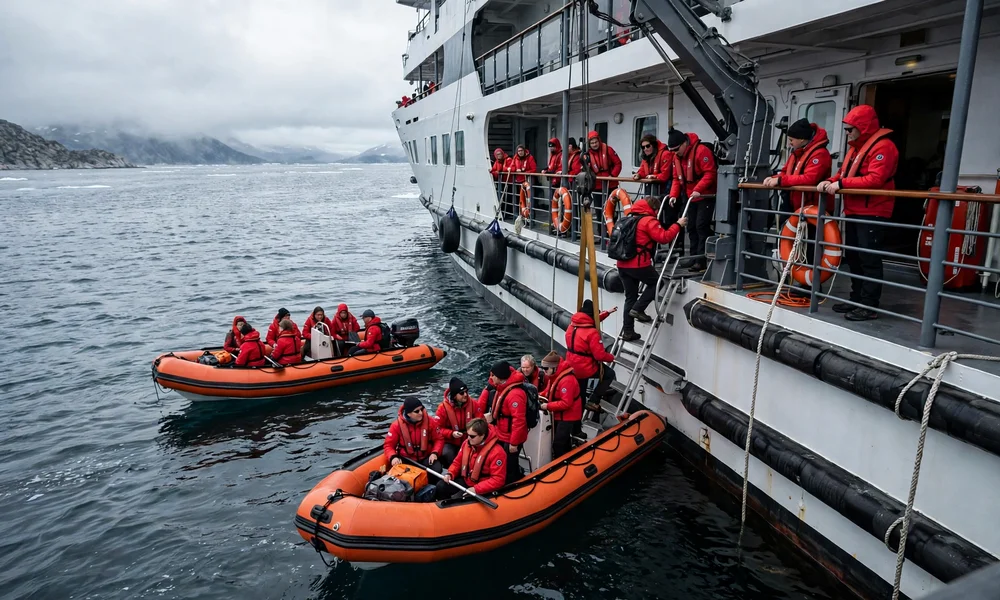
Zodiac boats are the number that makes an expedition ship different from every other cruise ship, and a luxury vessel usually carries 10 to 20 of them. A Zodiac is a rigid inflatable boat, about six metres long, that can carry ten passengers and a driver, and it is how people get ashore on a beach with no pier, how they cruise past a glacier face, and how they reach a whale that is feeding a few hundred metres from the ship. The Zodiacs are launched from a dedicated platform at the waterline, and the crew can have them all in the water in minutes, which matters when the weather window is short.
What it costs
A luxury expedition cruise ship costs roughly $100 million to $300 million to build, as an estimate, which is far less than a big cruise ship, but the ticket price per passenger is far higher. A voyage to Antarctica can cost $10,000 to $30,000 per person, and a longer Arctic voyage can cost more, because the ship carries so few guests and the operating costs are so high: ice pilots, expedition staff, fuel for the long passages and insurance for polar waters all add up. The price is high because the experience cannot be had any other way, and because the ship is built to go to places that are, by design, hard to reach.
A rare fact
Some expedition ships carry a pair of small submarines, and passengers can descend a hundred metres below the surface to see the underside of an iceberg, where the ice glows blue and the water is full of life that never sees the sun. The submarines are launched from the ship’s deck, they carry two or three people, and a dive lasts about half an hour, which is enough time to understand why the polar seas are worth protecting. It is the only way most people will ever see the world beneath the ice, and it is the sort of thing a big cruise ship can never offer.