The grand tourer was invented for a single journey: a long road, a full day, and a car that could cross a continent without tiring its driver. Picture a low, elegant coupe leaving a hotel at dawn, its bonnet stretching ahead like a promise, the boot packed for a week away, and a thousand kilometres of open road between breakfast and dinner.
A luxury grand tourer is not a sports car that happens to be comfortable. It is a different kind of machine, built around a large engine, a long wheelbase, and a cabin that stays quiet for hours.
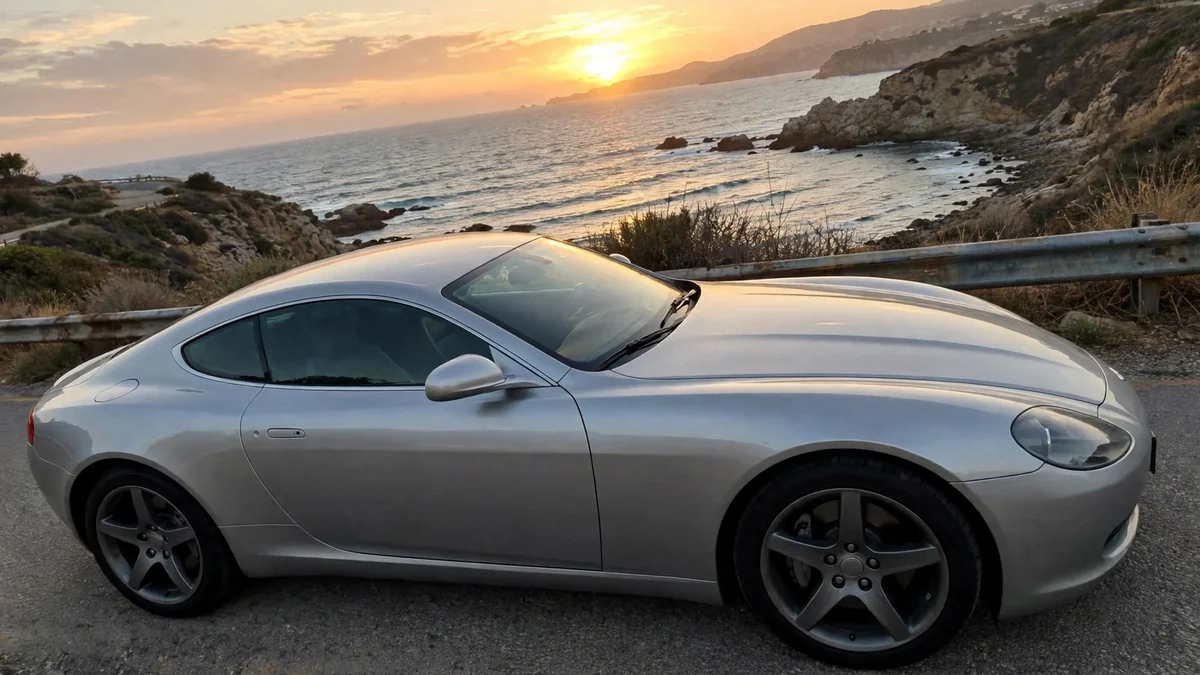
The engine: large, calm, and barely stressed
The engine of a luxury grand tourer is usually a large V8 or V12, displacing 4.0 to 6.5 litres and producing roughly 450 to 700 horsepower. It is tuned for torque rather than peak revs, with most of its pulling power available from low in the rev range, so the car surges forward with a gentle press of the pedal rather than a frantic downshift.
That laziness is what makes the car relaxing. The engine note is a low, distant hum rather than a shout, and the gearbox, usually an eight-speed automatic, changes gear so smoothly that passengers seldom notice it. How a luxury grand tourer works shows how the engine, gearbox, and chassis are tuned together, and the spec to watch is torque: a figure above 700 newton-metres means the car will overtake without effort and climb without strain.
Dimensions: long, low, and wide
A grand tourer is a big car, and its size is part of its character. Length typically runs 4.8 to 5.0 metres, width around 1.9 to 2.0 metres, and height only about 1.3 metres, giving it a long, low silhouette. The wheelbase, the distance between the front and rear wheels, is around 2.8 metres, and that long wheelbase is what gives the car its steady, unhurried ride over broken roads.
The low height keeps the centre of gravity down, so the car corners flat and stable, while the wide track helps it stay planted in fast bends. They were designed for open roads, and on an open road the proportions are perfect.
Performance: fast without trying
Performance figures for a luxury grand tourer look like sports car numbers, but they feel different. The sprint from 0 to 100 kilometres per hour typically takes 3.5 to 4.5 seconds, and the top speed is usually between 290 and 340 kilometres per hour, sometimes limited by the tyres rather than the engine. The acceleration is strong, but it arrives as a smooth push rather than a violent kick, and the car gathers speed the way a train does: steadily, quietly, and without drama.
Braking matters as much as speed on a car this heavy, so grand tourers carry large brakes, often carbon-ceramic discs, that can slow the car from high speed again and again without fading.
Range and fuel: built for distance
A grand tourer carries a large fuel tank, usually 80 to 90 litres, and that tank is the key to its range. With a full tank, the car typically travels 700 to 900 kilometres on the motorway, and its fuel consumption sits between 11 and 15 litres per 100 kilometres in mixed driving. Those are thirsty numbers by modern standards, but the point is not economy: it is the freedom to cross a country on one tank, with fuel stops chosen for pleasure rather than necessity.
The long range changes the rhythm of a journey. The luxury electric car specifications, explained show how electric rivals chase the same long-distance comfort with batteries instead of tanks, and the grand tourer’s answer is simple: a big tank, a calm engine, and a cabin that never tires its occupants.
The cabin: a room that happens to move
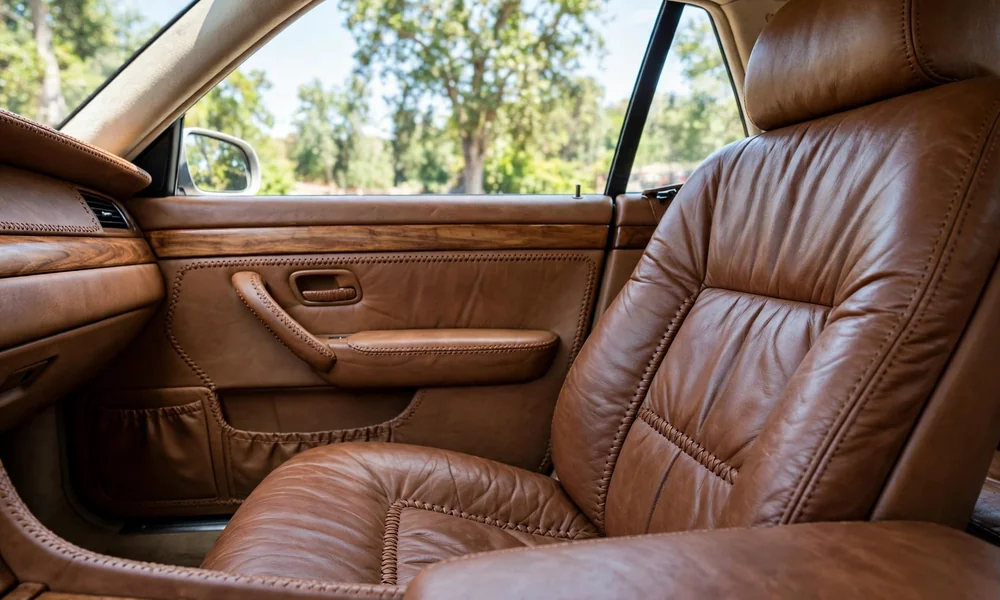
Inside, a luxury grand tourer is a two-plus-two: two full seats in front and two smaller ones behind, best suited to luggage or children rather than tall adults. The front seats are the heart of the car, wide, deeply padded, heated, cooled, and adjustable in a dozen directions, with massage functions on the most expensive models. The cabin is trimmed in hand-stitched leather, real wood, and polished metal, and the stitching alone can take a craftsperson a full day.
Quiet is the luxury that matters most at speed. The cabin uses acoustic glass, extra insulation, and active noise cancelling, so wind and road noise fade to a murmur and conversation stays easy at 130 kilometres per hour.
Chassis and materials: light where it counts
Underneath the leather and wood, a grand tourer is built from aluminium and composites, with a body that is light for its size. The kerb weight typically sits between 1,800 and 2,100 kilograms, which is heavy for a sports car but light for a car of this size and comfort. The weight is spread evenly, close to fifty-fifty between front and rear, which keeps the handling neutral and predictable.
Carbon fibre appears in the roof, the bonnet, and the aerodynamic parts, not as decoration but to keep weight out of the highest parts of the car. How a luxury coupe is made describes the same careful balance of strength and lightness in a smaller car, and the grand tourer applies it at a larger scale, with a body built to stay rigid and quiet for decades.
Key specifications at a glance
| Specification | Typical figure |
|---|---|
| Engine | V8 or V12, 4.0 to 6.5 litres |
| Power | 450 to 700 horsepower |
| Torque | 700 to 900 newton-metres |
| Length | 4.8 to 5.0 metres |
| Wheelbase | Around 2.8 metres |
| Kerb weight | 1,800 to 2,100 kilograms |
| 0 to 100 km/h | 3.5 to 4.5 seconds |
| Top speed | 290 to 340 kilometres per hour |
| Fuel tank | 80 to 90 litres |
| Range | 700 to 900 kilometres |
| Boot space | 300 to 400 litres |
What a luxury grand tourer costs
As an estimate, a luxury grand tourer typically costs between 200,000 and 450,000 dollars, depending on the engine, the trim, and the options. The hand-stitched interior and the large engine account for much of the price, and the options list, from bespoke paint to a tailored luggage set, can add tens of thousands more.
A rare fact
Here is a rare fact: the first grand tourers were built for wealthy owners who drove themselves across Europe before motorways existed, and some makers still test their cars on the same old mountain passes their founders used a century ago. The engineers drive the car over a pass, stop for lunch in the same village inn, and judge the car by how fresh the driver feels at the end of the day. It is the oldest test in motoring, and it is still the one that matters most.
The specifications of a luxury grand tourer tell the story of a car built for distance. A large, lazy engine, a long wheelbase, a quiet cabin, and a tank big enough to cross a country add up to a machine that makes a thousand kilometres feel like a morning drive. Read the torque, the range, and the cabin noise together, and the spec sheet becomes a journey.


