There is a moment in every luxury car factory that never gets old. A bare body shell, fresh from the paint shop, rolls into the trim line under bright lights, and its paint is so deep and so flawless that it looks wet. A worker in white gloves runs a hand along the shoulder line, checking for a ripple that no machine would notice. Nothing is rushed. A luxury coupe is not assembled the way an ordinary car is assembled. It is built slowly, checked constantly, and finished by people whose job is to notice the things everyone else would miss.
A coupe has a particular problem to solve. It must be beautiful, with a long bonnet and a low roofline, and it must also be rigid, quiet, and safe, which is hard when there are only two doors and no B-pillar to stiffen the middle of the car. This article follows a luxury coupe through the factory, from the first press of the steel to the final road test, and it is about the build, not the brochure. For the numbers themselves, the luxury coupe spec sheet explains what the figures mean, but here the story is the hands and the machines that turn them into a car.

How a Luxury Coupe Is Made
Step 1: Pressing and welding the body
The coupe begins as flat sheets of steel and aluminium, fed into presses that stamp them into doors, wings, bonnets, and roof panels with several thousand tonnes of force. Each panel is checked for shape and thickness, because a panel that is a fraction of a millimetre out will show as a ripple in the finished paint. The panels are then welded together by robots into a body shell, with hundreds of spot welds and, in the most stressed places, laser welds that run in a continuous seam. The finished shell is measured by laser against its design data, and any shell that falls outside tolerance is sent back, because everything that follows depends on this skeleton being exactly right.
Step 2: Painting, layer by layer
Paint is where a luxury coupe earns its reputation, and it is the slowest part of the build. The body shell is dipped in a rust-proofing bath, then sprayed with primer, base colour, and clear coat, with each layer baked in an oven before the next is applied. On a luxury coupe the paint may be four or five layers deep, and the final clear coat is polished by hand to remove any dust or orange-peel texture. Inspectors examine the finish under special lights that reveal flaws invisible in daylight, and a body that fails is sanded back and painted again, however expensive that is.
Step 3: The engine and the chassis
While the body is being painted, the mechanical heart of the coupe is assembled on a separate line. The engine, whether a turbocharged six-cylinder, a V8, or a hybrid unit, is built up and run on a test bench before it is fitted, and the gearbox, suspension, brakes, and steering are mounted onto a subframe that will be lifted into the body as a single unit. This is the moment the coupe stops being a shell and becomes a car. A luxury electric car hides its battery in the floor in a similar way, and the coupe borrows the same idea of keeping heavy parts low, which is why it feels so planted on the road.

Step 4: The cabin, stitched and fitted
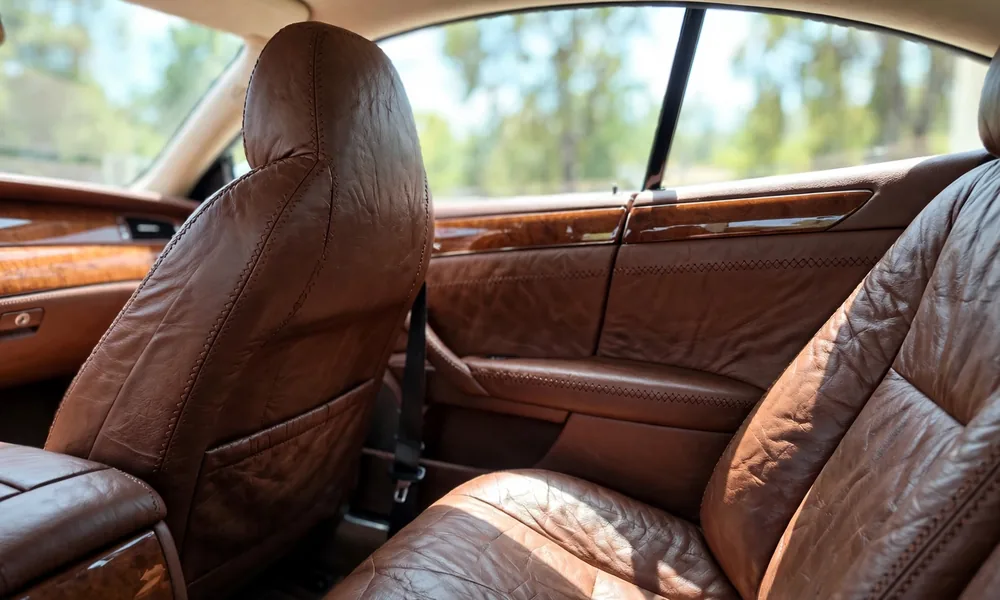
The cabin is where the handwork really shows. Leather hides are inspected one by one, and only the smoothest, unmarked sections are cut for seats, door panels, and the dashboard. Workers stitch the seat covers by hand, matching the thread and the pattern so that every seam lines up, and the wooden or metal trim is polished and fitted piece by piece. The hypercar interiors at the very top of the market set the standard for this kind of work, and a luxury coupe aims for the same feeling: that everything you touch was made by someone who cared.
Step 5: Electronics and the first start
Once the cabin is in, the car’s electronics are connected and the coupe is started for the first time. Technicians run through hundreds of checks, from the headlights and the air conditioning to the driver assistance systems and the sound system, and the car is driven onto a rolling road, a set of rollers that lets the wheels turn while the car stays still, so the engine, gearbox, and brakes can be tested at speed without leaving the factory. Any warning light, any rattle, any panel that does not sit flush is noted and fixed on the spot. This stage is slow and methodical, because a fault found here costs minutes to fix, while the same fault found by a customer costs a reputation.
Step 6: Road test and final inspection
The last step takes place outside the factory, on a test track and on real roads. A trained driver takes the coupe through a set course, listening for wind noise, checking the steering and the brakes, and feeling for any vibration that should not be there. The car is then washed, dried, and inspected under bright lights one final time, inside and out, with a checklist that runs to hundreds of items. A luxury coupe is never rushed out of the door, because the factory knows that the first drive is the moment the whole build is judged.
Specifications
| Feature | Typical luxury coupe |
|---|---|
| Body | Two-door coupe, steel safety cage with aluminium panels |
| Engine | Turbocharged six-cylinder, V8, or hybrid, 350 to 650 horsepower |
| 0 to 100 km/h | 3.5 to 5.5 seconds |
| Top speed | 250 km/h, usually electronically limited |
| Gearbox | Eight-speed automatic, often with paddle shifters |
| Weight | 1,700 to 2,000 kilograms |
| Build time | Several days on the line, plus paint and inspection |
What It Costs
A luxury coupe is priced for its build as much as for its badge. A new luxury coupe from a mainstream premium maker is estimated to cost roughly $80,000 to $150,000, while a high-performance coupe from a specialist maker is estimated to cost roughly $200,000 to $400,000, and a limited, hand-built model can be estimated at more than $500,000. Those are estimates, and options such as bespoke paint, a premium sound system, and hand-stitched interiors can add a large sum. A full repaint in a special colour alone is estimated to cost roughly $10,000 to $25,000, which says a great deal about how much work goes into the paint shop.
A Rare Fact
Here is a detail from the paint shop that few owners ever hear: the most expensive paint on a luxury coupe is often not the colour at all, but the clear coat. On some cars the final lacquer is applied, baked, sanded flat by hand, and then applied a second time, because a single coat can never be perfectly level. The workers who do this can feel a flaw with the palm of a hand that no instrument in the factory can measure, and their judgement is the last quality check the paint ever gets. On the most exclusive cars the process is slower still, because the lacquer is left to cure for days between coats, and the car is kept in a dust-free room while it hardens. Patience, in the paint shop, is a tool like any other.


