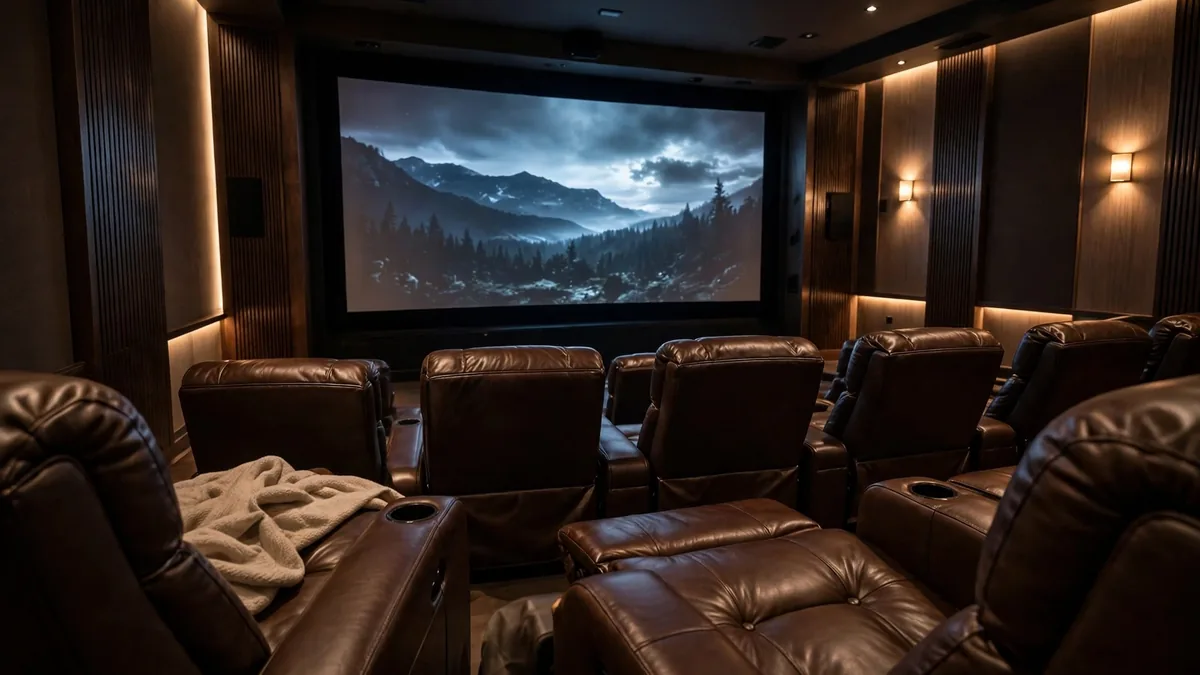
The room was dark, the screen was enormous, and the sound arrived from somewhere above my left shoulder before settling somewhere behind me. It was the first time I had sat in a home theatre that cost more than a car, and the first thing I noticed was not the picture. It was the quiet. When the film paused, the room went silent in a way ordinary rooms never do, as if the walls themselves had been told to listen.
1. Lumens, and why brighter is not always better
Brightness is measured in lumens, and a luxury home theatre projector usually delivers between 2,500 and 4,000 of them. A lumen is a measure of light output, and more lumens means a brighter image, which matters if the room has windows or light-coloured walls. The right number depends on the room, not on the projector.
The number to read next to lumens is contrast ratio, which describes the difference between the brightest white and the darkest black the projector can show. A high contrast ratio gives the picture depth, so a night scene looks like night instead of a dark grey fog. The way the projector and the screen are chosen together is part of how a luxury home theatre is made, where the room is designed before a single piece of equipment is bought. If the sheet boasts about lumens but says nothing about contrast, it is selling you a torch instead of a cinema.
2. Resolution and colour, and what 4K really buys you
Resolution is the number everyone recognises: 4K, which means the picture is made of roughly 8.3 million tiny dots of light. On a screen of 100 inches or more, that density matters, because sitting close to a huge screen with too few pixels makes the picture look soft at the edges. But resolution is only the beginning. A 4K projector with poor colour will show you a sharp picture of the wrong colours, and nobody will enjoy it.
The numbers that describe colour are the colour gamut, usually given as a percentage of a standard like DCI-P3, and HDR support, which lets the projector show brighter highlights and deeper shadows in the same frame. A luxury projector covers close to 100 percent of the DCI-P3 gamut, which is the colour range cinemas use, and supports HDR formats that keep a sunset looking like a sunset instead of a flat orange band. Colour accuracy is measured the same way in other screens, and how a luxury gaming monitor works explains how refresh rates and colour are tested in a display you sit much closer to.
3. Watts, and the loudness trick nobody warns you about
Speaker power is measured in watts, and a luxury theatre amplifier may promise hundreds of them per channel. It sounds like a lot, and it is, but watts are the most misleading number on the whole sheet. Doubling the watts only adds about three decibels of loudness, which the human ear hears as a small step up, not a doubling. A 200-watt amplifier is only slightly louder than a 100-watt one, and what matters far more is the sensitivity of the speakers, measured in decibels, which describes how much sound a speaker makes from a single watt.
4. Speaker layout, and what those numbers around the dot mean
A theatre layout is written as a string of numbers with dots between them, like 7.1.4 or 9.1.6, and it reads like a code until someone explains it. The first number is the speakers at ear level around the room. The second is the number of subwoofers, the big boxes that make the floor shake. The third is the number of speakers in the ceiling, which carry the sound of rain, helicopters, and anything else that should come from above.
A 7.1.4 system has seven speakers around you, one subwoofer, and four in the ceiling, and it is the standard layout for a serious luxury room. A 9.1.6 system adds two more speakers at the front and two more in the ceiling, and it fills a larger room more evenly. The layout only works if the speakers are placed where the sound is most even, which is why installers measure the room and place the seats about two thirds of the way back from the screen. The cost of all that equipment and installation is part of why a luxury home theatre is so expensive, where the price of the room, the treatment, and the tuning are added up.
5. Decibels, and the silence between the sounds
Decibels measure loudness, and a luxury home theatre is designed to reach peaks of around 105 decibels, which is the reference level cinemas use, while keeping the quiet parts truly quiet. That second half is the hard part. A room that can play loudly is easy to build. A room that can play a whisper and have it heard from the back row is not, because every hum from the projector, every rumble from the air conditioning, and every echo off a bare wall gets in the way.

The Specifications at a Glance
Here are the numbers that matter most on a luxury home theatre, and what a good figure looks like for each one.
| Specification | Typical Luxury Range |
|---|---|
| Projector brightness | 2,500 to 4,000 lumens |
| Resolution | 4K, with HDR and wide colour |
| Colour gamut | Near 100 percent of DCI-P3 |
| Speaker layout | 7.1.4 or 9.1.6, with ceiling speakers |
| Peak loudness | Around 105 decibels at reference level |
| Room noise floor | Below 25 decibels |
| Screen size | 100 to 150 inches diagonal |
| Seating distance | About 3 to 4 metres from a 120-inch screen |
What Does a Luxury Home Theatre Cost?
A luxury home theatre is estimated to cost roughly $30,000 to $250,000, depending on the size of the room and the quality of the equipment. A single-room system with a good projector and a seven-speaker layout is estimated at roughly $30,000 to $80,000, while a dedicated cinema room with a laser projector, eleven or more speakers, custom seating, and full acoustic treatment can be estimated at $150,000 to $250,000. A single high-end projector is estimated at roughly $10,000 to $40,000 on its own, and professional calibration, which tunes the picture and sound to the finished room, is estimated at roughly $2,000 to $5,000.
A Rare Fact
The first home theatres were built by film stars in the 1920s, who installed projectors in their houses so they could watch their own films in private. The rooms were built by cinema engineers, and the idea of a dedicated screening room at home spread from Hollywood mansions to ordinary houses over a century, until the cinema in the living room became a luxury that anyone with a spare room could plan.
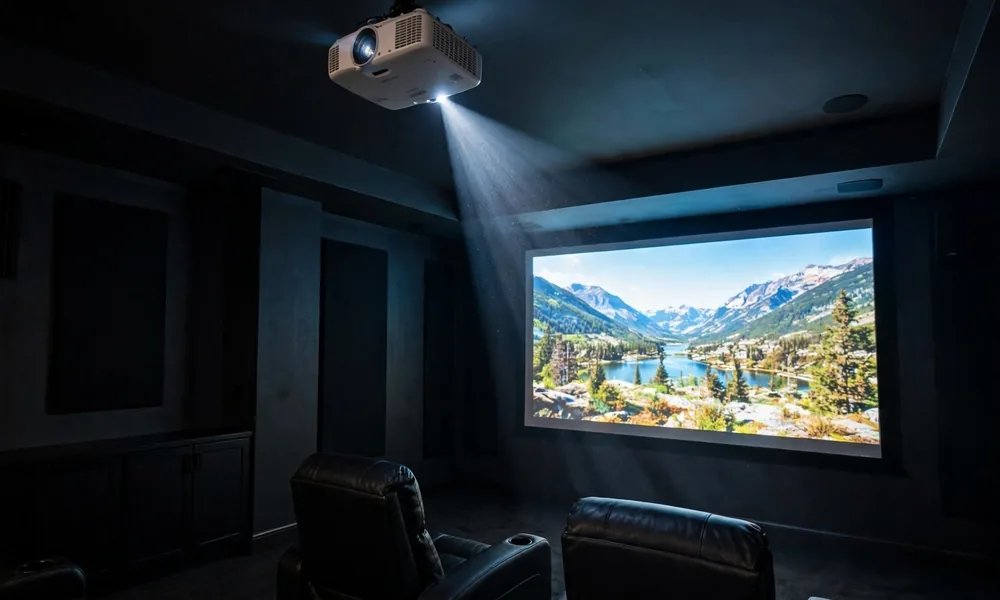
The spec sheet stops being a puzzle once you read it as a description of a feeling. Lumens set the brightness, colour sets the truth of the picture, watts and sensitivity set the scale of the sound, and decibels set the silence in between. Read those, and you will know how the room will feel before the lights go down.


