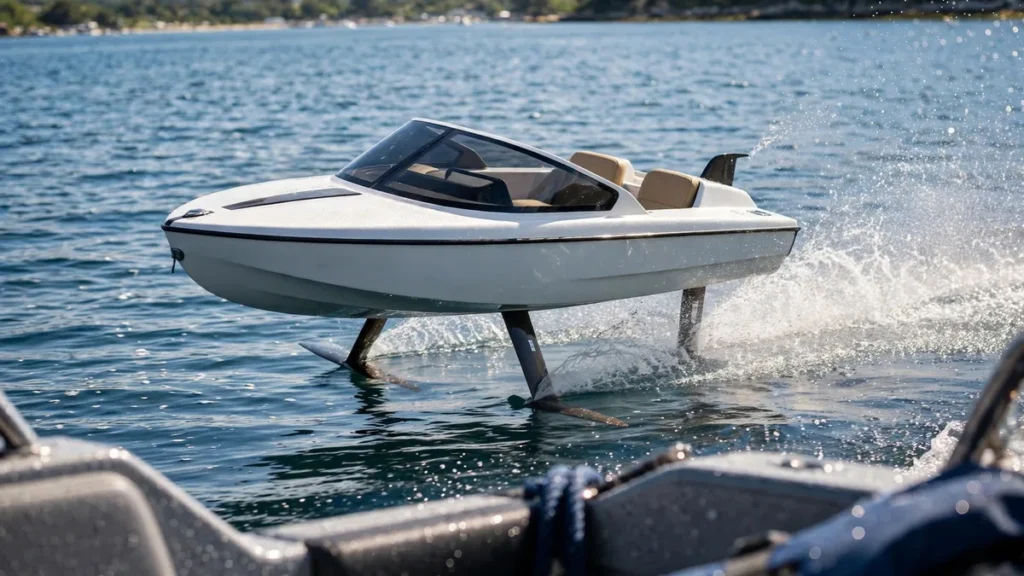
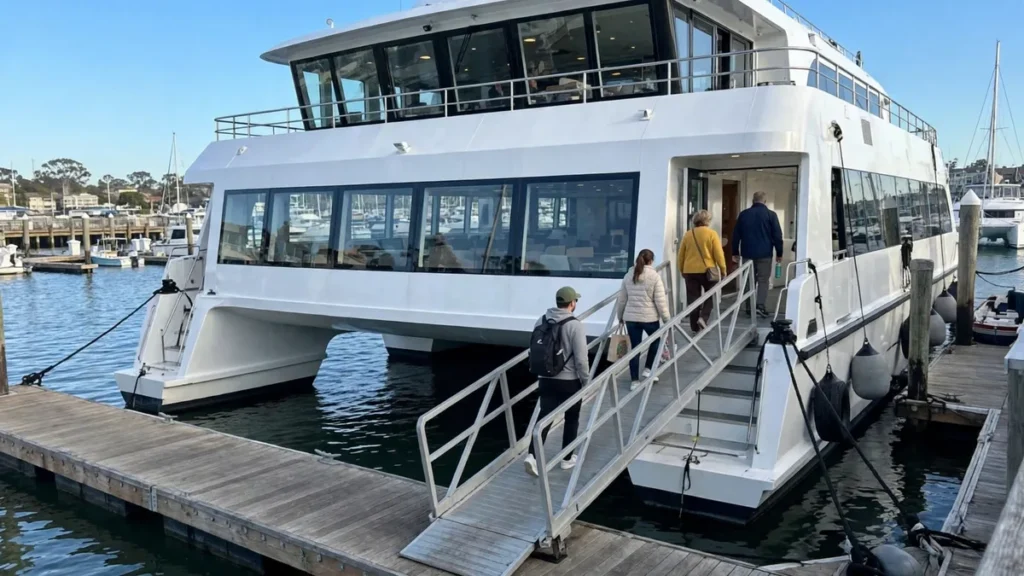
The first time a hydrofoil ferry lifts clear of the water, passengers do what passengers always do: they reach for their phones. One moment the hull is pushing through the chop like any other boat, and the next the whole vessel rises, the ride goes quiet, and the sea seems to slide past underneath instead of slamming into the bow. It feels like flying, and in a sense it is. A luxury hydrofoil ferry does not so much sail as it rides on wings hidden beneath the waves, and once you have felt that smooth, level glide, an ordinary ferry feels like a bus with a leak.
Hydrofoils are not new, but the luxury ferry has given them a second life. Modern materials, computer-controlled foils and quiet electric or hybrid propulsion have turned a clever old idea into a serious way to cross bays, lakes and coastal stretches in comfort. This guide explains the numbers on the specification sheet, so you know what speed, capacity and range really mean when you step aboard one of these flying ferries.
The headline numbers, translated
A hydrofoil ferry is judged by a different set of numbers from an ordinary boat. Speed matters, but so does the speed at which the foils lift the hull clear, because below that take-off speed the ferry is just a heavy boat pushing water aside. Capacity matters too, because every extra passenger is weight the foils must lift.
The table below gathers the figures you will typically see for a large luxury hydrofoil ferry, with a plain explanation of each one. Treat them as typical for the class, since every route, every operator and every design tunes the numbers to its own waters.
| Specification | Typical figure | What it means |
|---|---|---|
| Length | 25 to 35 metres | Hull length from bow to stern. Longer hulls ride more smoothly in a swell. |
| Passenger capacity | 120 to 250 seats | How many people it carries. Luxury versions seat fewer people, with far more room each. |
| Cruising speed | 35 to 45 knots | Speed once foil-borne, about 65 to 83 kilometres per hour. Roughly twice a normal ferry. |
| Take-off speed | 15 to 20 knots | The speed at which the foils lift the hull clear of the water and the ride smooths out. |
| Range | 150 to 300 nautical miles | How far it travels between refuels or recharges. Foil-borne cruising stretches this a long way. |
| Power | 2,000 to 4,000 kW | Combined output of the propulsion system. Most of it is needed to reach take-off speed. |
| Draught, foil-borne | Under 2 metres | How deep the foils reach below the surface while flying. Shallow enough for most harbours. |
| Wave limit | Up to 1.5 metres | The biggest waves it can handle comfortably. Beyond this, the ride firms up and speed drops. |
How the foils change everything
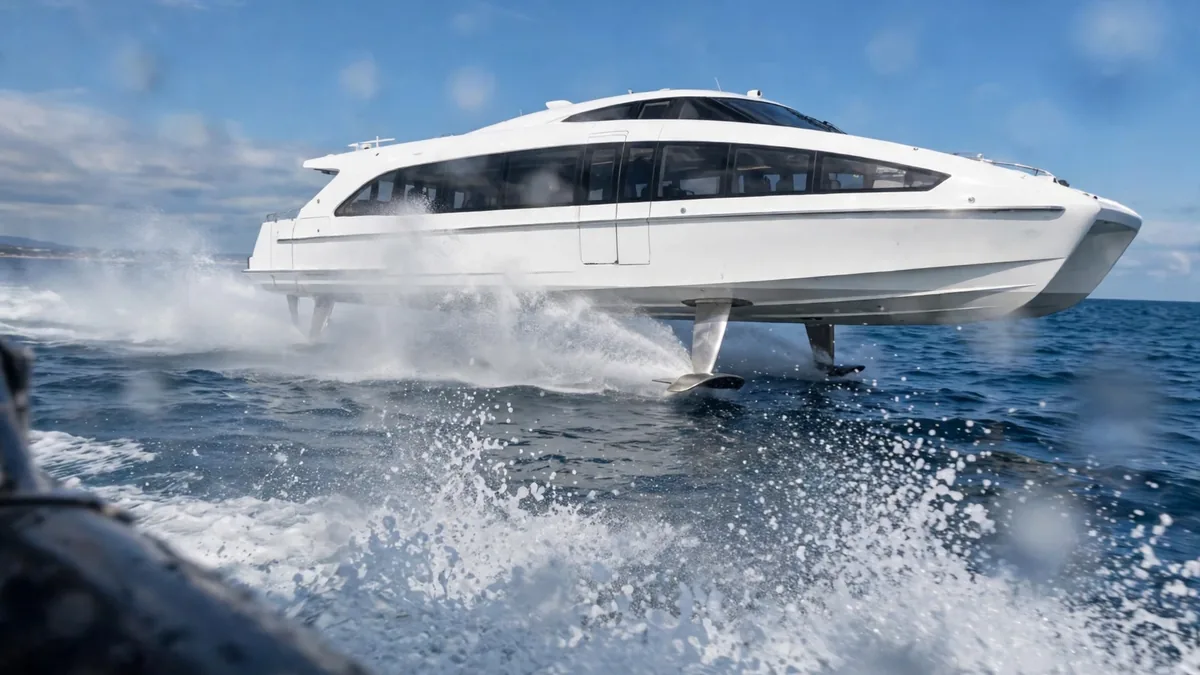
The magic of the hydrofoil is a simple piece of physics. A wing-shaped foil under the water generates lift as it moves, just as an aeroplane wing does in the air. Once the ferry is moving fast enough, that lift raises the hull out of the water, leaving only the slender foils and their supports in the sea.
The take-off moment is the part passengers remember. The engines work hard, the bow rises, spray flies, and then the hull settles into a level, almost eerie calm. From then on the ride is set by the foils, not the waves. Small waves pass underneath the hull without touching it, which is why a hydrofoil can cross a choppy bay while passengers sip coffee that stays in its cup.
That control system is the quiet revolution in modern hydrofoils. Early hydrofoils needed a skilled helmsman to keep them stable, and a mistake could slam the hull back down. Modern ferries use sensors and fast-moving flaps on the foils to hold the ride height steady automatically, and the crew simply sets the speed and course. If you want the full story of the machinery, our guide to how a luxury hydrofoil ferry works explains the foils, the propulsion and the control system in detail.

Speed, capacity and the luxury trade-off
Speed is the hydrofoil ferry’s calling card, and the numbers are striking. A conventional ferry on a coastal route might manage twenty knots; a hydrofoil cruises at forty, turning a two-hour crossing into one. That speed changes what a ferry can be. Commuters can live further from work, island resorts become day trips, and a route that once needed an overnight boat becomes a morning sailing. The time saved is the product being sold, as much as the seat itself.
Capacity is where the physics pushes back. Foils can only lift so much weight, so a hydrofoil ferry carries fewer people than a conventional ferry of the same length, and it carries almost no cars. Luxury operators turn that limit into a virtue: fewer seats, more legroom, wider windows, a proper cafe bar and a quiet cabin where you can actually work.
Range follows from the same efficiency. Because a foil-borne hull wastes so little energy on drag, a hydrofoil can travel a long way on a modest fuel or battery load, and that is what has made electric hydrofoil ferries realistic. The construction behind all of this is a story of its own, and how a luxury hydrofoil ferry is made follows the hull, the foils and the fitting-out from the yard to the water.
What it costs
A large luxury hydrofoil ferry typically costs from around $8 million to $25 million as an estimate, depending on size, capacity and whether it uses diesel, hybrid or fully electric propulsion. Electric versions sit at the top of that range, because the batteries and charging systems are expensive, but they cost far less to run and to maintain. For passengers, a ticket on a luxury hydrofoil route is usually priced above a conventional ferry on the same crossing, often by half as much again, because the crossing takes half the time and the cabin is a far nicer place to spend it.
If you are comparing ferries, look past the top speed. Check the take-off speed, because a ferry that lifts early rides smoothly sooner. Check the wave limit for your route, because a fast ferry that cancels in a chop is no use on a rough coast. And check the seat count against the cabin photographs, because the difference between a luxury hydrofoil and a crowded one is measured in legroom, not knots. The price of building one explains a lot about those choices, and why a luxury hydrofoil ferry is so expensive breaks down where the money actually goes.
A rare fact
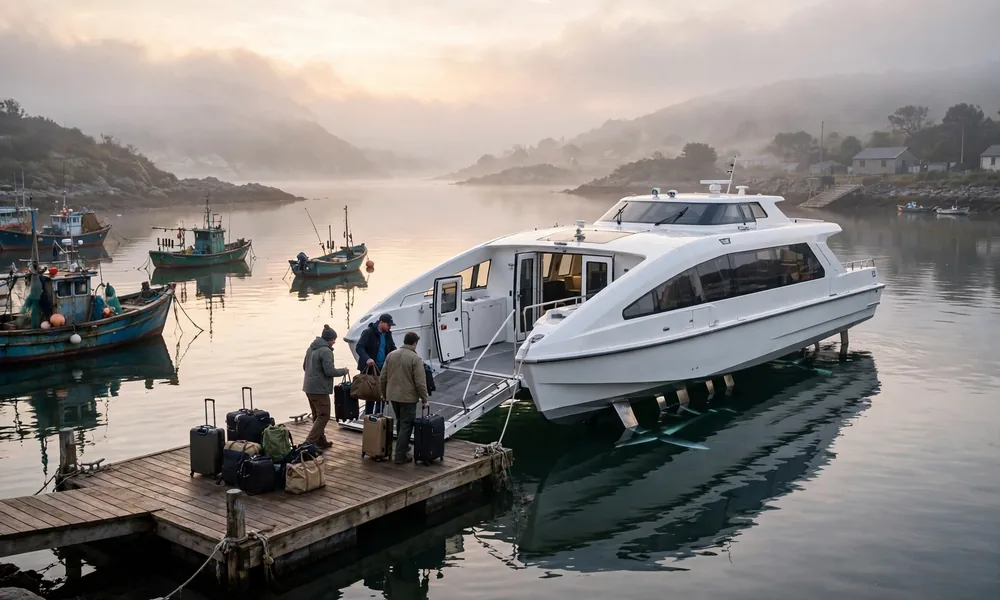
Here is a detail that surprises even regular passengers: a foil-borne hydrofoil ferry can use less energy per passenger than the car ferry it replaces, even while travelling twice as fast. The trick is that drag falls away so sharply once the hull leaves the water that the engines are mostly fighting the thin foils, not the sea. It is the same reason a cyclist in a racing tuck goes faster on the same effort, and it means the fastest boat on the route can also be one of the cleanest, a combination that would have sounded impossible to the engineers who built the first clumsy hydrofoils nearly a century ago.