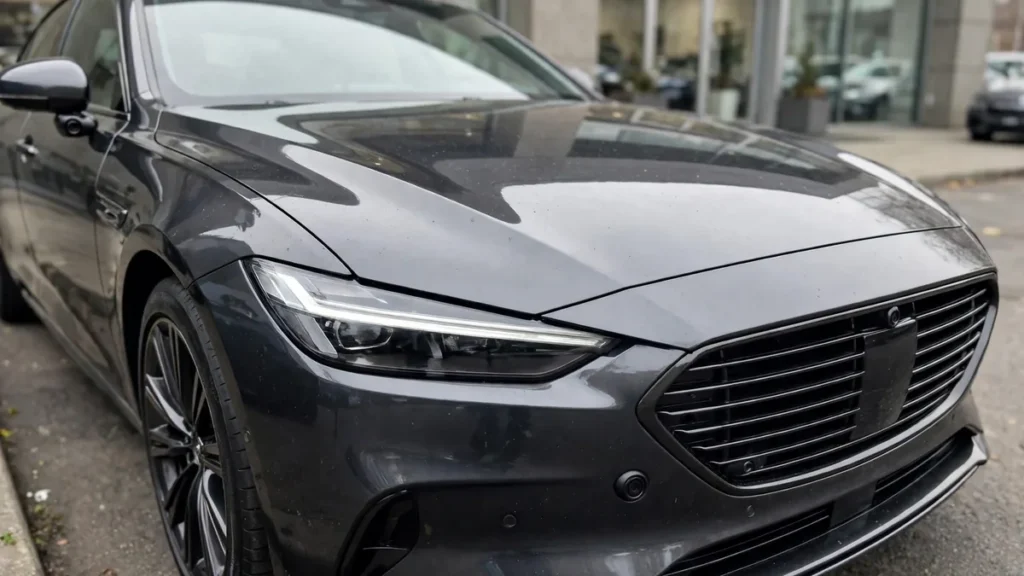
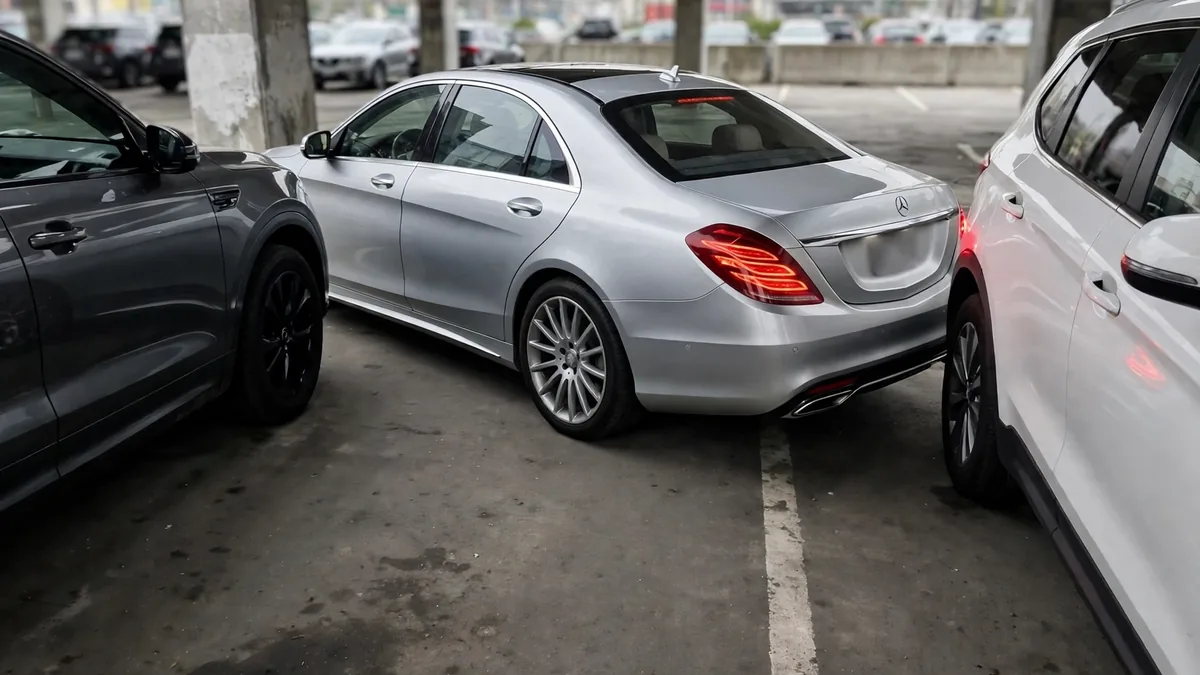
She had owned the car for three weeks and still dreaded the same thing every evening: the narrow bay outside her flat, with a low stone wall on one side and a neighbour’s motorcycle on the other. The first time she tried it, the car began to beep before she had even turned the wheel, and the beeps grew faster as the wall drew near, until one long tone told her to stop. She opened the door, looked back, and found she still had a handspan to spare. The car had known exactly where the wall was.
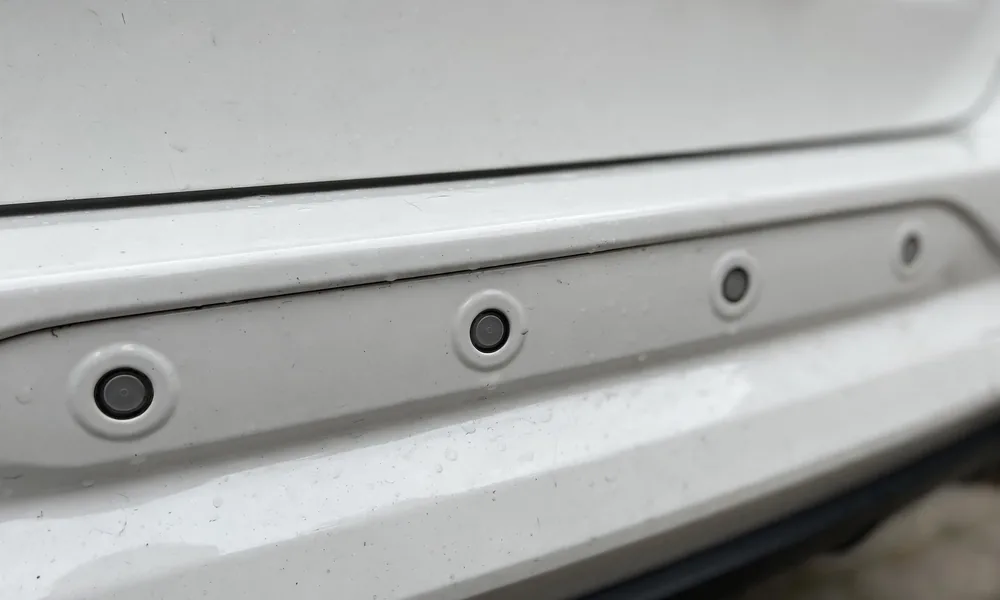
That knowledge comes from parking sensors, small discs set into the bumpers that send out sound waves and listen for the echo. Luxury cars use more of them, place them more carefully, and pair them with cameras and software that turn a set of beeps into a clear picture of the space around the car. The spec sheet is short, but each number describes a real moment in a real car park.
Reading a Luxury Parking Sensor Spec Sheet
Step 1: Ultrasonic sensors work like a bat in a car park
Most parking sensors are ultrasonic, which means they send out a pulse of sound too high for human ears to hear and measure how long the echo takes to return. The longer the wait, the further away the obstacle. Luxury cars typically carry eight to twelve sensors, four in each bumper, with extra ones on the corners and sometimes along the sides. The corner sensors matter most, because corners are where drivers misjudge distance, and a sensor that watches the corner can warn about a post the driver cannot see from the seat.
Step 2: Range is short, and that is the point
A parking sensor usually works between about 20 centimetres and 2.5 metres, and the short range is deliberate. The sensors are meant for slow manoeuvres, not for the open road, so they are tuned to be precise at close quarters rather than to see far away. As the car closes on an obstacle, the beeps speed up, and below about 30 centimetres most systems sound a continuous tone. That tone is the car saying there is no more room to guess, and it is deliberately hard to ignore.
Step 3: Accuracy depends on where the sensors sit
Two cars can use the same sensors and still behave differently, because placement decides what they can see. Sensors set low in the bumper spot kerbs and low walls, while sensors set higher watch for bollards and the bumpers of other cars. Luxury makers test the placement on every body style, because a sensor that works on a saloon may sit at the wrong height on a tall SUV. They also angle the corner sensors outward, so the car can sense a wall it is turning toward before the bumper reaches it. The same care with placement shows up across the car’s other assistance systems, as our guide to how a luxury autonomous car works explains.
Step 4: The beeps are a language with rules
The sound a parking sensor makes is not random. The interval between beeps shrinks as the distance shrinks, and the tone usually comes from the speaker nearest the obstacle, so the driver can tell left from right without looking at the screen. Many luxury systems add a visual display that shows coloured bars for each sensor, turning green, amber and red as the gap closes. Some cars lower the music volume when the sensors are active, so the warning is never drowned out. Drivers learn the language within a week, and after that they park by ear as much as by eye.
Step 5: Weather and dirt can fool a sensor
Ultrasonic sensors are hardy, but they are not magic. Heavy rain, thick mud, snow packed onto the bumper, or a layer of ice can muffle the sound pulse and make the system miss an obstacle or warn when nothing is there. Luxury cars fight back with sensors that sit slightly proud of the bumper, self-cleaning coatings, and software that ignores a single strange reading and waits for a second one before warning. Even so, a driver who has just driven through a muddy lane should wipe the bumpers before trusting the sensors in a tight space. A quick wipe takes ten seconds and can save a bumper.
Step 6: Sensors, cameras and steering now work as one team
On a modern luxury car, the parking sensors rarely work alone. Their readings are combined with the surround-view cameras and, on some cars, with the steering system, so the car can guide itself into a bay while the driver works the pedals. The sensors provide the distance, the cameras provide the picture, and the software decides when to warn and when to stay quiet. It is a quiet piece of teamwork, and it is why a luxury car can feel almost calm in a space that would make an older car feel enormous. The same idea of systems sharing what they sense appears in very different machines, as our guide to how electric yacht docking works shows.
Luxury Parking Sensor Specs at a Glance
| Specification | Typical luxury figure | What it means |
|---|---|---|
| Sensors per car | 8 to 12 | Front, rear and corner coverage |
| Sensor type | Ultrasonic | Sound pulses and echoes measure distance |
| Detection range | About 0.2 to 2.5 metres | Tuned for slow, close manoeuvres |
| Continuous tone distance | About 30 centimetres | Stop now, the gap is nearly gone |
| Warning display | Beeps plus coloured bars | Sound and picture show distance and direction |
| Weakness | Mud, snow and ice on the bumper | Dirty sensors can miss or misread obstacles |
What Luxury Parking Sensors Cost
A full front-and-rear parking sensor system on a luxury car typically adds an estimated $800 to $2,500 when ordered as an option, and a single replacement sensor usually costs an estimated $150 to $400 fitted and painted. These are estimates, not quoted prices, and they vary by brand and by whether the bumper must be removed. Repainting is often the expensive part, because a sensor must sit flush and match the paint exactly, or it will look wrong every time the owner walks past the car.

A Rare Fact About Parking Sensors
The first parking sensors were not made for cars at all. The ultrasonic idea came from measuring distance in industry and in the sea, and it took years before the parts became small and cheap enough to hide in a bumper. Early car systems were so eager that they beeped at rain and at tall grass, and drivers switched them off in frustration. The modern luxury system is quiet most of the time, which is the point: it speaks only when the gap is genuinely closing.
Parking sensors will never make a driver good at parking on their own, but they remove the guesswork from the last metre, which is where most small accidents happen. A luxury system does it with more sensors, better placement and a calmer warning, and after a week of using it, most drivers stop thinking about it at all. That is the real test of the spec sheet: not the numbers, but the evening when the tight bay outside the flat stops feeling tight. The sound of the system working well is also part of the cabin’s design, as our guide to how a luxury car sound system works explains.