A pontoon boat used to be the plainest boat on the lake: two metal tubes, a flat deck, a bench, and a small outboard. The luxury pontoon changed all of that without changing the basic idea. The tubes got bigger, the deck wider, and the furniture, sound system, and engine grew until the boat could run fifty miles per hour and host a dinner party.
Step aboard a modern luxury pontoon on a Saturday afternoon and the first thing you notice is how little it feels like a boat. The deck does not flex underfoot, the seating wraps around the bow in deep cushions, and the helm looks like it belongs in a car. Then the captain pushes the throttle forward and the boat rises onto plane while the passengers keep their drinks upright. That calm was engineered into the tubes, the deck, and the power package.

How a luxury pontoon boat is built
Step 1: The tubes are formed
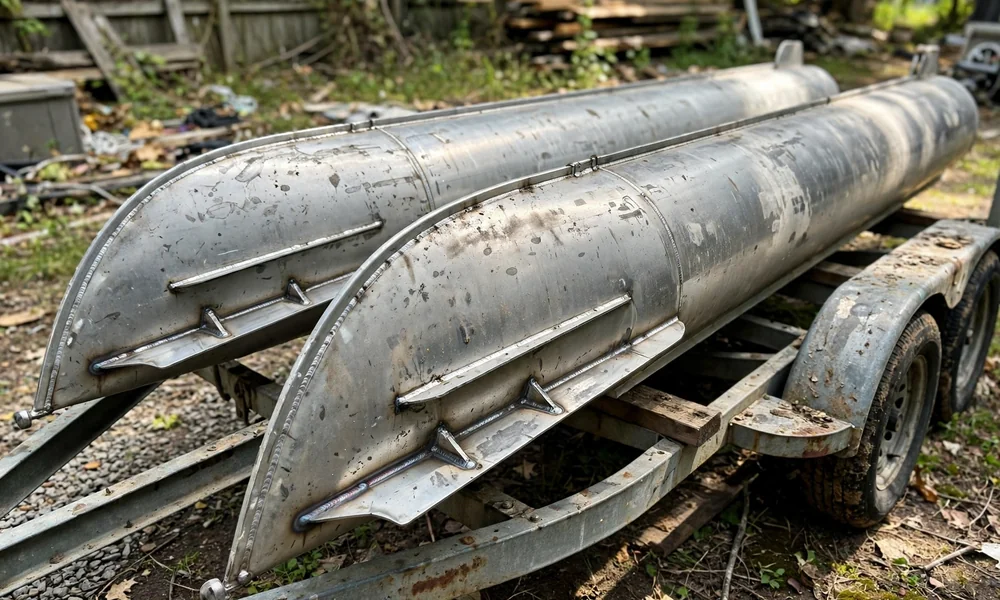
Everything starts with the pontoons themselves, usually two or three aluminium tubes, each around twenty-five inches in diameter, welded from marine-grade aluminium sheet. Luxury builders add lifting strakes, thin fins welded along the inside of each tube that catch the water at speed and lift the boat onto plane. A third centre tube, often slightly larger and set lower, turns the boat into a tritoon. The third tube adds buoyancy, carries more weight, and lets the builder fit a bigger engine.
Step 2: The deck is built stiff
The deck is the platform everything else stands on, and on a luxury boat it is built to stay flat and quiet. Cross members of aluminium channel are welded or bolted between the tubes, then a marine plywood or composite deck is fastened down and sealed against water. The deck must carry the furniture, the helm, the engine weight, and a dozen passengers without flexing. Extra bracing goes under the helm and seating, and the best decks use composite panels that never rot.
Step 3: Power and steering go on
Most luxury pontoons run a single large outboard, typically between 200 and 400 horsepower, mounted on the transom between the tubes. The biggest models use twin outboards or a single 450-horsepower engine, and the transom is reinforced with extra aluminium plate to carry the weight and the thrust. Hydraulic steering is standard, because a 300-horsepower outboard is far too heavy to steer by cable at speed. The fuel tank, usually between thirty and sixty gallons, sits under the deck amidships, low and centred so the boat trims evenly as fuel burns off.
Step 4: The furniture is fitted
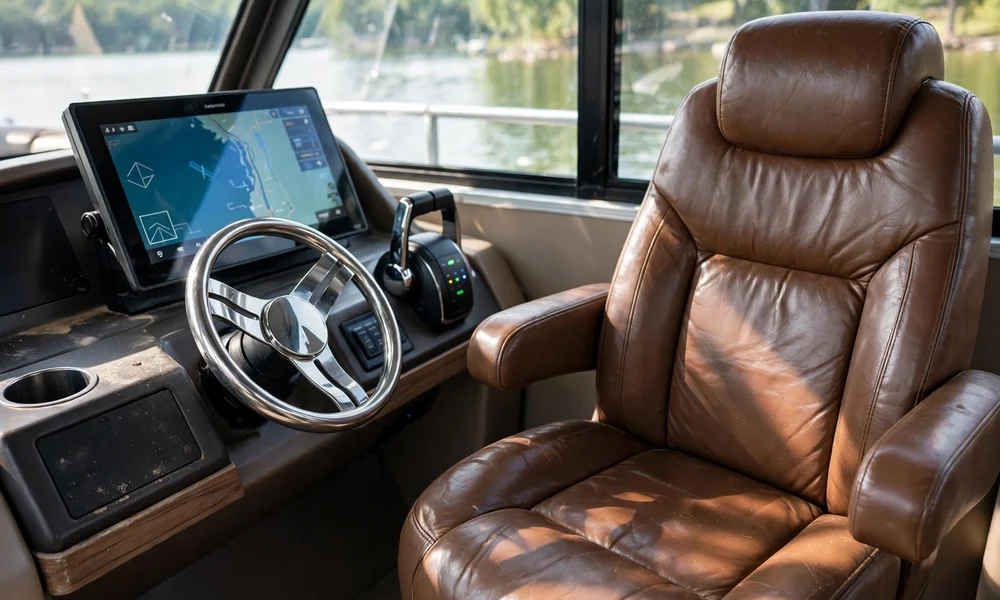
The furniture is what turns a pontoon from a platform into a lounge, and luxury builders treat it like interior design. The bow gets wraparound loungers with thick foam and marine vinyl that resists sun and mildew. The helm gets a high-back captain’s chair with armrests and a footrest. The stern often carries a sun pad, a changing room, or a wet bar with a sink and a cooler. The vinyl is stitched and sealed so water cannot reach the foam.
Step 5: Electronics and comfort systems
The helm of a luxury pontoon carries a touchscreen display for navigation, engine data, and the stereo, plus a digital throttle that replaces the old cable linkage. Speakers are set into the seat bases and the helm, with a subwoofer under a lounger and an amplifier hidden in a dry locker. LED lighting runs under the seats and along the deck edge. A bimini top or a powered canopy shades the cockpit, and many boats add a changing room and a shower at the stern.
Step 6: Testing on the water
Before delivery, the boat is tested on the water with a full load. The builder checks the top speed, the time to plane, the turning behaviour, and the way the boat handles a chop. A well-built tritoon should plane in a few seconds, hold its line in a turn without leaning hard, and ride level with passengers spread around the deck. Handover comes only when it planes cleanly and the top speed matches the spec sheet.
Reading the spec sheet
The numbers on a pontoon spec sheet look modest next to a yacht’s, but each one carries real weight. Length decides how many people the boat can carry and how it rides in a chop. Tube diameter sets the buoyancy: bigger tubes float higher and carry more weight. Horsepower and the number of tubes together set the top speed. Passenger capacity is a legal limit, not a comfort guide, and the fuel capacity sets how far the boat can run. Here is a typical twenty-five-foot luxury tritoon.
| Specification | Typical figure | What it means |
|---|---|---|
| Length overall | 25 feet (7.6 m) | Total length, tubes included |
| Beam | 8 ft 6 in (2.6 m) | Width; deck space, stability |
| Tubes | Three, 25 in diameter | Tritoon; buoyancy and speed |
| Deck length | 23 feet (7.0 m) | Usable deck, bow to stern |
| Dry weight | 3,400 lb (1,540 kg) | Weight before fuel, gear |
| Engine | 300 hp outboard | Single engine, transom mount |
| Top speed | 48 mph (42 knots) | Maximum, light load, calm water |
| Cruise speed | 28 mph (24 knots) | Comfortable fast cruising |
| Fuel capacity | 52 gal (197 L) | Range with cruise speed |
| Passenger capacity | 12 people | Legal limit, not comfort guide |
| Livewell | Optional, 15 gal | Fishing option, not standard |
| Draft | 14 inches (0.36 m) | Shallow; beach-friendly |
What it costs
A new luxury pontoon in the twenty-three to twenty-seven-foot range typically costs an estimated $80,000 to $180,000, depending on the tubes, the engine, and the furniture package. A top-spec tritoon with a 400-horsepower outboard, a full electronics suite, and premium upholstery can pass an estimated $200,000. The engine alone is a large share of the price: a 300-horsepower outboard costs an estimated $25,000 to $35,000. Running costs are modest next to a yacht’s, with fuel, storage, and servicing typically adding up to an estimated $3,000 to $6,000 a year. All prices here are estimates.
A rare fact
The third tube on a tritoon is not simply a spare. On many luxury models the centre tube is larger than the two outer tubes and carries its own sealed fuel tank, which lowers the centre of gravity and frees up deck space. It also changes the turning: a twin-tube boat leans outward in a hard turn, while a tritoon leans inward like a normal hull, because the centre tube acts as a keel. That single difference is why tritoons took over the luxury end of the market.
The Takeaway
A luxury pontoon’s spec sheet rewards a careful read. The tube count and diameter decide buoyancy and speed, the deck construction decides whether the boat feels solid or drum-like, and the engine decides whether it planes quickly or labours. Read the numbers that way and the sheet will tell you which pontoon is a floating lounge and which one is a genuine performance boat. For the houseboat side of the family, read how a luxury houseboat is made, and for the sailing equivalent, how a luxury catamaran is made shows how twin hulls work at a larger scale, while electric boat specs explained decodes the numbers on the electric boats now sharing the same lakes.


