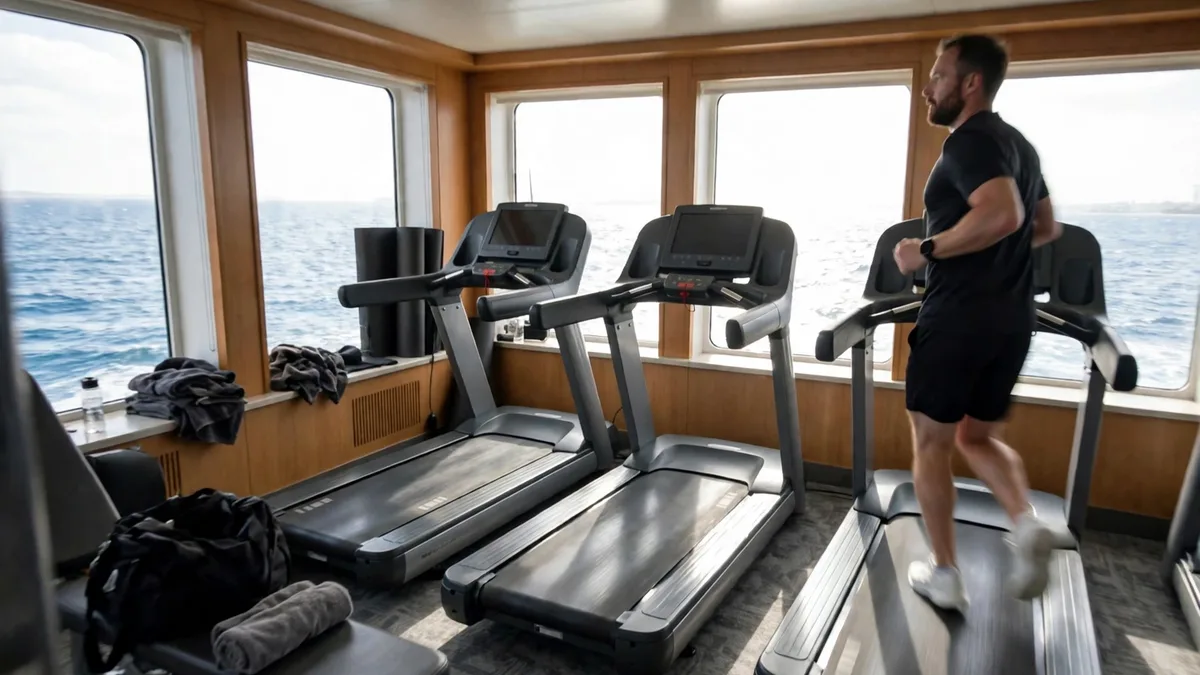
High above the waterline, on a deck where the horizon stretches in every direction, a passenger runs on a treadmill facing a wall of glass. The sea slides past below, the ship barely moves, and the gym feels more like a spa than a ship’s compartment. It is a long way from the cramped fitness rooms of smaller vessels. On a luxury ship, the gym is a selling point, and its specification sheet reads like a brochure for a land-based health club.
A luxury ship gym is a large fitness space on a cruise ship or private vessel, built for dozens of passengers to train at once while the ship is under way. It needs room, light, fresh air and stable footing, all of which a moving ship must work hard to provide. The specification sheet lists the figures that make that possible. This guide explains what each number means, and what it tells you about the ship behind it.
The Spec Sheet at a Glance
| Specification | Typical Luxury Ship Gym | What It Means |
|---|---|---|
| Floor area | 150–300 square metres | Room for 20–40 people at once |
| Ceiling height | 2.7–3.2 metres | Airy feel, room for tall kit |
| Exercise machines | 25–40 pieces | Treadmills, bikes, weights, studio |
| Window area | 30–50 square metres | Sea views while training |
| Air changes | 6–10 per hour | Fresh air for a busy room |
| Power draw | 20–40 kW | Electricity for machines and cooling |
| Floor loading | 400 kg per square metre | Weight the deck must carry |
| Class capacity | 15–25 people | Size of a group fitness class |
These are typical figures for large luxury ships, not rules. A small private yacht may have a gym the size of a cabin. Read the numbers against the size of the ship and the number of people aboard.
Space and Views: The Gym as a Destination
Space is the first thing the sheet boasts about, because a luxury ship gym is big. One hundred and fifty to three hundred square metres is the size of a small house, and it holds twenty to forty people training at once without crowding. The ceiling runs two point seven to three point two metres high. But the number that really sells the room is the window area: thirty to fifty square metres of glass, usually along one whole side of the ship, so runners face the sea instead of a wall. Designers put the gym high in the ship, near the sundeck, where the views are best and the motion is gentle. The room is split into zones, with cardio machines by the windows, free weights in the middle, and a studio corner for classes. The sundeck above it is built to the same generous standard, as our guide to how a luxury ship sundeck is made explains.
Equipment: A Full Health Club at Sea
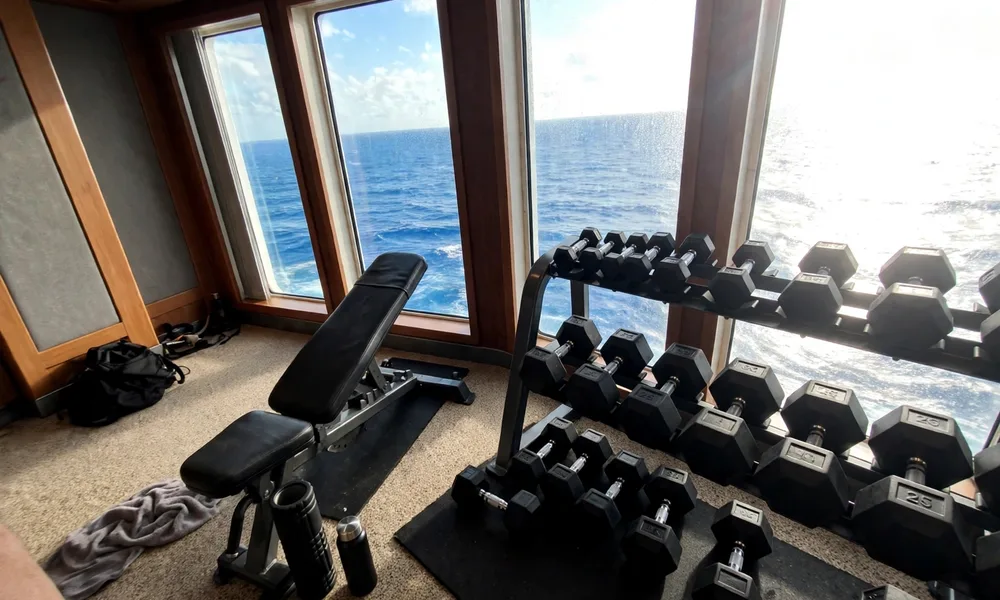
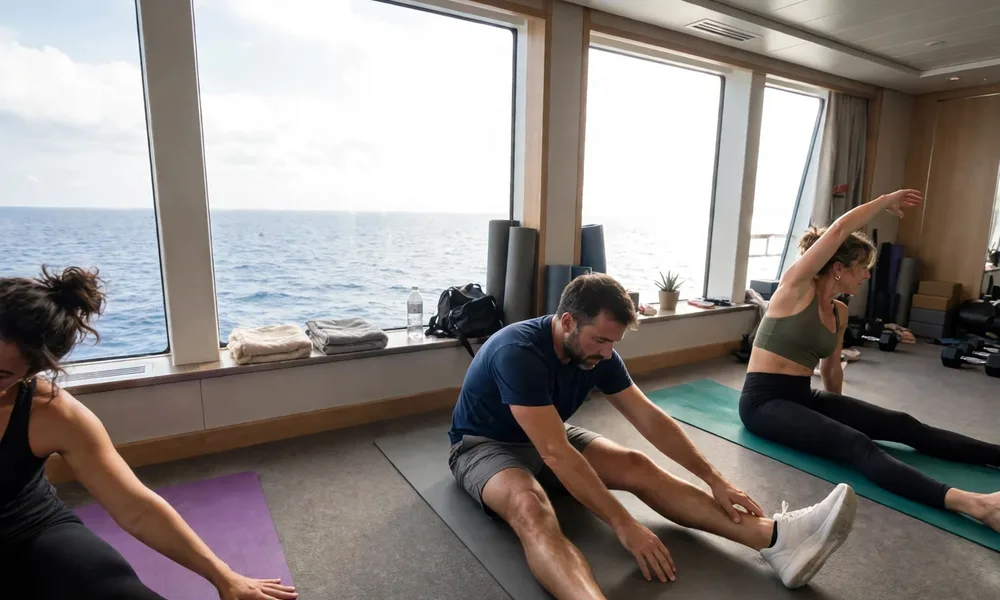
The equipment list on a ship gym sheet looks like a land health club’s inventory. Twenty-five to forty pieces cover every kind of training: rows of treadmills and bikes for cardio, cable machines and racks for strength, and a studio space for yoga, pilates and spin classes that take fifteen to twenty-five people at a time. Treadmills are the hardest machines to run at sea, because they draw power and shake the deck, so they sit on rubber mounts and thick floating floors that soak up vibration. Free weights are stored in racks bolted to the deck, and the heaviest dumbbells are kept low, where they cannot roll far if the ship meets a swell. The machines are commercial grade, built for hundreds of hours of use a month, and they are chosen in standard sizes so a broken treadmill can be swapped in any port.
Air and Climate: Fresh Air for a Crowded Room
Air matters more on a ship gym than anywhere else on board except the galley, because forty people exercising at once fill a room with heat and humidity in minutes. The sheet lists six to ten air changes per hour, which means the whole volume of the room is replaced that many times, pulling in sea air that is filtered, cooled and dried before it reaches the gym. The room is kept a few degrees cooler than the cabins, since a training crowd generates real heat, and the cooling plant for the gym is one of the largest on the ship. Humidity control is just as important: damp air fogs the big windows, rusts the machines and makes the floor slippery. The galley faces the same battle with heat and steam on a bigger scale, and our luxury ship galley specs guide shows how the ship feeds hundreds of people from a room not much larger.
Power and Stability: Keeping the Floor Still
A ship gym draws twenty to forty kilowatts, most of it for air conditioning and the treadmills, which is a small slice of a big ship’s generating capacity but more than a whole house uses. The machines run on the ship’s main supply, with no batteries to worry about, which is one luxury a ship gym has over a submarine’s. Stability is the other hidden number. A ship rolls, and a rolling gym is unusable, so the gym sits near the ship’s centreline and low enough that the motion is gentle, while the ship’s stabiliser fins do the heavy work outside the hull. The fins are wide wings that swing against the waves and cut the roll dramatically, and on a calm day passengers barely feel the ship move at all. The engine room that powers all of this is a marvel in its own right, and why a luxury ship engine room is so expensive explains where that money goes.
Price: What a Ship Gym Costs
A luxury ship gym typically costs between one and three million dollars to fit out, depending on the ship and the equipment. The machines themselves account for a large share, since commercial treadmills and strength stations are expensive even on land, and marine versions cost more again. The rest goes on the room itself: the glass, the floating floor, the ventilation plant and the studio finishes. Design time is significant too, because the gym must be drawn into the ship’s plans years before launch, and moving it later means rebuilding a whole deck. Against the price of the ship, which runs into hundreds of millions, the gym is a modest line, but it is the line passengers photograph and remember.
A Rare Fact Worth Knowing
Here is a detail few spec sheets mention. On some luxury ships, the gym floor is fitted with sensors that feed the ship’s motion system, because a room full of people moving in step during a class can set up a rhythm the hull can feel. It is a small reminder that on a ship, even exercise is part of the vessel’s engineering, and the gym’s specification is really a specification for keeping a moving building comfortable.
Read the sheet slowly, and the ship gym stops looking like a hotel room that happens to float. Space is measured in hundreds of square metres, equipment is counted in dozens, air is changed by the hour, and power is drawn by the kilowatt. Those numbers are the reason the room works at sea.