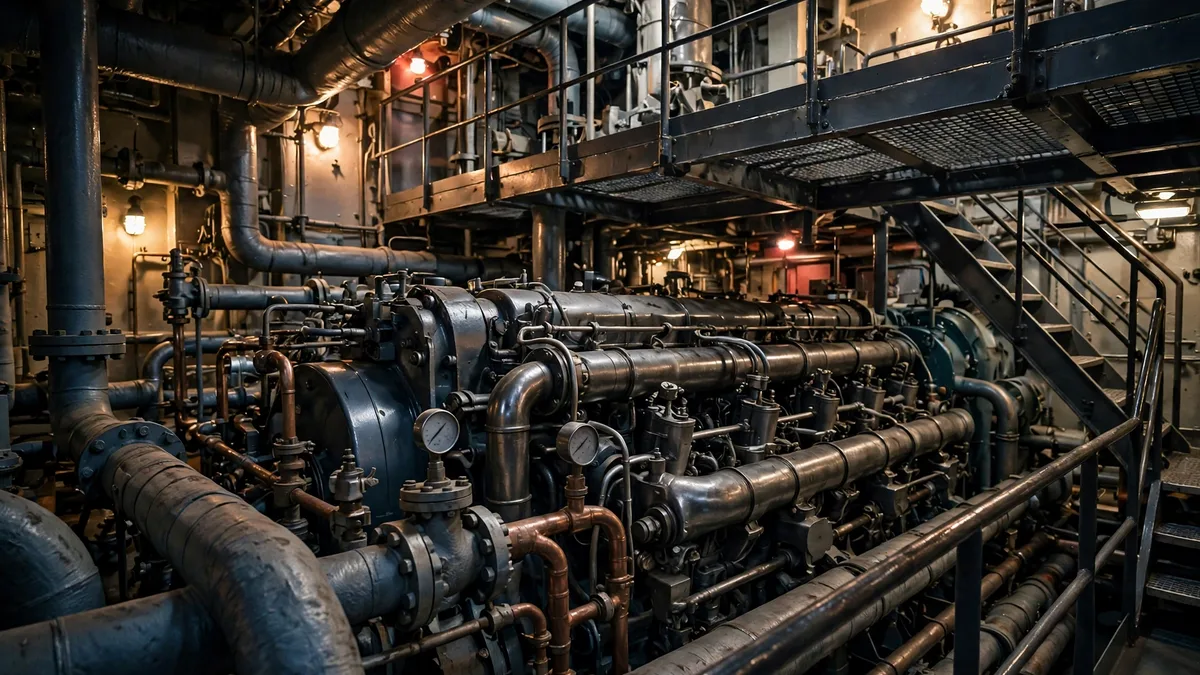
Five decks below the ballroom, the air is warm, the floor hums underfoot, and a machine the size of a house is turning, hour after hour, without stopping. Guests upstairs hear nothing, feel nothing, and never think about it, which is exactly the point. The engine room is the most expensive room on a luxury ship to build, and the bill is not for one engine. It is for a whole power station, built to run for decades, in salt air, with no room for failure.
A luxury ship engine room holds the main engines, the generators, the fuel systems, the cooling plant and the controls that keep a floating city moving and lit. It costs a fortune because every part of it is oversized, duplicated, custom-built and certified, and because the work of installing it happens inside a steel hull where nothing is easy to reach. These are the cost drivers, one by one.
Why It Costs So Much
The first thing to understand is scale. A large luxury ship needs 40,000 to 60,000 kilowatts of power, the draw of a small town, and the engines that make it are each the size of a house. Buying them is only the start: they must be lowered into the hull before the decks above are built, aligned to a fraction of a millimetre, and bolted to foundations that absorb their vibration. If an engine needs replacing later, the ship must be cut open. That permanence is priced into every decision.
Reason 1: The machinery itself is enormous
The main engines dominate the bill. A set of four medium-speed diesel or dual-fuel engines for a large luxury ship costs in the tens of millions of dollars, and that figure covers only the engines themselves, not the gearboxes, shafts, propellers and thrusters they drive. Each engine weighs hundreds of tonnes and is built to order, with pistons the size of dustbins and crankshafts longer than a bus. The generators add more: a ship needs several, each able to carry the whole hotel load alone, so that losing one never darkens a cabin. The machinery is bought once and expected to run for thirty years, so the builders pay for quality that a land power station would spread across a far bigger site.
Reason 2: Everything is duplicated
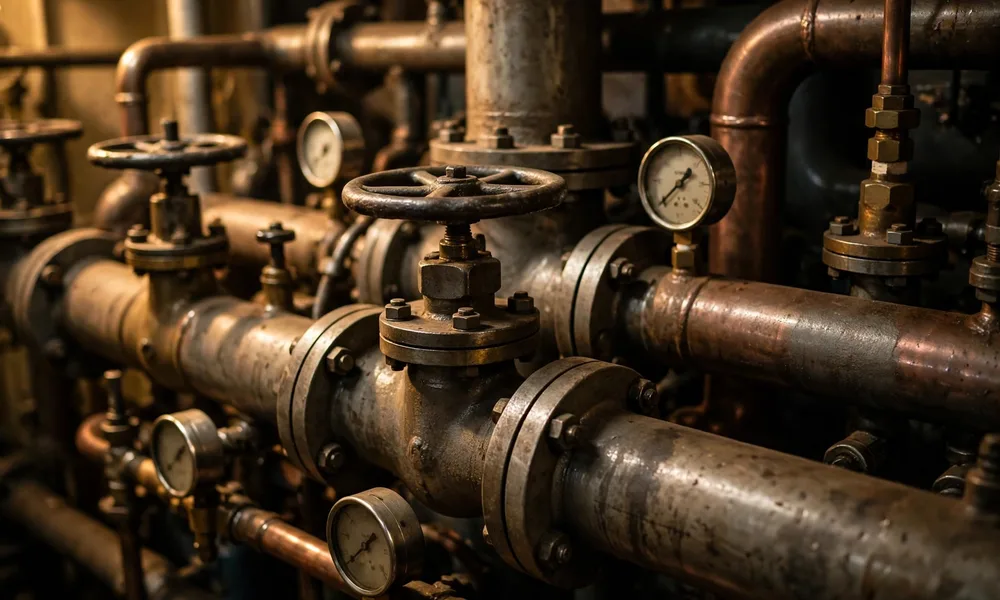
A ship at sea cannot call a repair van, so the engine room is built with redundancy in mind, and redundancy doubles the cost of almost everything. There are two fuel systems, two cooling systems, two sets of pumps and two routes for every cable, so that a single failure never stops the ship. The engines themselves are split into separate compartments, so a fire in one cannot take out the other. Classification rules demand it: the ship must be able to limp home on half its power, and to prove it in trials before it carries a single guest. That safety margin is invisible to passengers, but it is one of the largest lines on the bill, and it is the reason the room feels so crowded with pipes.
Reason 3: Custom engineering in a steel box
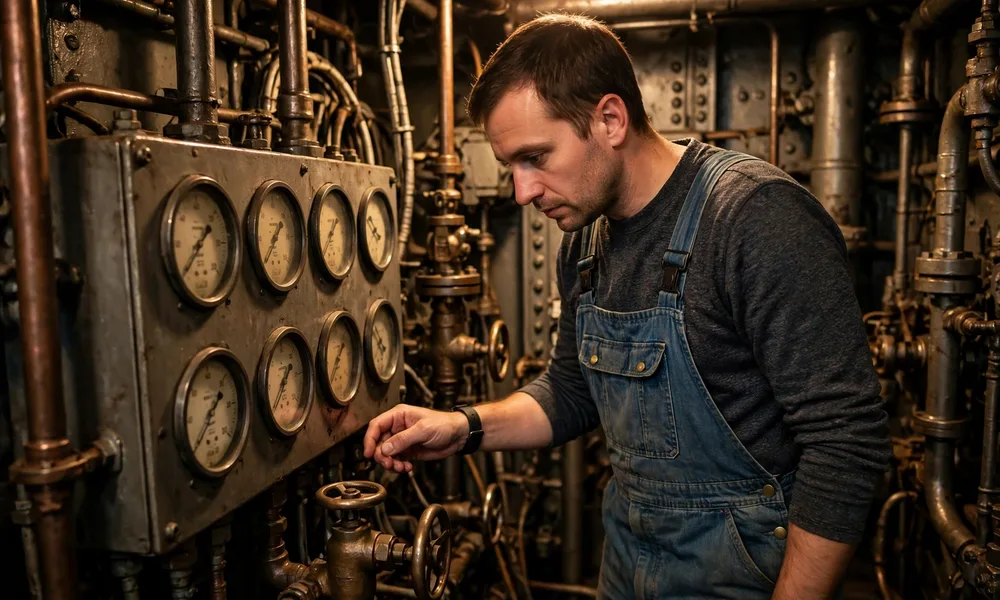
Nothing in an engine room is off the shelf. Every pipe run is bent to fit the curve of the hull, every cable tray is routed around a bulkhead, and every pump sits on a foundation designed for that one ship. The engineering hours alone run into the hundreds of thousands, with naval architects, vibration specialists and fire engineers all signing off on the same cramped space. The way the room actually works, hour by hour, is what beneath the ballroom, the ship engine room at work describes, and every hour it runs is the result of that custom work.
Reason 4: Fireproofing, soundproofing and safety
An engine room is a box full of fuel, heat and moving metal, so safety engineering is a major cost. The room is lined with fire-resistant insulation, fitted with gas and foam suppression systems, and divided by steel doors that close automatically. The exhausts run through insulated trunking to the funnel, and the fuel tanks sit inside double walls, so a leak is caught before it reaches the sea. Soundproofing is nearly as expensive: the engines sit on spring mounts, the room is wrapped in acoustic panels, and the decks above are floated on rubber, so guests hear nothing. The numbers behind all of this are listed in the engine room numbers that move a luxury ship, from engine output to cooling capacity, and each one carries a price.
Reason 5: Labour, certification and testing
Installing an engine room is slow, skilled work, and the labour bill is a large share of the total. Fitters, welders, pipefitters and electricians work inside the hull for months, often in heat and noise, and every weld is inspected, every pipe pressure-tested and every cable checked. Then comes certification: a classification society surveys the room, witnesses the trials and signs the ship off, and its surveyors charge for every visit. Sea trials add more, with the ship run at full power for days while engineers measure vibration, temperature and fuel use. By the time the ship is handed over, the engine room has been tested more thoroughly than almost any other machine on earth.
Reason 6: A lifetime of running costs
The build cost is only the beginning. A large luxury ship burns tens of tonnes of fuel a day, and the engine room needs a crew of twenty or more engineers, plus spare parts, lubricants and regular overhauls. A major engine overhaul, with pistons and liners replaced, can cost millions and take the ship out of service for weeks. The same logic applies across the ship: a cabin refit is costly too, as why a luxury ship cabin is so expensive shows, but no cabin has to run non-stop for thirty years.
| Cost driver | What it means for the bill |
|---|---|
| Main engines and generators | Tens of millions, built to order, sized like houses |
| Redundancy | Duplicated fuel, cooling, pumps and cables throughout |
| Custom engineering | Hundreds of thousands of design hours, nothing off the shelf |
| Fire and sound safety | Insulation, suppression, spring mounts, acoustic panels |
| Labour and certification | Months of skilled fitting, surveys, sea trials |
| Running costs | Tens of tonnes of fuel a day, crew of twenty plus, overhauls |
As an indicative guide, the engine room package of a large luxury ship, engines, generators, systems and installation together, typically runs to $50 million to $150 million, depending on the size of the ship and the type of fuel it burns. That is a substantial share of the whole ship, and it explains why owners haggle over engine choice more than over any carpet or chandelier. A smaller luxury yacht engine room is a different scale, often $1 million to $5 million, but the same rules apply: duplicate what matters, certify everything, and never let the guests hear it.
Here is a rare fact worth knowing. The engines of a large cruise ship produce roughly as much power as a small town of 50,000 homes, yet the whole plant fits into a room the size of a village hall, and it runs for months without stopping. Engineers change the oil while the engines are running, using systems that let them service one part while the rest keeps turning, and the ship carries its own machine shop, so a broken part can be remade at sea.