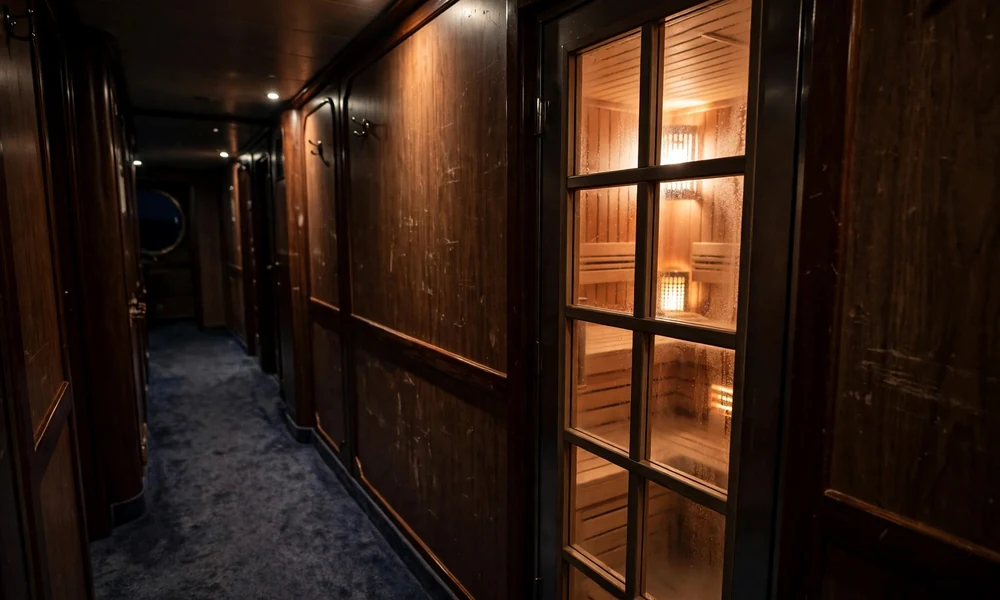
Down a quiet corridor on a cruise ship, behind a door that always feels warmer than the rest of the deck, there is a small room made of pale timber that smells of cedar and steam. Guests come in from the pool with wet hair and tired legs, sit on the warm benches, and let the heat do its slow work while the ship moves under them. It is the smallest room on the ship, and one of the most used.
A luxury ship sauna is a timber-lined heated room on a large ship, built for a dozen or more guests at a time, with an electric heater, tiered benches, and a steam system that runs all day. The room is insulated, ventilated, and built to survive salt air and a rolling deck. This is a plain translation of the numbers that matter.

1. Room size and seating, and how many guests one sauna holds
The room size is the first number on the sheet. On a luxury ship the sauna is usually 12 to 30 square metres, with tiered benches seating 10 to 20 guests at a time. The benches run in two or three levels, so the guests who want the hottest air sit high and the ones who want it gentler sit low, and the room can serve a whole spa session at once.
The figure to read next to the floor area is the sessions per day, usually 8 to 12, with the room open from early morning until late evening. A sauna that seats fourteen, run ten times, serves more than a hundred guests a day.
2. Temperature and heater power, and how hot the room really gets
The temperature is the number guests ask about first. A luxury ship sauna usually runs at 70 to 90 degrees Celsius, with an electric heater of 12 to 24 kilowatts driving the room up to temperature. The heater is sized for the volume of the room, and the thermostat holds the heat steady even when the door opens and a dozen guests come in from the pool.
The number to check next to the temperature is the heat-up time, usually 45 to 60 minutes from cold. The heater is the heart of the room, and its power decides whether the benches feel warm or merely lukewarm.
3. Timber and insulation, and why the wood matters
The timber is the part guests touch. A luxury ship sauna is usually lined in cedar or aspen, in boards 12 to 15 millimetres thick, chosen because the wood stays cool enough to sit on even when the air is hot. The benches are built from the same timber, with gaps between the slats so the hot air can move through and the wood can dry between sessions.
The figure to read next to the timber is the insulation, usually 50 to 100 millimetres of mineral wool behind the lining, with a vapour barrier that keeps the steam out of the ship’s structure. Without it, the heat would leak into the deck and the moisture would rot the steel. A smaller version of the same idea is described in the luxury yacht sauna spec sheet, explained in plain numbers.
4. Steam and humidity, and the ladle of water on the stones
A dry sauna is only half the story. A luxury ship sauna usually has a stone heater holding 20 to 40 kilograms of olivine stones, and guests ladle water over them to make a burst of steam. The humidity rises from around 10 percent to 30 or 40 percent for a few minutes, the air feels hotter on the skin, and then the ventilation clears it again.
The number to check next to the stones is the water use, usually 5 to 10 litres per session, ladled a cup at a time. The stones are replaced every year or two, because repeated heating and cooling cracks them, and a cracked stone holds less heat. The way a sauna is used in daily service is covered in how a luxury yacht sauna works.
5. Ventilation and drainage, and the air above the benches
A ship sauna needs serious ventilation. The room usually moves 200 to 400 cubic metres of air per hour, with fresh air drawn in low near the heater and stale air pulled out high above the benches. Guests should feel the heat on their skin, not a stuffy room, and the air must be fresh even when the room is full.
The figure to read next to the airflow is the drainage, because a sauna produces litres of water every day from steam, sweat, and the showers next door. The floor is tiled and sloped to a drain, with a raised wooden duckboard underfoot, and the crew mops and dries the room after every session. The cost of building a room like this is covered in why a luxury yacht sauna is so expensive.

6. Marine build, and a hot room on a rolling ship
The marine part of the specification is the fixing. The benches, the heater, and the lining are all bolted to a steel frame tied into the deck, with a lip on the heater so the stones stay put when the ship rolls. Nothing in a ship sauna is loose, because a loose bench on a rolling ship is an accident waiting for a wave.
The number to check next to the fixings is the fire safety, because a sauna is the hottest room on the ship. The heater has a cut-out that trips if the temperature passes 110 degrees Celsius, the timber is treated to resist scorching, and the crew checks the heater and the stones before the first session of each day.
The Specifications at a Glance
Here are the numbers that matter most on a luxury ship sauna.
| Specification | Typical Luxury Range |
|---|---|
| Room size | 12 to 30 square metres |
| Seating | 10 to 20 guests, tiered benches |
| Temperature | 70 to 90 degrees Celsius |
| Heater power | 12 to 24 kilowatts, electric |
| Heat-up time | 45 to 60 minutes from cold |
| Stones | 20 to 40 kilograms of olivine stones |
| Ventilation | 200 to 400 cubic metres per hour |
| Timber lining | Cedar or aspen, 12 to 15 millimetres |
What Does a Luxury Ship Sauna Cost?
A luxury ship sauna is estimated to cost roughly $150,000 to $450,000 installed, depending on size and spa fit-out. A single sauna room with heater, benches, and ventilation is estimated at roughly $150,000 to $250,000, while a full spa suite with a sauna, steam room, and treatment rooms is estimated at roughly $800,000 to $1,500,000. A replacement heater alone is estimated at roughly $8,000 to $20,000.
A Rare Fact
A ship sauna is heated for the whole voyage, but it is only truly hot for a few hours a day. The crew lets the room cool overnight so the timber can dry, and on the first morning of a new cruise the benches are still faintly warm from the day before, like a room that remembers the heat.
Once you know which numbers do the work, the sheet makes sense. Room size decides how many guests one sauna serves, heater power decides how hot the benches feel, and the timber decides whether the hottest room on the ship is also the most comfortable.