A seaplane that runs on batteries sounds simple until you try to build one. The water is not a runway. It moves, it splashes, it corrodes, and it grabs at the floats with every take-off. Add a battery pack that must be light enough to fly and strong enough to survive a hard landing on a wave, and the price starts to make sense before the cabin is even fitted.
A luxury electric seaplane is a small aircraft that takes off and lands on water, powered entirely by batteries and electric motors, with floats or a hull built for the sea. It costs millions not because of the leather seats, but because of the engineering that keeps it safe on water and in the air. This is why the price is what it is.
1. The battery, and the weight that fights every take-off
The battery is the biggest single cost in an electric seaplane. A luxury version usually carries 150 to 350 kilowatt-hours of aviation-grade cells, and the pack alone can cost hundreds of thousands of dollars. The cells must be light, powerful, and sealed against salt water, and every kilogram of battery is a kilogram that cannot be a passenger.
The cost grows because the pack is not a box of car batteries. It is built in sealed modules with cooling channels, crash protection, and a management system that watches every cell, and it is certified to aviation standards that a road vehicle never meets.
2. The floats and the hull, and the engineering of landing on water
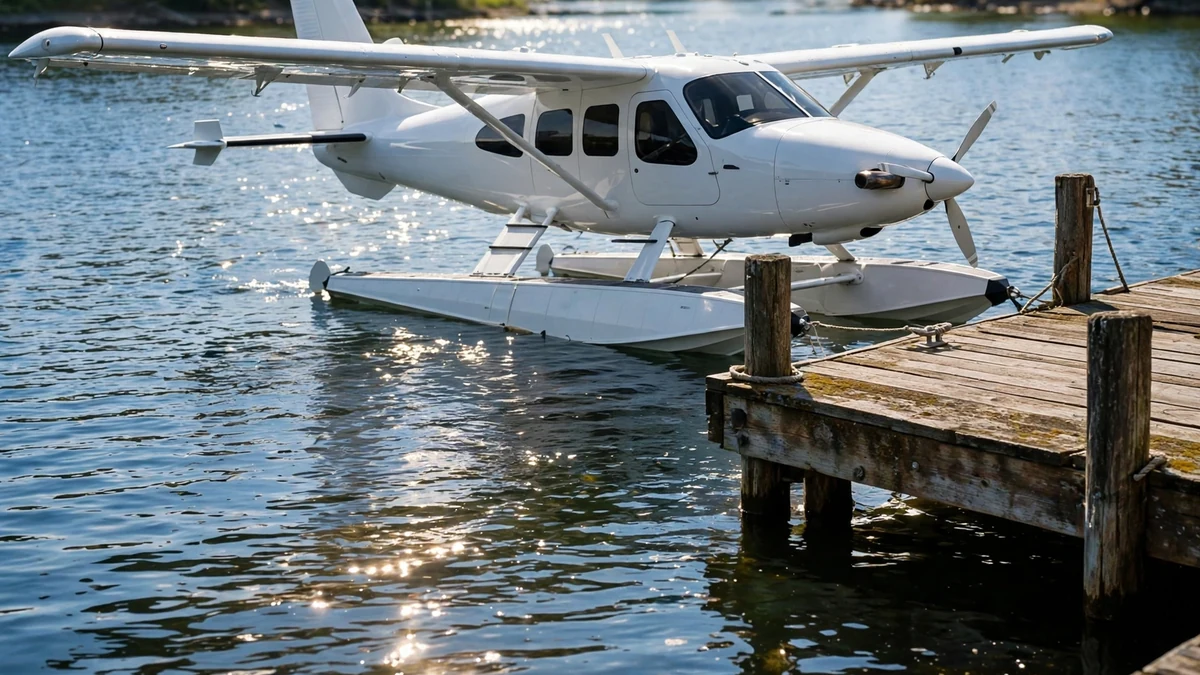
A seaplane lands on a surface that never stays still. The floats or the hull must be shaped to cut through waves, resist corrosion from salt water, and survive thousands of hard impacts, and they are built from marine-grade aluminium or carbon fibre with sealed compartments inside. The shape is tested in tanks and on the water, and a bad shape means a rough landing or a hull that leaks.
The cost grows because the water gear is a boat as well as an aircraft part. The floats need steps, spray rails, and water rudders, the hull needs bilge pumps and corrosion protection, and the whole assembly is inspected after every few dozen landings. The numbers on a conventional version are in the luxury electric seaplane spec sheet, explained in plain numbers.
3. Certification, and the paperwork that costs as much as the metal
Certification is the quiet cost that buyers never see. An electric seaplane must be approved for flight and for water operations, and the battery, the motors, the floats, and the flight controls are each tested and documented to aviation standards. The testing takes years, and the paperwork is done by engineers whose time is charged by the hour.
The cost grows because an electric seaplane is a new kind of aircraft, and the regulators have no old file to copy from. Every test is a first test, every failure means a redesign, and the cost of the programme is spread across a small number of aircraft. That is why the first few seaplanes cost far more than the ones that follow them.
4. Small production runs, and the price of building by hand
A luxury electric seaplane is not built on a production line. It is built in small batches, often fewer than a dozen a year, by a small team of specialists who fit the cabin, wire the battery, and test the aircraft by hand. There is no economy of scale, and every part is ordered in small numbers at a high price.
The cost grows because the cabin is fitted like a yacht, with leather seats, panoramic windows, and sound insulation, and the work is done by craftsmen rather than machines. What an electric seaplane actually is, and how it differs from a conventional one, is explained in what an electric seaplane is.
5. Motors, maintenance, and the sea air that eats everything
The electric motors are quiet and simple, but the sea is not kind to them. Salt air corrodes connectors, seals, and bearings, so the motors and the battery are sealed, the wiring is marine-grade, and the aircraft is washed down after every flight on salt water.
The cost grows because the aircraft must be kept in a hangar near the water, inspected more often than a land plane, and fitted with parts that are made to survive the sea. A similar kind of new electric flying, with the same small-batch economics, is described in why a luxury eVTOL aircraft is so expensive.
How It Works
Here is how a luxury electric seaplane gets from the dock to the sky, in seven steps.
- The pilot checks the battery charge, the water conditions, and the floats, and the passengers board from the dock while the aircraft is tied up.
- The motors start silently and the aircraft taxis on the water, steered by water rudders, out to open water clear of boats and swimmers.
- The pilot lines up into the wind, opens the throttles, and the floats rise onto their steps as the speed builds.
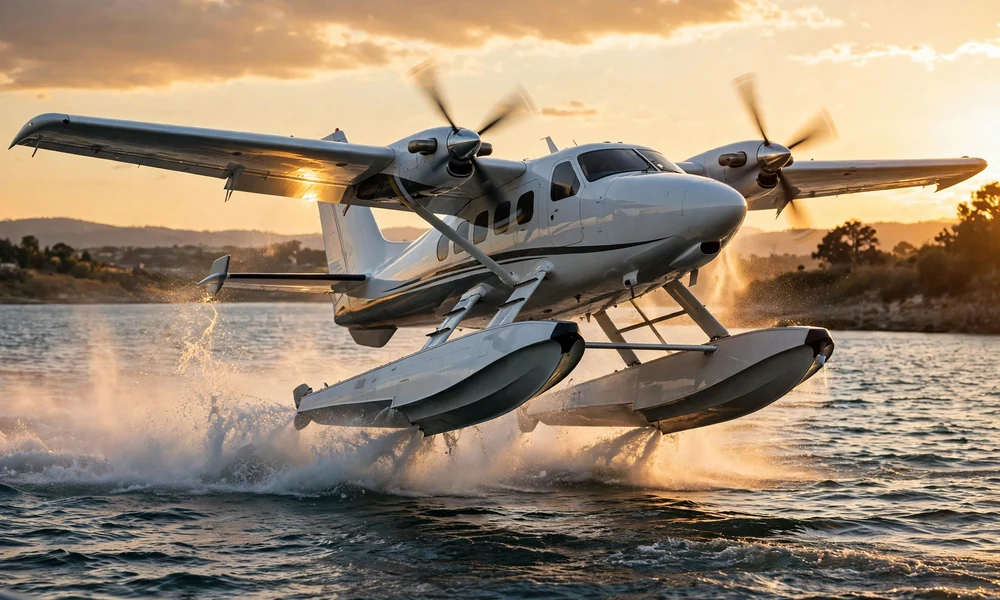
- The wings take the weight, the floats leave the water, and the aircraft climbs away, leaving a line of spray behind it.
- In cruise the motors run quietly, the battery drains slowly, and the pilot watches the charge the way a sailor watches the fuel gauge.
- For landing the pilot descends to the water, flares gently, and the floats touch down first, settling into the water as the speed falls away.
- The aircraft taxis back to the dock, the motors are shut down, and the crew washes the salt off before the next flight.
The Specifications at a Glance
Here are the numbers that sit behind the price of a luxury electric seaplane.
| Specification | Typical Luxury Range |
|---|---|
| Battery capacity | 150 to 350 kilowatt-hours |
| Range | 150 to 300 kilometres, with reserve |
| Cruise speed | 180 to 250 kilometres per hour |
| Passengers | 4 to 8, plus pilot |
| Motor power | 300 to 600 kilowatts total |
| Take-off run on water | 300 to 600 metres |
| Charging time | 45 to 90 minutes, fast charge |
| Hull material | Marine-grade aluminium or carbon fibre |

What Does a Luxury Electric Seaplane Cost?
A luxury electric seaplane is estimated to cost roughly $2.5 million to $6 million, depending on size and cabin fit-out. A base aircraft with a standard cabin is estimated at roughly $2.5 million to $4 million, while a fully fitted luxury version with a bespoke interior and premium avionics is estimated at roughly $4.5 million to $6 million. A replacement battery pack is estimated at roughly $250,000 to $600,000.
A Rare Fact
A seaplane pilot reads the water the way a land pilot reads a runway. Before every take-off the pilot looks for the wind on the surface, the colour of the water, and the line of the waves, because a smooth stretch of water is a good runway and a choppy one is a bad one, and no two mornings ever offer the same strip.
Once you know where the money goes, the price makes sense. The battery is a certified aviation pack, the floats are a boat built to fly, and the whole aircraft is built by hand in tiny numbers, so the millions are engineering first and luxury second.