A bed used to be the simplest thing in a house. It was a frame, a mattress and a pile of pillows, and the only decision was whether it felt too soft or too hard. A luxury smart bed changes that completely, because the mattress itself has become a machine. It watches how you sleep, warms one side and cools the other, lifts your head when you snore, and then shows you a report in the morning about how the night went. The bed is still a bed, but the numbers behind it read more like the specification sheet of a car.
The strange part is that none of those numbers mean much on their own. A firmness of 6, a temperature range of 18 to 30 degrees, a sleep score of 82: each one sounds precise, and each one is meaningless until you know what the bed is measuring and what it does with the answer.
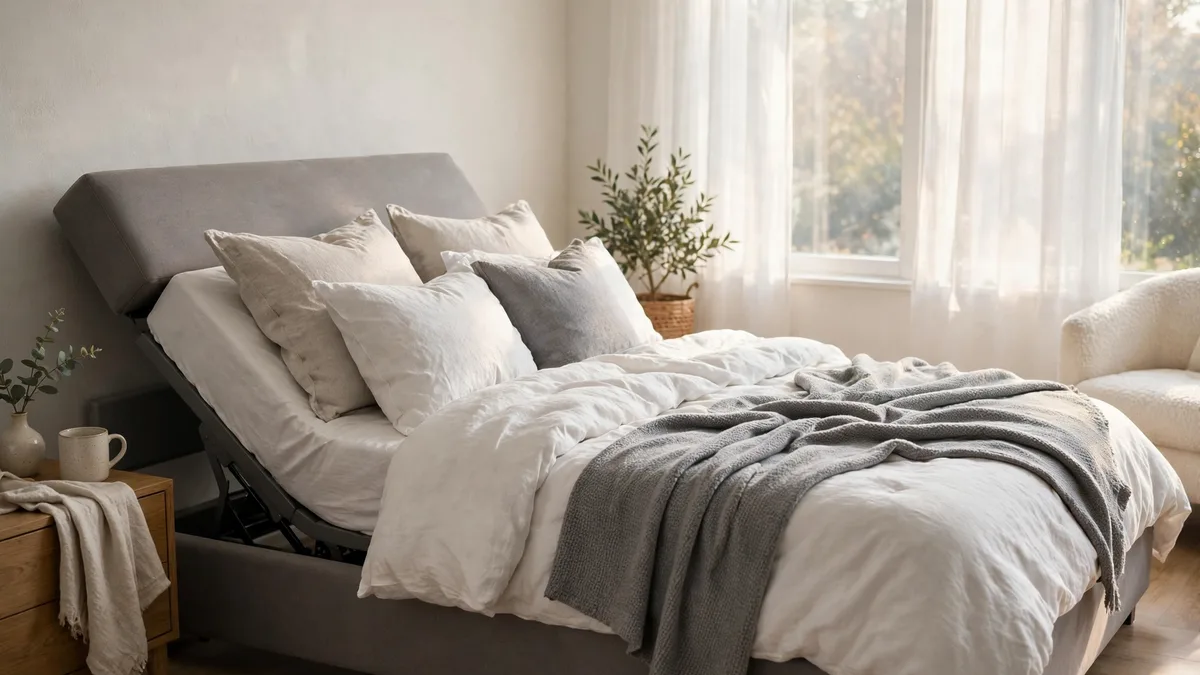
Luxury Smart Bed Specs at a Glance
Before the detail, here are the headline numbers for a typical luxury smart bed. A smaller bed will sit at the modest end of each range, with fewer sensors and a simpler base, while a top model pushes further, but the pattern of a mattress that measures, adjusts and reports stays the same.
| Specification | Typical figure | Why it matters |
|---|---|---|
| Mattress size | King, 76 by 80 inches | Room for two sleepers to move |
| Firmness range | 1 to 10, adjustable per side | Each side set to its own sleeper |
| Sleep tracking | Heart rate, breathing, movement | Watches sleep without a wearable |
| Temperature control | 18 to 30 degrees Celsius per side | One side cool, one side warm |
| Adjustable base | Head and feet up to 60 degrees | Reading and sleeping positions |
| Snore response | Gentle lift of the head | Eases snoring without waking you |
| Weight capacity | Up to 400 kilograms per bed | Holds two sleepers plus mattress |
| App and voice control | Phone app and voice assistant | Change settings without getting up |
Firmness: Two Sides, Two Numbers
Firmness is the first number people ask about, and on a luxury smart bed it is usually given on a scale of 1 to 10, where 1 is very soft and 10 is very firm. Most sleepers settle somewhere between 4 and 7, and the clever part is that the two sides of the bed can be set independently, so one sleeper can have a 5 while the other has a 7, and neither has to compromise.
The number is only a starting point, because firmness feels different depending on your weight and how you sleep. A side sleeper needs a softer surface so the shoulder and hip can sink in, while a back sleeper needs a firmer one so the spine stays straight, and a heavier sleeper will find the same setting feels softer than a lighter sleeper does.
Sleep Tracking: What the Sensors See
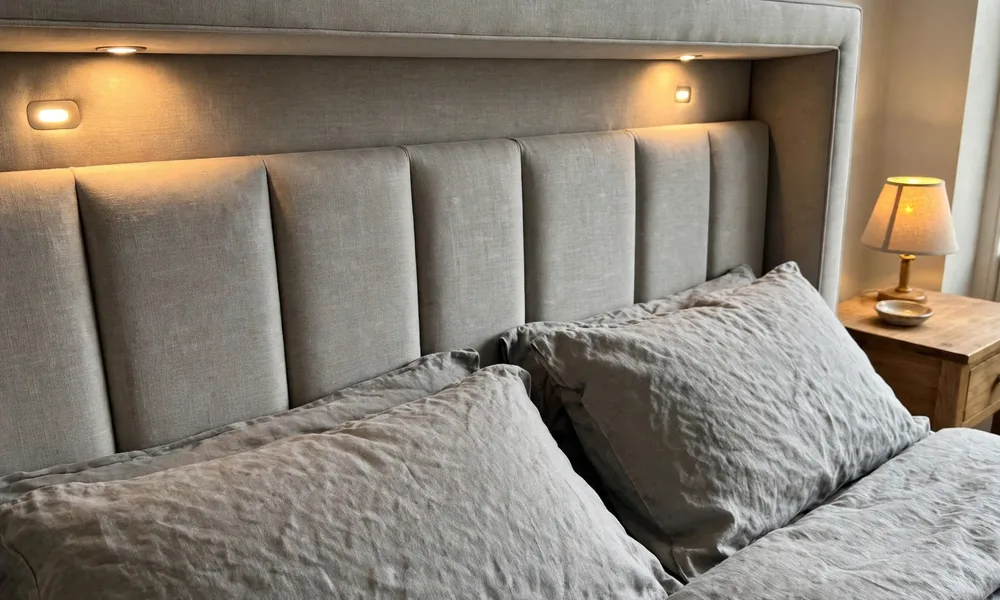
Sleep tracking is the part of the bed that feels most like magic, and it works without anything touching your skin. Thin sensors under the mattress measure the tiny movements of your breathing and the beat of your heart through the mattress, and from those two signals the bed works out when you fall asleep, how often you stir, and how much of the night you spend in deep sleep. It also notices snoring, restless legs and the times you get up, and it turns all of that into a sleep score in the morning, usually a number out of 100, with a short note about what helped or hurt.
The score is useful as a trend, not as a verdict on a single night. One bad night after a late dinner tells you very little, but three weeks of scores will show whether a cooler room, an earlier bedtime or a firmer setting actually helps, and that is the point of the whole system. If the score keeps falling on the nights you drink coffee late, the bed has told you something worth knowing, even if it cannot tell you why.
Temperature and the Adjustable Base
Temperature control is the specification that surprises people most, because a bed that can be warm on one side and cool on the other sounds like a trick, and it is the feature owners say they would miss most. Water or air is moved through thin channels in the mattress, warming one side to 30 degrees while the other stays at 18, and the bed can cool you down as you fall asleep and warm you gently before the alarm.
The adjustable base is the other half of the comfort story, and it is simpler than it sounds. The head of the bed can rise to about 60 degrees, which is enough to read or watch television in comfort, and the feet can rise too, which takes the pressure off tired legs. A gentle lift of the head is also what the bed uses when it hears snoring: it raises you a few degrees, the airway opens, and the snoring softens, all without waking either sleeper. It is a small movement, and it is the one the bed makes most often, night after night, without anyone ever noticing.
A Rare Fact About the Luxury Smart Bed
The smart bed has an unlikely ancestor. In the nineteenth century, wealthy households kept a warming pan, a brass pan filled with hot coals that a servant slid between the sheets to warm the bed before the master climbed in, and later came the hot water bottle, the electric blanket and the heated mattress pad, each one a step towards a bed that controls its own temperature. The first beds that tracked sleep were built for hospitals, where nurses needed to know whether a patient was breathing steadily through the night without waking them to check. The luxury smart bed is simply those two ideas joined together: the warming pan and the hospital monitor, shrunk into a mattress and given a phone app, so the bed warms you, watches you and reports back, all while you sleep.
What the Specs Mean for You
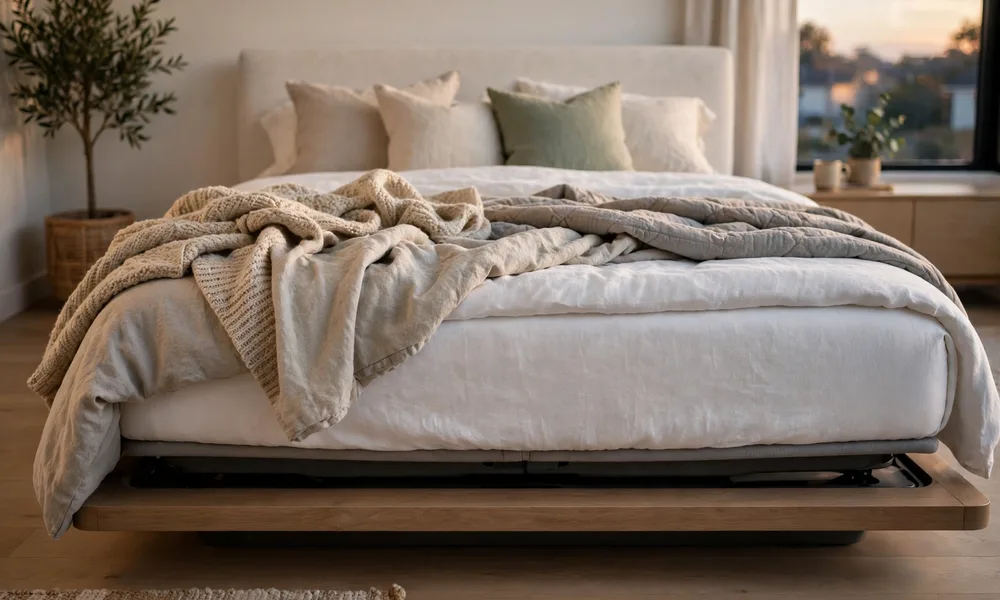
If you ever try a luxury smart bed, ignore the sleep score on the first night and pay attention to two things instead: whether you wake up warm or cool, and whether your back feels better than it did on your old mattress. Give the bed a week to learn you, because the first nights are guesses, and the settings it suggests after a week are worth more than the ones you picked in the shop. Try one side firmer and one side softer if you share the bed, and let the temperature drift down as you fall asleep, because that is the change most people feel first.
The smart bed is the most personal machine in a smart home, and its numbers make sense once you see what they are for: a mattress that adjusts to the person on it, night after night, instead of asking the person to adjust to the mattress. The same thinking runs through the rest of the house, from the way a smart mirror is made for the bathroom, to the way a smart mirror works each morning, and the way a smart thermostat works to keep the whole house at the right temperature. Read the figures, and the bed stops being a gadget and starts being a very patient piece of engineering.


