A dryer is the most unglamorous machine in a luxury home, and that is exactly why its specification sheet is worth reading. Nobody shows off a dryer the way they show off a kitchen or a cinema room, yet it runs more often than almost anything else in the house, and the difference between a cheap dryer and a luxury one shows up every single day: in clothes that last longer, in bills that stay lower, and in laundry that comes out dry instead of damp in the middle. The numbers explain how it does that, and they are simpler than they look.
The trick is that a luxury smart dryer does not dry by brute force. An ordinary dryer blasts hot air until a timer runs out, which is why shirts come out shrunken and towels come out stiff. A smart dryer measures the dampness inside the drum, adjusts the heat as the load dries, and stops the moment the clothes are done.
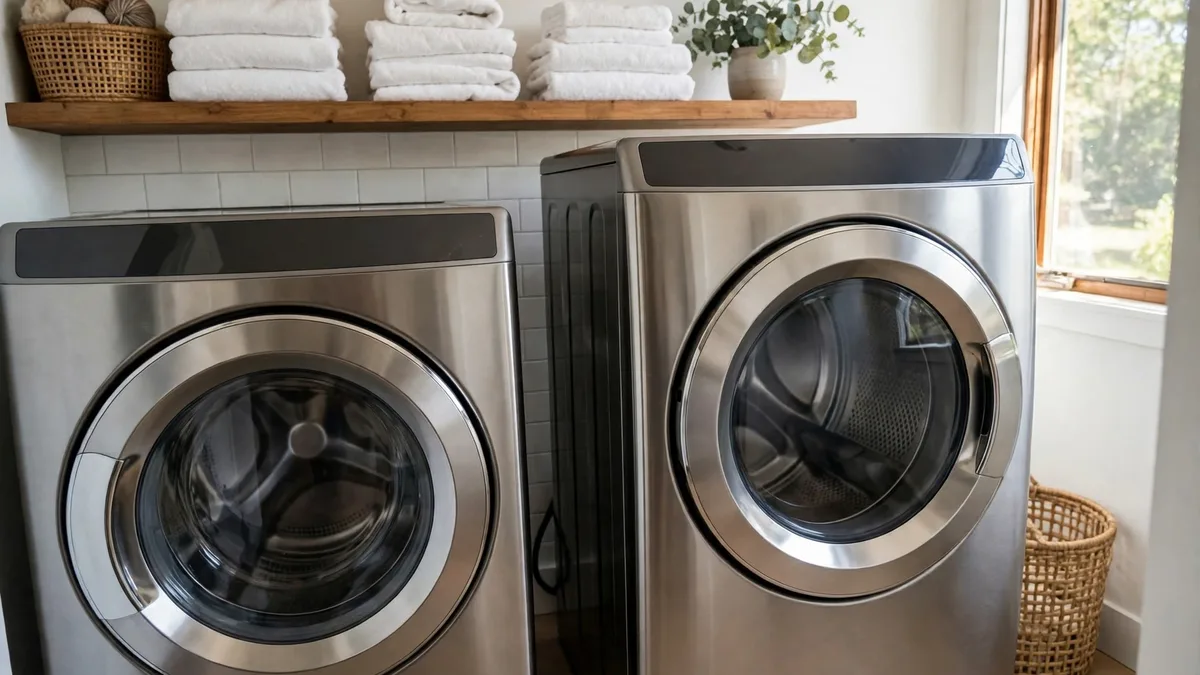
Luxury Smart Dryer Specs at a Glance
Before the detail, here are the headline numbers for a typical luxury smart dryer. A smaller model will sit at the modest end of each range, with a smaller drum and fewer programmes, while a top model pushes further, but the pattern of a big drum, gentle heat and sensors that know when to stop stays the same. The numbers below are for a full-size family machine.
| Specification | Typical figure | Why it matters |
|---|---|---|
| Drum capacity | 9 to 11 kilograms | A full family load in one go |
| Drying programmes | 12 to 16 cycles | A setting for delicates to bedding |
| Heat pump | Yes, low temperature drying | Dries gently and uses less power |
| Energy rating | Energy Star rated | Lower bills than a vented dryer |
| Noise level | 58 to 62 decibels | Quiet enough to talk over |
| Moisture sensors | 3 to 5 sensors | Stops when clothes are dry |
| Drying time | 40 to 90 minutes | Depends on load and fabric |
| Smart features | Phone alerts and remote start | Know when the load is done |
Capacity and Programmes: Size Changes Everything
Capacity is the first number that matters, and on a luxury smart dryer it is usually 9 to 11 kilograms, which is the weight of the dry laundry the drum can hold. That sounds like a lot until you try to dry a family load of towels and bedding, and then it makes sense: a drum that is too small packs the clothes tight, the hot air cannot reach the middle, and the load comes out damp in the centre and over-dried at the edges.
The programmes are the second half of the story, and a luxury dryer usually offers 12 to 16 of them, from a quick 20-minute refresh for a shirt to a long, gentle cycle for wool and silk. Each programme is a recipe: a temperature, a drum speed and a length of time, worked out for one kind of fabric, and the smart part is that the dryer adjusts the recipe as it goes, shortening the cycle when the load is light and lengthening it when the towels are thick.
The Heat Pump: Gentle Heat, Lower Bills
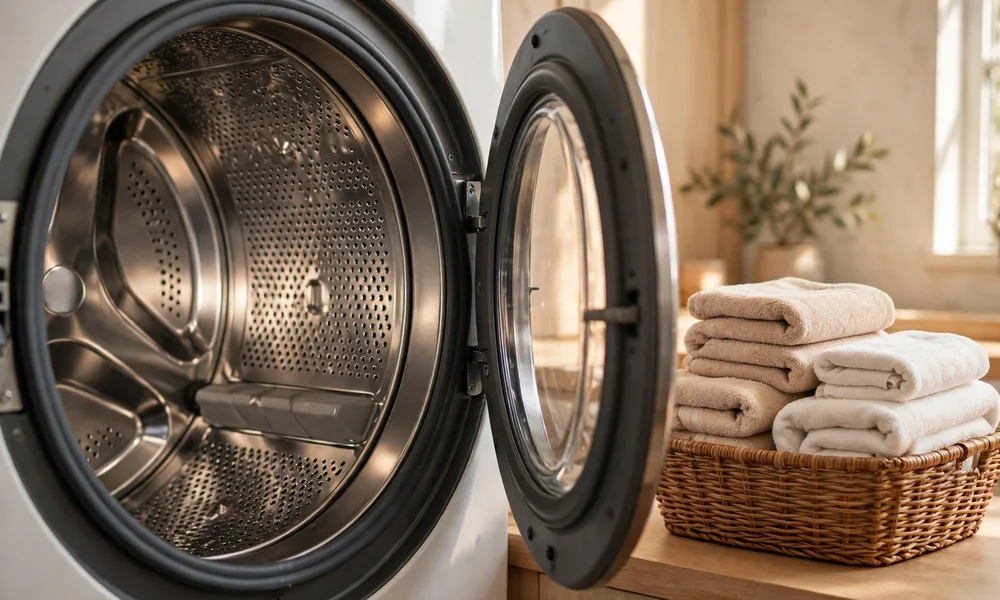
The heat pump is the specification that separates a luxury dryer from an ordinary one, and it is worth understanding, because it changes how the machine works. An ordinary dryer heats air with an element, blows it through the clothes once, and throws the hot, damp air outside, which wastes most of the energy. A heat pump dryer recycles the same air: it heats it, passes it through the clothes, cools it to pull the water out, and then heats it again, using the same heat over and over instead of making new heat every minute.
The result is drying at a much lower temperature, usually around 50 degrees instead of 70 or more, which is kinder to fabric and uses far less electricity. Clothes last longer because they are not baked, colours fade more slowly, and the electricity bill drops, sometimes by half compared with a vented dryer.
Sensors, Noise and the Phone in Your Pocket
The moisture sensors are the quiet heroes of the machine, and a luxury dryer usually has three to five of them, placed around the drum to measure how damp the clothes are from different angles. They are the reason the dryer can stop itself: when the sensors agree the load is dry, the cycle ends, and the clothes are not left tumbling for another twenty minutes, getting hotter and more creased. The sensors also catch the load that is dry on the outside and damp in the middle, because one sensor will still read wet while the others read dry, and the dryer keeps going until they agree.
Noise is the number people forget to check, and then notice every day. A luxury dryer runs at 58 to 62 decibels, which is about the level of a normal conversation, and it stays that quiet because the motor is mounted on rubber, the drum is balanced, and the cabinet is insulated.
A Rare Fact About the Luxury Smart Dryer
The dryer has a surprisingly recent history. For most of human history, laundry was dried on a line, and the first mechanical dryers, built in the late nineteenth century, were hand-cranked drums that blew warm air over the clothes and had to be turned by hand for an hour. The electric dryer did not reach ordinary homes until the 1950s, and even then it was a luxury, because it used so much electricity that many families kept the washing line for everything except winter. The heat pump dryer, which recycles its own heat, was first built for laundries that could not afford to waste energy, and only later shrank into a machine for the home. The smart dryer is the latest step: the same drum, the same heat, but with sensors that know when to stop, so the machine that once had to be cranked by hand now finishes the job on its own and tells your phone it is done.
What the Specs Mean for You
If you ever choose a luxury smart dryer, start with the drum: buy the biggest one that fits your laundry room, because a drum that is too small will cost you a second cycle every day, and no sensor can fix an overloaded drum. Then look for a heat pump, because the lower temperature is what keeps your clothes alive, and check the noise figure if the laundry room sits near a bedroom. Use the moisture sensors and trust them: when the dryer stops itself, the load is done, even if it feels cooler than you expect.
The dryer is the hardest-working machine in a smart home, and its numbers make sense once you see what they are for: a big drum, gentle heat and sensors that know when to stop, instead of a hot box and a timer. The same thinking runs through the rest of the house, from the way a smart dryer is made in the factory, to the smart fridge specifications that keep food cold, and the way a smart fridge works day and night in the kitchen. Read the figures, and the laundry room stops being an afterthought and starts being a very clever piece of engineering.