A luxury smart fridge is one of the strangest appliances to shop for, because the specification sheet reads like a cross between a computer and a cold room. There are litres and cubic feet, compressor types, camera counts, screen sizes, decibel ratings and energy classes, and very little on the page tells you which of those numbers actually change daily life in the kitchen.
The price gap makes the confusion worse. A premium smart fridge can cost five or six times what a good ordinary fridge costs, and the extra money is spread across cooling hardware, sensors, screens and software in proportions that are not obvious from the outside. This guide works through the specifications one by one, explains what each one does, and separates the numbers worth paying for from the ones that exist mainly to fill a brochure.
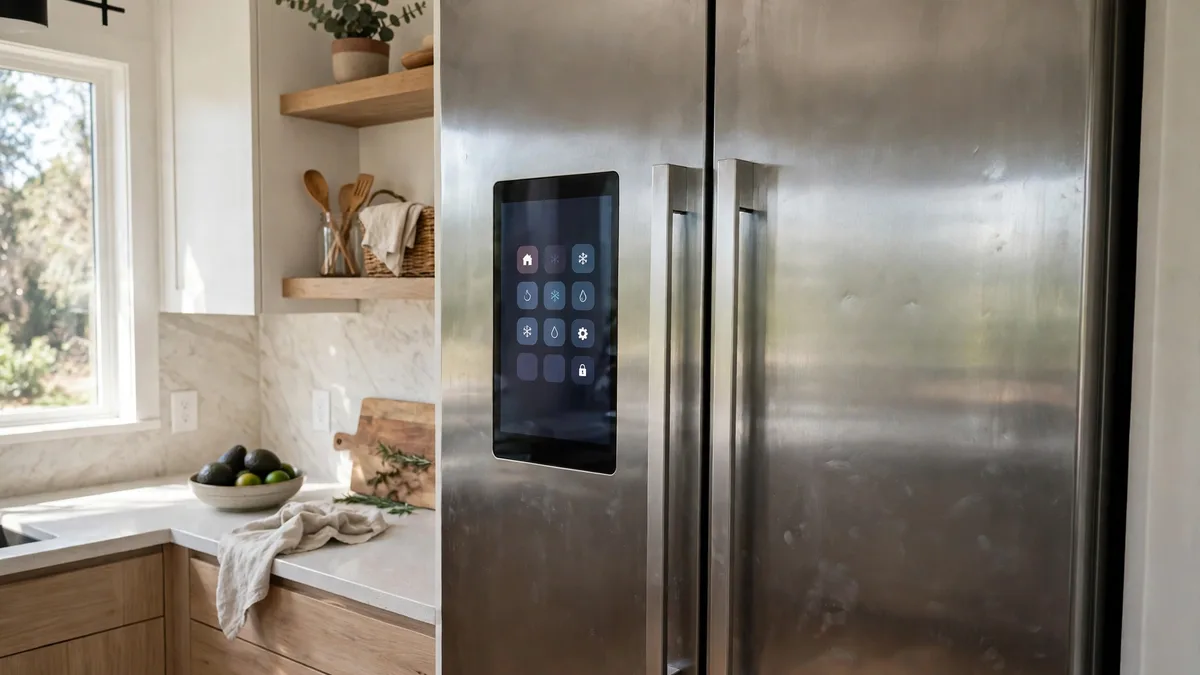
Specs at a Glance
| Specification | Typical Luxury Range | What It Means |
|---|---|---|
| Total capacity | 550 to 750 litres | Usable space for a large household |
| Compressor | Dual inverter or twin | Separate cooling for fridge and freezer |
| Temperature zones | 3 to 5 zones | Different climates for different foods |
| Noise level | 36 to 40 decibels | Quiet enough for an open-plan kitchen |
| Display | 21 to 32 inches | Touchscreen for apps and family notes |
| Internal cameras | 2 to 4 cameras | See inside from the shop |
Capacity and Layout
Capacity is the first number most buyers look at, and it is also one of the easiest to misread. Manufacturers quote gross capacity, which counts every cubic centimetre inside the cabinet, including the space taken up by shelves, drawers, ice makers and the walls themselves. Net capacity, the space you can actually put food in, is usually ten to fifteen percent lower, so a fridge quoted at 650 litres may offer closer to 570 litres of real storage.
Layout matters as much as the headline number. Luxury models are usually French door or side by side, with wide shelves that take a full tray or a pizza box flat, and a freezer drawer below rather than a narrow vertical compartment. The split between fridge and freezer is worth checking too: a model with seventy percent fridge space suits a household that cooks fresh food daily, while a fifty-fifty split suits one that freezes in bulk. The way the space is divided shapes every shopping trip that follows, which is why how a luxury smart fridge works matters as much as how big it is.
Cooling: Compressors, Zones and Temperatures
The compressor is the heart of the fridge, and the specification that separates luxury models from ordinary ones most clearly. A standard fridge has one fixed-speed compressor that switches fully on and fully off, which creates temperature swings of several degrees. A luxury smart fridge usually has an inverter compressor that varies its speed smoothly, holding the temperature within a fraction of a degree and using less electricity while it does so.
Dual compressor systems go further. One compressor cools the fridge and a second cools the freezer, so moist air from the fridge never mixes with the dry air of the freezer. That separation is why food in a premium fridge stays fresh longer: vegetables do not dry out, ice does not pick up the smell of last night’s leftovers, and frost builds up far more slowly. Some models add a third cooling circuit for a convertible drawer that can switch between fridge, freezer and a precise chill zone for wine or meat.
Temperature zones are the other half of the cooling story. A single-zone fridge holds everything at roughly three degrees, which is fine for milk but too warm for fish and too cold for some fruit. A luxury model offers separate zones held at different temperatures, often with humidity control in the crisper drawers, so leafy greens stay crisp for days longer and soft fruit does not go limp. Sensors throughout the cabinet watch the temperature in real time and adjust the airflow, which is the quiet engineering behind the freshness claims on the box.

The Cameras, Screens and Software
The smart features are what make the specification sheet look like a gadget catalogue. Internal cameras, usually two to four of them mounted near the top of the cabinet, take a photograph every time the door closes, so you can check from the supermarket whether you still have eggs. The cameras work best in well-lit cabinets with a clear view of the shelves, and they struggle when tall items block the lens, which is worth remembering before paying extra for a fourth camera.
Software ties the pieces together. The companion app sends a warning when the door is left open, when the temperature rises, or when the water filter needs changing, and some models track expiry dates and suggest recipes based on what the cameras see. That tracking is only as good as the data entered, though, and many owners find the door-open alert and the temperature warning far more useful than the inventory features. The build quality behind the screen is described in how a luxury smart fridge is made, where the cabinet, insulation and door assembly explain why these machines weigh so much more than ordinary fridges.
Build, Materials and Noise
Build quality shows up in the specifications as weight, wall thickness and noise level, and all three are worth reading carefully. Luxury fridges use thicker insulation, which keeps the cold in and lets the compressor rest, and heavier doors with proper gaskets that seal with a soft thud instead of a rattle. Stainless steel fronts are usually fingerprint resistant at this price, and some models are panel ready, designed to take a kitchen cabinet front so the fridge disappears into the joinery entirely.
Noise is measured in decibels, and the difference between 36 and 42 decibels is larger than it sounds, because the scale is logarithmic. A fridge rated at 36 to 38 decibels is a soft hum that disappears under conversation, while one above 42 becomes noticeable in a quiet room at night. Inverter compressors help, since they avoid the sudden clunk of a fixed-speed unit switching on. The same heavy engineering carries the price of the other kitchen appliances, as how a luxury smart oven is made shows.
A Rare Fact About Smart Fridges
One detail rarely appears on any specification sheet: some luxury smart fridges can keep food cold for several hours during a power cut with no backup power at all, purely because their insulation is so thick. Engineers test this by switching the power off and watching the temperature climb, and a well-insulated cabinet holds safe temperatures far longer than a thin-walled budget model. It never makes the brochure, yet it matters most on the day the power fails.

What the Specs Mean for You
Read the specification sheet in order of what affects your food. Capacity and layout decide whether the fridge fits your shopping habits, the compressor and the zones decide how long food stays fresh, and the noise rating decides whether you will hear it at night. Those three groups are worth paying for, and they are the ones that still matter five years after the purchase.
The cameras, the screen and the software are conveniences, not foundations. They are pleasant to have, but they age faster than the cooling hardware and should never decide a purchase over better insulation or a better compressor. A fridge that holds a steady temperature, stays quiet and gives you shelves that fit real food is the one that earns its price, and the specification sheet, read carefully, tells you which one that is.