The storm had been falling for three days when the lodge manager at the high alpine resort made the call no wheeled vehicle could answer. The road was gone under two metres of fresh powder, the lifts were shut, and a party of twelve guests was due at the summit chalet before dark. He walked out to the machine shed, fired up the big tracked vehicle sitting in the corner, and pointed it at the mountain. An hour later the guests were drinking hot chocolate by a stone fireplace, warm, dry, and slightly stunned at how smooth the ride had been. That is the luxury snowcat in its natural habitat: a machine built to go where nothing else can, while carrying its passengers in heated, leather-trimmed comfort.
A snowcat looks simple from the outside, a boxy cabin on four wide tracks, but the specification sheet behind it reads like a piece of heavy engineering crossed with a boutique hotel. Every number matters, because snow is unforgiving. Too little power and the machine bogs down on a steep grade. Tracks too narrow and it sinks. A cabin too cold and the luxury part of the name becomes a joke. This guide explains what each figure on a luxury snowcat spec sheet actually means, and how the numbers work together on a real mountain.

How a Luxury Snowcat Works
Understanding the specifications is easier once you know the sequence of systems that turn diesel fuel into forward motion across deep snow. The process runs through six stages, and each one shows up on the spec sheet in a different place.
- Power generation. A turbocharged diesel engine, usually between 300 and 500 horsepower, sits low in the chassis. Diesel is the fuel of choice because it delivers enormous torque at low revs, which is exactly what a heavy tracked vehicle needs to start moving in soft snow without spinning.
- Hydrostatic drive. Instead of a conventional gearbox, most modern luxury snowcats use hydrostatic transmission. Hydraulic pumps send pressurised fluid to drive motors at each track, giving the driver infinitely variable speed control and the ability to steer by varying the speed of each side. The spec sheet lists this as drive type, and it is the reason a snowcat can turn smoothly on a slope without sliding.
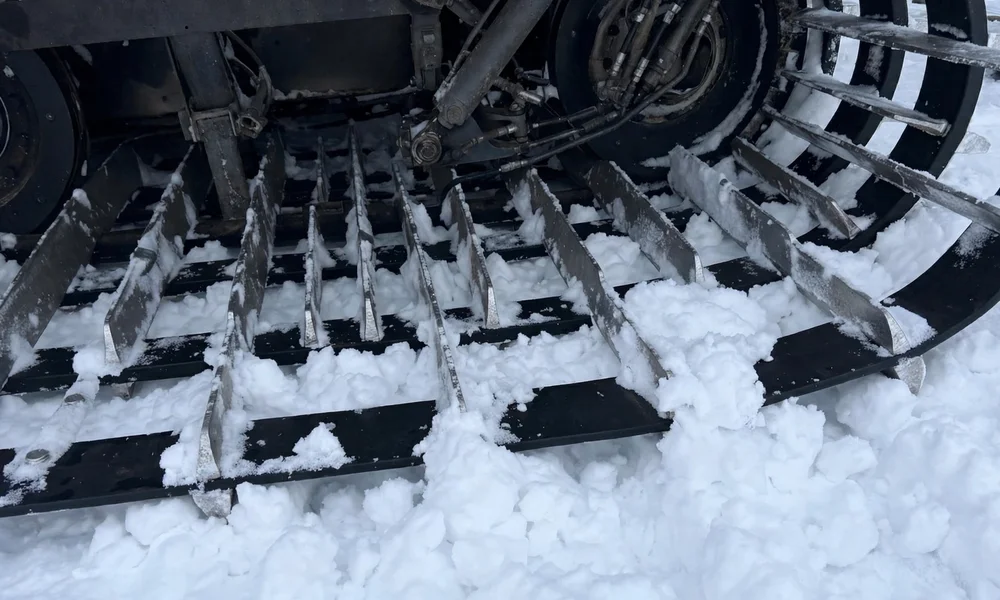
- Track propulsion. Four wide rubber tracks, each often more than a metre across, spread the machine’s weight over a huge area. Ground pressure can fall below 0.2 kilograms per square centimetre, which is less than a person standing on skis. Track width and ground pressure are two of the most important numbers on the sheet.
- Suspension and levelling. Independent suspension at each track station keeps the cabin level on uneven ground. Luxury models add active levelling, so the cabin stays flat even when the tracks are climbing over a drift at an angle. Passengers notice this as the absence of seasickness.
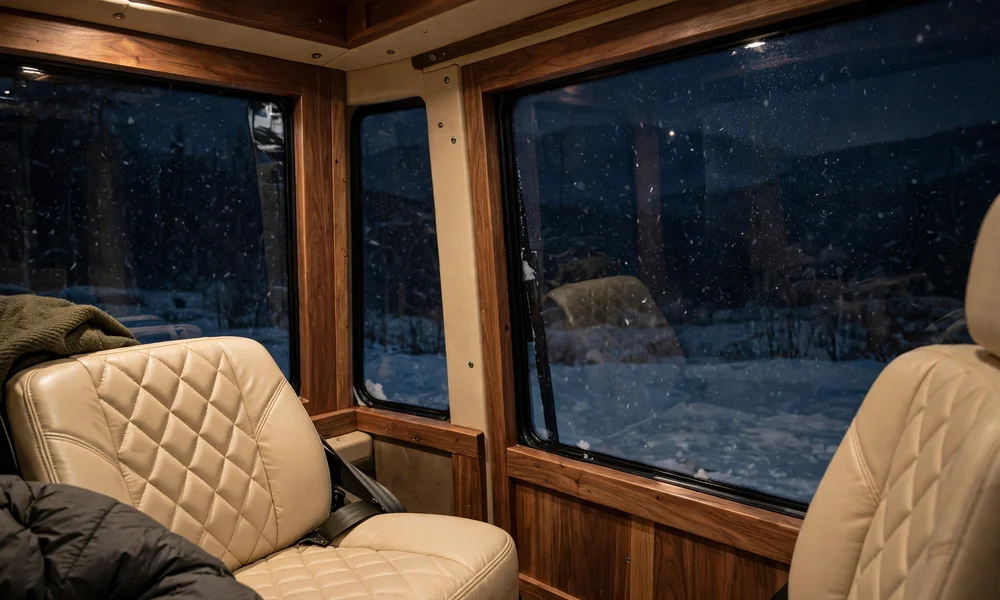
- Climate and cabin systems. A heated cabin, double-glazed windows, heated seats, and a high-output defroster turn the interior into a warm room. The heating system is usually rated in kilowatts on the spec sheet, and luxury builders fit systems powerful enough to hold twenty degrees inside while the temperature outside falls to minus thirty.
- Grooming and cargo equipment. Many luxury snowcats carry a rear tiller for grooming ski runs, a front blade for clearing drifts, and a winch rated for several tonnes. The winch rating and blade width are the numbers that tell you whether the machine is a pure passenger carrier or a working mountain tool as well.
The interplay of these systems is what separates a true luxury snowcat from a converted work machine. A work cat may have the same engine and tracks, but it will not have the acoustic insulation, the suspension tuning, or the cabin finishing that make a two-hour ride through a blizzard feel like a lounge with a view. If you want the full picture of how the machine moves, our guide to how a luxury snowcat works walks through the drive system in more detail.
The Spec Sheet, Decoded
Manufacturers publish dozens of figures, but a handful decide how the machine actually performs. The table below lists the headline specifications of a typical top-tier luxury snowcat, with a plain explanation of what each number means in practice.
| Specification | Typical Luxury Figure | What It Means |
|---|---|---|
| Engine power | 350–500 hp | Torque-rich diesel output for climbing steep grades in deep snow |
| Track width | 1,100–1,400 mm per track | Wider tracks spread weight and stop the machine sinking |
| Ground pressure | 0.12–0.20 kg/cm² | Lower is better; below a skier’s footprint is excellent |
| Top speed | 20–25 km/h | Fast enough for resort work, slow enough to stay safe |
| Passenger capacity | 10–16 seats | Heated cabin seating, usually in leather |
| Gradeability | Up to 45 degrees | Steepest slope the machine can climb on packed snow |
| Fuel capacity | 250–400 litres | Range of roughly 8–12 hours of mixed operation |
| Winch pull | 5–8 tonnes | Recovery and grooming power on the steepest runs |
| Cabin heating | 12–18 kW | Keeps the interior warm at minus thirty outside |
| Operating weight | 9–14 tonnes | Heavy, but spread across four tracks it floats |
Two numbers deserve special attention. Ground pressure is the single best predictor of whether a snowcat will float over fresh powder or dig itself a hole, and gradeability tells you whether it can reach the summit lodge or must stop halfway. A machine with impressive horsepower but narrow tracks will still get stuck, which is why experienced buyers read the track figures before the engine figures. The same logic applies across the snow world, and it is why a machine like the luxury snowmobile, covered in our piece on why a luxury snowmobile is so expensive, costs so much for such a small vehicle: flotation and power in a tiny package are hard engineering.
What a Luxury Snowcat Costs
A new luxury snowcat typically costs an estimated $500,000 to $900,000, depending on cabin fit-out, track package, and grooming equipment. That figure is an estimate based on published list prices and dealer reports, and it excludes the cost of a heated garage, spare tracks, and a trained driver, all of which a resort must budget for. Used machines in good condition can be found for far less, but the cabin refurbishment alone can run into six figures, which is why most luxury operators buy new and keep the machine for a decade or more.
The price makes more sense when you divide it by what the machine earns. A resort snowcat that carries twelve guests at a time, several times a day, through a four-month season can pay for itself in a few winters, and it also grooms the runs that every other guest skis on. It is a vehicle, a lift, and a grooming machine in one body, and the spec sheet is the proof. For a sense of how other luxury machines justify their numbers, the luxury tiltrotor specs explained guide shows a very different engineering trade-off in the air.
A Rare Fact
Here is a detail few passengers ever learn. The most advanced luxury snowcats carry a GPS-guided grooming system that records the exact path of every pass and builds a millimetre-accurate map of the snow surface. The next night, the machine follows that map to within a few centimetres, laying down perfectly spaced corduroy grooves without the driver steering at all. The system was adapted from precision farming equipment, where tractors use the same technology to plant seeds in perfectly straight rows, and it means the flawless ski run you carve at dawn was drawn by satellite the night before.