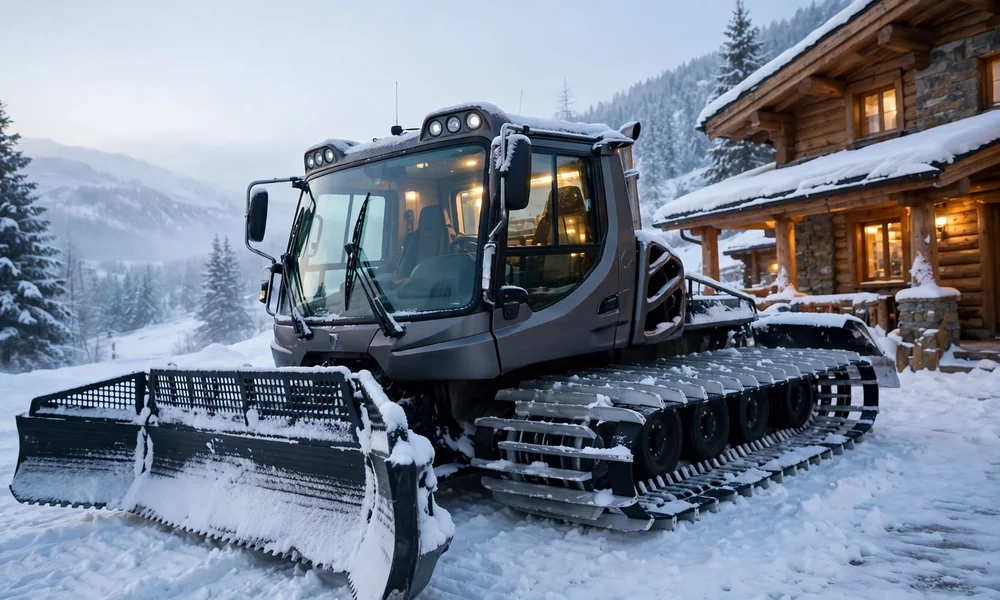
It is four in the morning on a ski mountain, dark and twenty below, and the slopes are a mess of ruts and ice from the day before. Out of the gloom comes a machine the size of a small bus, glowing with work lights, its wide tracks churning the snow into a fine spray behind it. It climbs straight up a slope that a car could never attempt, dragging a huge tiller behind it. This is a snowcat, and it is the machine that makes skiing possible.
A luxury snowcat is a tracked vehicle built to work in deep snow, and the luxury versions carry their crew and guests in a heated, leather-lined cabin instead of a bare steel box. Underneath it is a simple, brutal machine: a diesel engine, two wide rubber tracks, and a set of tools at the front and back that push, cut and smooth the snow.
How a Luxury Snowcat Works, Step by Step
Step 1: The tracks grip the snow
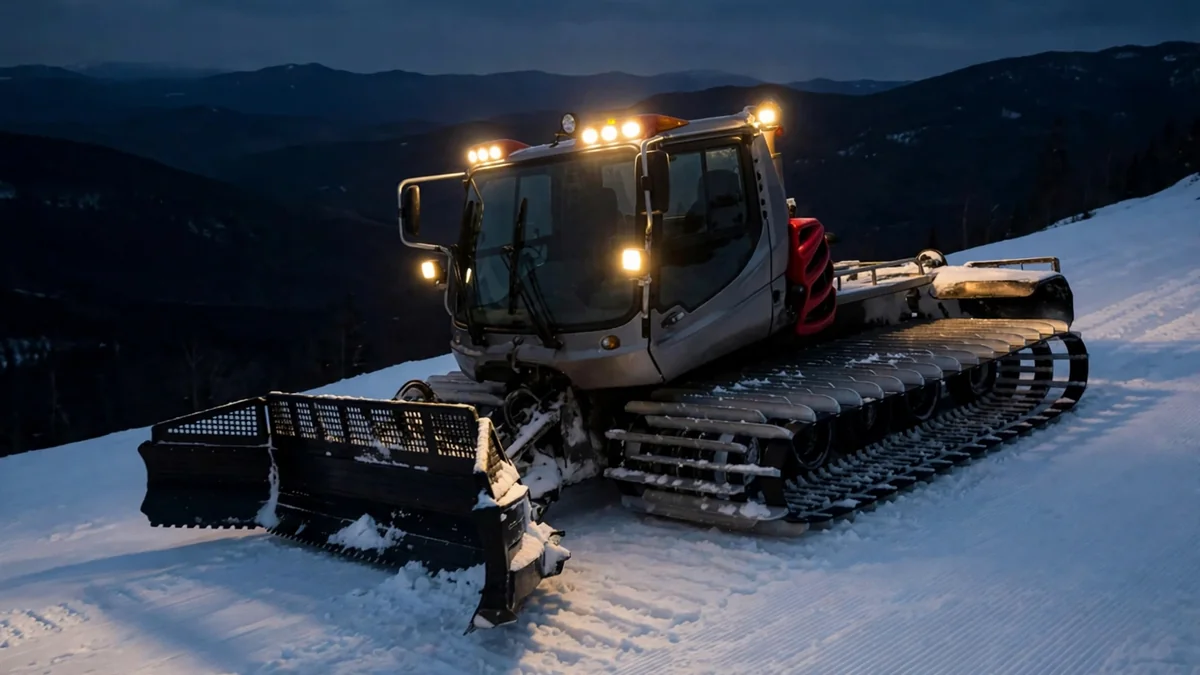
Everything starts with the tracks. Instead of wheels, a snowcat rides on two wide rubber tracks, each one up to a metre across, studded with steel grousers that bite into the snow like claws. The tracks spread the machine’s weight over such a large area that it presses down on the snow with less force per square centimetre than a person standing on skis, so it floats on top of soft powder instead of sinking into it.
Step 2: The engine makes power for everything
In the middle of the machine sits a big diesel engine, usually producing between 300 and 500 horsepower, and it does far more than drive the tracks. It powers the hydraulic pumps that lift and lower the blade and the tiller, it runs the generator that heats the cabin and lights the work lamps, and in the luxury versions it drives a winch at the back that can pay out a steel cable to anchor the machine to a tree or a post. The whole machine is a power station on tracks, and the engine rarely stops from dusk until dawn.
Step 3: The blade pushes the snow where it belongs
At the front of the snowcat is a wide steel blade, like a snowplough, that can be raised, lowered, tilted and angled from the cab. The driver uses it to push snow into hollows, to knock down bumps, and to build up the edges of a piste so skiers stay on the trail. The blade is controlled by joysticks, and a good driver can shave a bump flat with a single pass, reading the snow through the way the machine moves under them.
Step 4: The tiller turns rough snow into corduroy
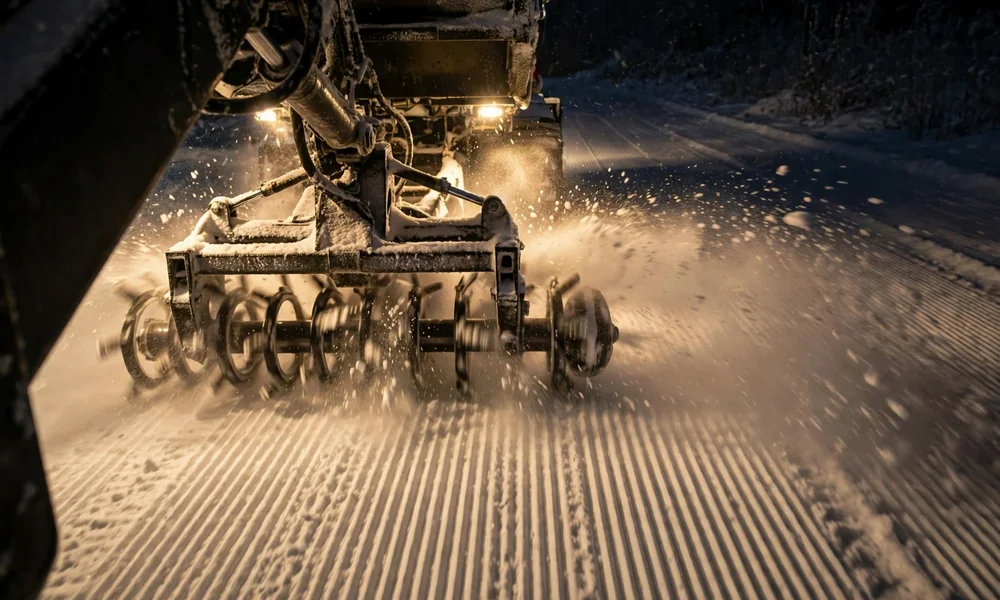
Behind the snowcat trails the tiller, a spinning drum fitted with steel teeth that churns the top layer of snow into fine, even grains. As the drum spins, it breaks up ice and clumps, mixes in air, and lays the snow down in neat parallel ridges that skiers call corduroy, the velvety stripes you see on a freshly groomed piste in the morning. The same idea of a machine working snow in the cold shapes the winter vehicles described in the guide to how a luxury snowmobile works, but a snowmobile rides on the snow, while a snowcat rebuilds it.
Step 5: The winch holds it on the steepest slopes
The hardest job of all is grooming the steepest runs, where even tracks can slip, and that is where the winch comes in. A steel cable is run from a drum at the back of the snowcat to an anchor at the top of the slope, and as the machine climbs, the winch winds the cable in, holding the snowcat to the mountain like a climber on a rope. With the winch, a snowcat can work on slopes of more than thirty degrees, where it would otherwise slide sideways, and it can groom a black run in the dark without ever losing its grip. The winch is the reason the steepest, most exciting runs in a resort are also the smoothest in the morning.
Step 6: The cabin keeps the crew warm and in control
Up front, the cab is where the luxury shows. In a working snowcat the cab is a warm, quiet box with a heated seat, a panoramic windscreen, and joysticks for every tool. The lights are bright enough to turn night into day, and the heater is strong enough to keep the windscreen clear at twenty below. The thinking behind the cabin, a quiet, comfortable space in a machine built for extremes, is the same as in the car described in the guide to how a luxury limousine works, only here the road is a mountain.
Step 7: Night work, morning perfection
A snowcat’s working day starts when the lifts close. The driver takes the machine up the mountain in the dark, works the slopes one by one, and is finished before the first skiers arrive, because fresh corduroy needs a few cold hours to set hard. At the end of the night the machine is parked in a heated garage, the tracks are washed, the blade and tiller are checked for damage, and the fuel tank is filled for the next night. By dawn the mountain is ready, smooth and waiting, with no sign of the machine that made it except the corduroy itself, and the computer guidance that plans each pass shares the quiet logic of the car described in the guide to how a luxury autonomous car works.
Specifications at a Glance
| Feature | Typical Luxury Snowcat |
|---|---|
| Engine | Diesel, 300 to 500 horsepower |
| Drive | Two wide rubber tracks, hydrostatic |
| Top speed | About 20 kilometres per hour |
| Weight | 7,000 to 11,000 kilograms |
| Ground pressure | Lower than a skier on skis |
| Blade width | About 4 to 5 metres |
| Winch pull | Up to 5 tonnes on steep slopes |
| Cabin | Heated cab plus luxury guest cabin |
What a Luxury Snowcat Costs
As an estimate, a luxury snowcat might cost roughly $400,000 to $700,000, with the tracks, the winch and the luxury cabin accounting for a large share of the price. The most richly finished machines, with a full guest cabin, a bar and a panoramic roof, could cost an estimated $900,000 or more. Those are estimates, and the running costs are high: diesel for a night of work, track and tiller maintenance, and a skilled driver who works while everyone else sleeps.
A Rare Fact
The snowcat was born from a failure. In the 1920s and 1930s, inventors across Canada and the United States tried to build vehicles that could cross deep snow, and most of them sank, broke or froze. The breakthrough came from a Canadian mechanic named Joseph-Armand Bombardier, who built a tracked vehicle to carry his neighbours to hospital across snowed-in roads, and his machines became the snowmobiles and snowcats of the modern world. Today’s luxury snowcat, with its GPS, its winch and its leather cabin, is the great-grandchild of a machine built to get a sick neighbour to a doctor through a snowstorm.
A luxury snowcat is a machine that works while the world sleeps, turning a mountain of ruts and ice into a smooth white carpet, and doing it in silence, in the dark, at twenty below. By the time the sun rises, it is already home, and the only proof it was ever there is the perfect slope beneath your skis.