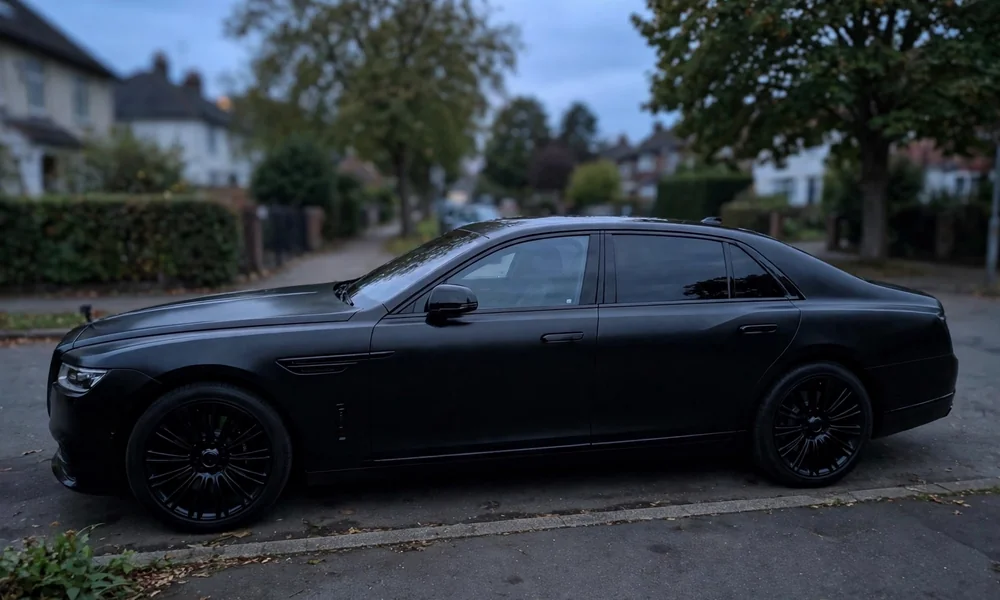
The client never sees the workshop floor where his car is taken apart. He sees a showroom, a handshake, and a delivery date six months away, and when the car finally arrives it looks exactly like the luxury saloon he ordered. Nothing on the outside gives the secret away, and that is the whole point. A luxury bulletproof car is not supposed to look armoured. It is supposed to look ordinary, comfortable, and expensive, while quietly carrying several hundred kilograms of steel and glass that its unprotected twin will never need.
The build starts with a decision that shapes everything else: how much protection the car must offer. Armour is graded in levels, and each level stops a different threat, from a handgun round to a high-powered rifle bullet and, at the top end, armour-piercing ammunition. A client who travels through a city with a history of street crime needs a different car from a head of state. Choosing too little leaves the occupants exposed, while choosing too much adds weight that ruins the ride and the handling the luxury badge promises.
What follows is a slow, hand-built transformation. A standard luxury car rolls into the workshop and comes out months later as a rolling safe, its doors, roof, floor, and glass all rebuilt to stop bullets while its cabin stays quiet, soft, and familiar. This is how a luxury bulletproof car is made, from the first strip-down to the final test on the range.
How a luxury bulletproof car is made
Step 1: Choosing the donor car and the protection level
Every armoured build begins with a donor car, usually a large luxury saloon or SUV chosen for its size, its strong body shell, and its ability to carry extra weight. The workshop strips the car back to its bare shell, removing the interior trim, the seats, the glass, and the door panels so every surface can be measured and every gap mapped. Engineers then agree the protection level with the client, balancing threat against weight. A typical armoured saloon ends up 600 to 900 kilograms heavier than the car it started life as.
Step 2: Armouring the body shell
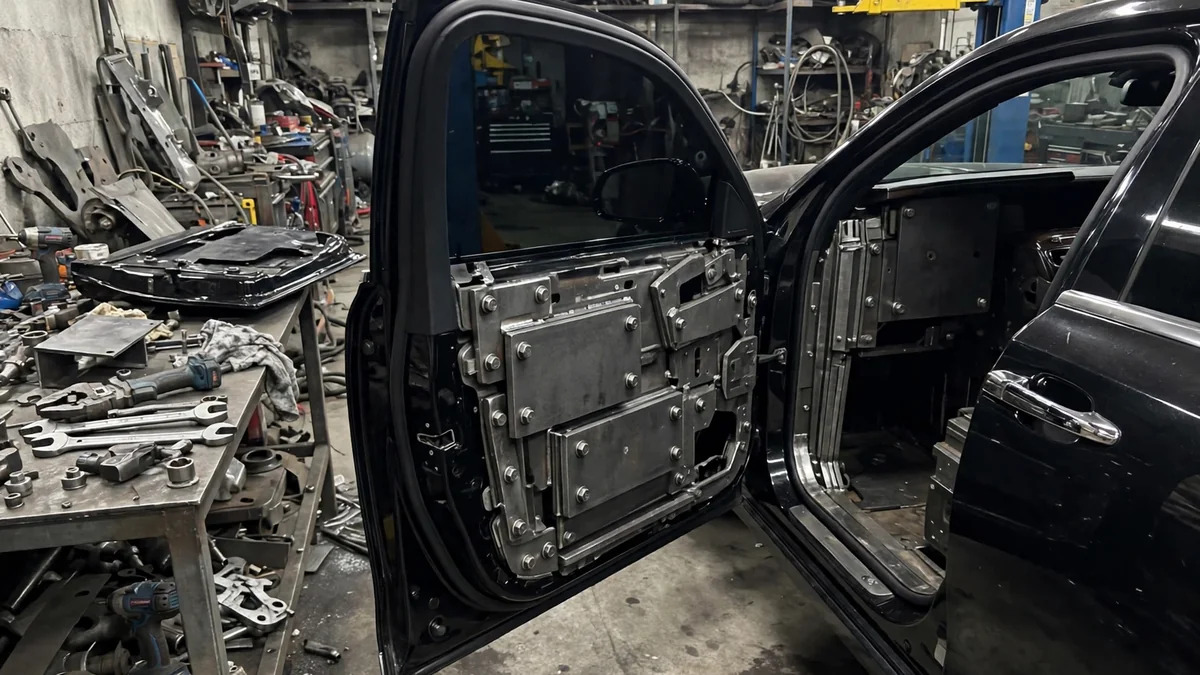
The heart of the build is the armouring of the body shell, done panel by panel, by hand. Armour steel, a hard, heat-treated alloy far tougher than ordinary car body steel, is cut to match the shape of each door, pillar, roof panel, and floor section, then welded and bolted into place so the plates overlap like scales, leaving no gap a bullet could slip through. The same obsession with layered protection shapes how a luxury limousine is made, where the shell must stay silent and smooth while hiding an entirely different structure underneath.
Step 3: Fitting the ballistic glass
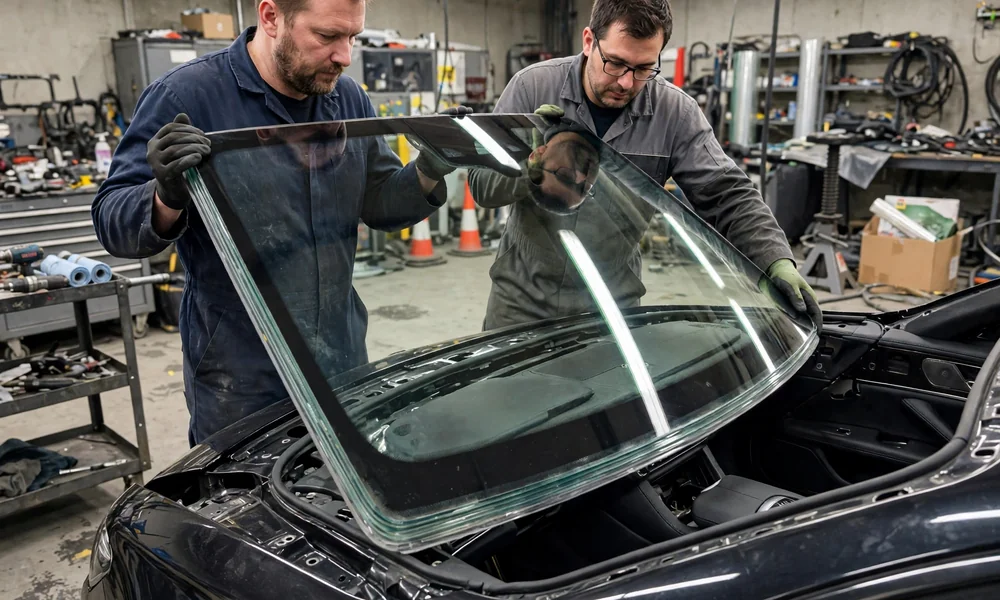
Glass is the hardest problem in the whole build, because it must stop a bullet and still let the driver see the road. Ballistic glass is a sandwich of glass and polycarbonate layers bonded together, sometimes more than 40 millimetres thick and several times heavier than the original windscreen. The windscreen alone can weigh as much as a grown man, and it is installed with a crane and a team of fitters. When a bullet strikes, the outer layers shatter and absorb the energy while the inner polycarbonate layer catches the fragments, leaving the cabin intact and the view still usable.
Step 4: Run-flat tyres and reinforced wheels
A bulletproof car is useless if a shot tyre leaves it stranded, so the wheels get as much attention as the doors. Run-flat tyres carry a thick reinforced sidewall and an internal support ring, which means the car can keep driving for 50 to 80 kilometres at reduced speed even with no air pressure at all, long enough to reach safety. The idea is simple: the car must never be stopped by its tyres, because a stationary armoured car is a target, while a moving one keeps getting further away.
Step 5: Chassis, suspension and brakes
None of the armour matters if the car cannot move, stop, and turn like a luxury car should, so the chassis is rebuilt around the new weight. The suspension gets uprated springs and dampers, often with a self-levelling system that keeps the ride height constant whether the car is empty or full, and the brakes grow larger discs, multi-piston callipers, and high-temperature pads to haul the extra mass to a stop. The same discipline of re-engineering a familiar car around a hidden new job is behind how a luxury hydrogen car is made, where the familiar shape hides a completely different heart.
Step 6: Testing and certification
Before any armoured car is handed over, it is shot at. Test panels identical to the ones fitted to the car are fired on at a certified range with the exact ammunition the protection level promises to stop, and the car itself is checked for gaps at every seam, hinge, and window edge, because a single unprotected centimetre defeats the whole build. Only when both pass does it earn its certificate, listing the protection level, the ammunition tested against, and the workshop that built it. That certificate is the difference between a car that looks armoured and a car that actually is.
Specifications
| Specification | Typical figure |
|---|---|
| Base vehicle | Large luxury saloon or SUV |
| Added armour weight | 600 to 900 kilograms |
| Ballistic glass thickness | Up to 40 millimetres or more |
| Run-flat range | 50 to 80 kilometres with no air pressure |
| Build time | Four to six months |
| Protection levels | Handgun up to armour-piercing rifle |
| Estimated price | From around $250,000, an estimate |
The price of a luxury bulletproof car is an estimate, because no two builds cost the same. A discreet handgun-level conversion of a large saloon can start from around $250,000 including the donor car, while a top-level build with rifle protection, blast flooring, and a full luxury interior can pass $500,000. The armour itself is only part of the bill: hundreds of hours of hand fitting, certified testing, and the reinforced suspension and brakes all add up, and the certificate that proves the protection is part of what the buyer is paying for.
A rare fact
Here is a detail few owners ever learn: the heaviest single armoured component in many luxury bulletproof cars is not a door or the floor, but the windscreen, and some workshops fit it last, after the car has already been weighed and balanced, because its position high and forward shifts the car’s weight distribution enough to change how the suspension must be set. It is a structural part of the car that happens to be transparent.
The finished car is a contradiction that works: a luxury saloon that rides like a luxury saloon, sounds like one, and looks like one, yet can take a bullet and keep driving. That is the real achievement of the build, and it is why the work takes months rather than weeks. The same hidden-engineering thinking runs through how a luxury autonomous car is made, where the most important systems are the ones the passengers never see.