The trail had been groomed at first light, and by mid-morning the snow held a clean edge under the runners of the snowmobile ahead. It was no work machine, but a low, wide, beautifully finished thing with heated grips, a heated seat, a windscreen that kept the wind off, and an exhaust tuned to a soft growl rather than a scream. Its rider wore no balaclava under the helmet, and did not need one. That is the quiet trick of a luxury snowmobile: a machine built for cold, noise and punishment, made to feel like a heated armchair travelling at a hundred kilometres an hour.
The spec sheet is where that trick is proven or exposed. A snowmobile lives or dies on a handful of numbers: power and torque, track size, weight, suspension travel, fuel range and ski stance. Get them right and the machine floats over powder, turns without effort and rides all day. Get them wrong and no leather or chrome will save it, because the rider feels every mistake through the handlebars within a kilometre. Decoding the sheet is the fastest way to tell a genuine luxury machine from a dressed-up utility sled.
How a Luxury Snowmobile Is Built, Step by Step
Every luxury snowmobile starts as a utility machine and is refined from there, one system at a time.
1. The chassis is drawn around the rider
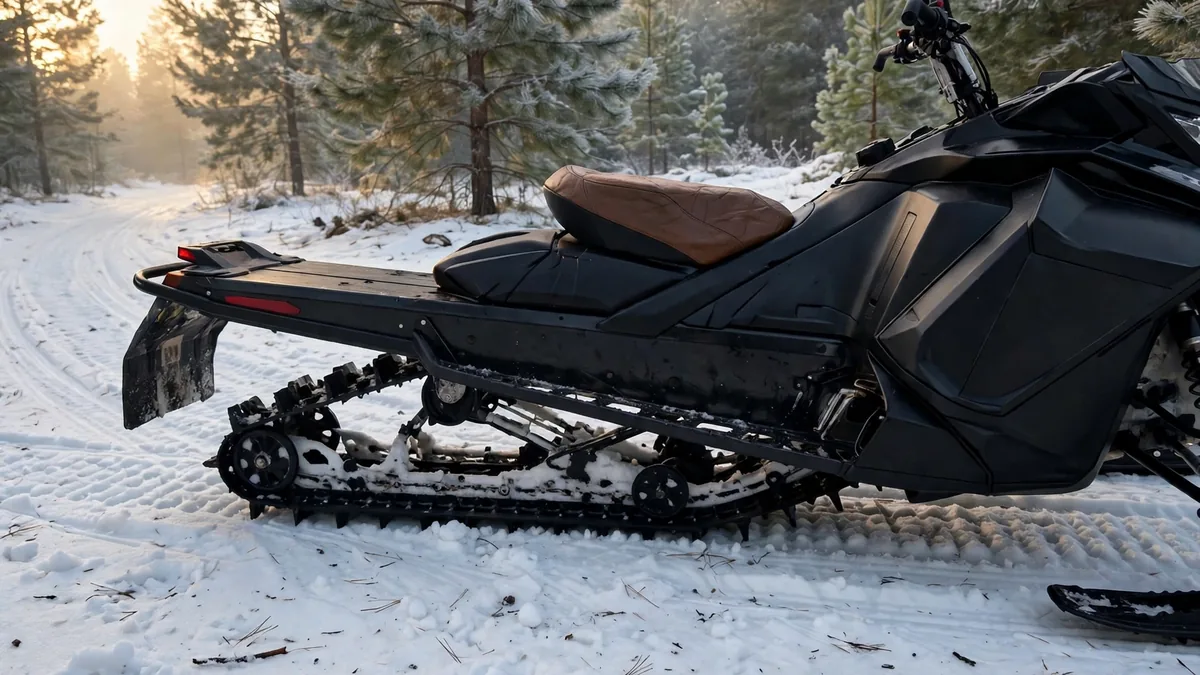
Engineers begin with a lightweight aluminium or steel tunnel chassis, the spine of the machine, shaped so the rider sits low and central. A lower centre of gravity steadies the sled in corners, and a narrow tunnel leaves room for a wide track underneath.
2. The engine is chosen for torque, not just power
Most luxury models use a two-stroke twin of around 850 cubic centimetres, or a four-stroke turbo triple, making roughly 165 to 200 horsepower. What matters in deep snow is torque at low revs, which gets a heavy sled moving from a standstill in powder without digging in.
3. The track is sized to the snow it will meet
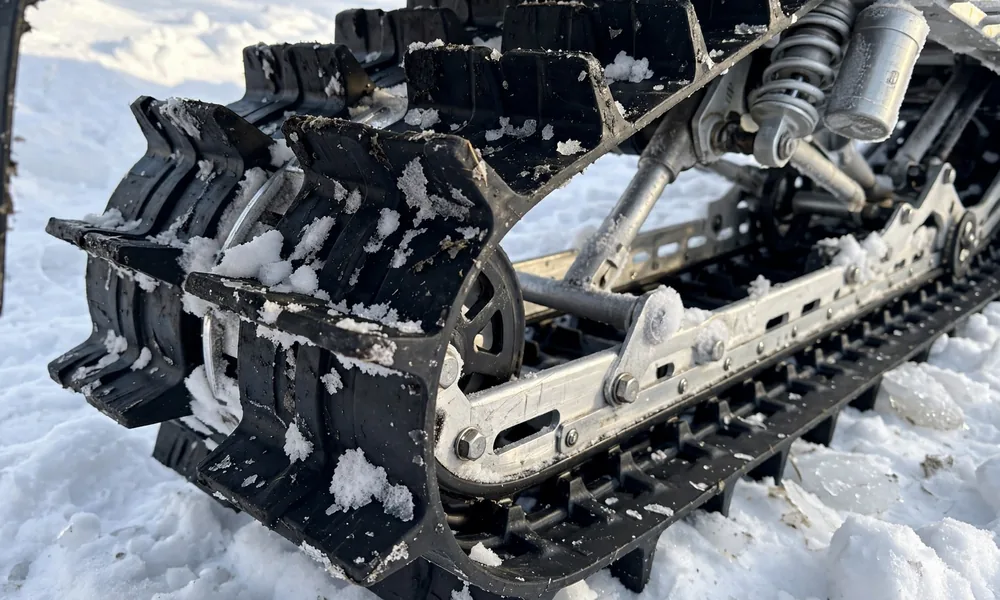
The track is a continuous rubber belt with lugs, and its length and width decide how well the machine floats. Luxury trail machines typically run a track around 137 inches long and 15 inches wide, with 1.25-inch lugs that grip hard snow without dragging in powder. Longer, wider tracks float better but steer more slowly.
4. The suspension is tuned for comfort first
Long-travel front suspension, usually about 200 millimetres of movement, and a coupled rear suspension with a similar range, soak up the bumps of a groomed trail and the hidden hollows of fresh snow. Luxury models add adjustable gas shocks, so the ride can be softened for a passenger or firmed for a fast solo run.
5. The skis set the steering feel
Two front skis, spaced about 1,070 to 1,100 millimetres apart, carry the front of the machine and steer it. Wider spacing gives stability on fast trails, narrower spacing makes the sled easier to lean into a turn. Luxury skis often have a deeper keel and a carbide runner, which bites into ice and keeps the steering precise.
6. The luxury layer goes on last
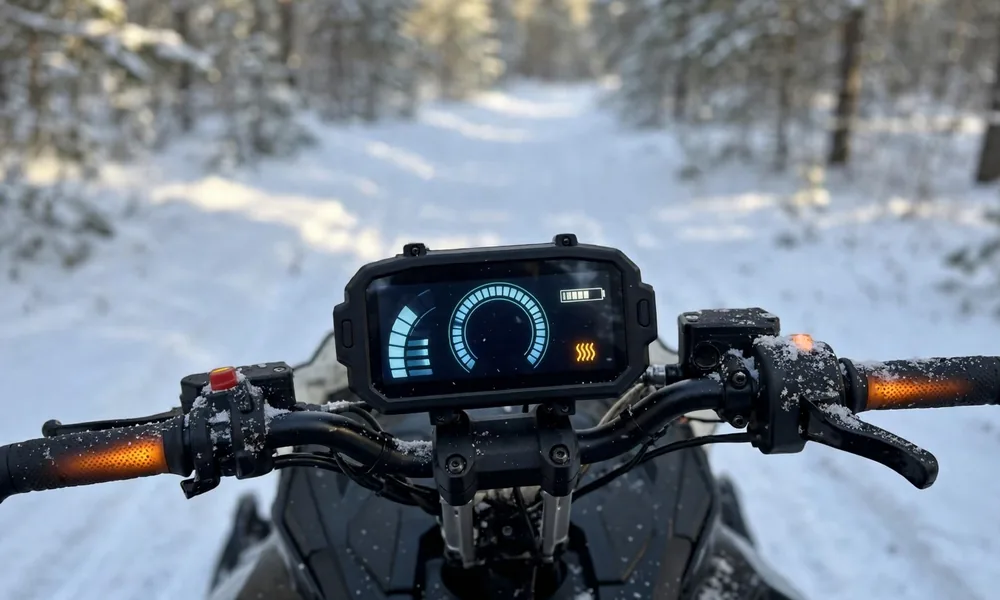
Only when the machine underneath is proven do the comforts arrive: heated seat and grips, tall windscreen, hand guards, a premium gauge with navigation, a sound system, and storage that stays shut in a crash. Every extra is weighed, because added weight costs the agility the chassis was built for.
7. Cold testing proves it all
Before delivery, the finished machine is tested at minus 30 degrees and below, started cold after a night outside, and ridden hard over rough trails. Batteries, belts, fuel lines and electronics are checked for cold failure, because a luxury machine that will not start in its own cold has failed at its first job.
The Spec Sheet, Decoded
Start with the power-to-weight ratio, the most revealing figure on the sheet: a luxury snowmobile weighs around 220 to 250 kilograms dry and makes 165 to 200 horsepower, a ratio no car can match. Next, the track dimensions: length times width gives the contact area, and more area means the machine floats on soft snow instead of sinking. Fuel capacity, usually 35 to 45 litres, sets the range at about 150 to 250 kilometres, though the quoted figure assumes gentle riding. Suspension travel, ski stance and length complete the handling picture, while the top speed, often quoted near 160 to 190 kilometres per hour, matters far less than the mid-range pull that overtakes a slower sled.
| Specification | Typical luxury snowmobile | What it means |
|---|---|---|
| Engine | 850 cc twin or turbo four-stroke | Deep-snow torque |
| Power | About 165–200 hp | Brisk acceleration |
| Dry weight | About 220–250 kg | Floats and turns easily |
| Track | 137 in long, 15 in wide, 1.25 in lugs | Decides flotation |
| Front suspension travel | About 200 mm | Front bump absorption |
| Rear suspension travel | About 200–220 mm | Rear bump absorption |
| Ski stance | About 1,070–1,100 mm | Steady or nimble |
| Fuel capacity | About 35–45 litres | Range of 150–250 km |
| Top speed | About 160–190 km/h | Rarely the point |
| Seat | Heated, two-up with passenger backrest | Two-up, all day |
Two figures deserve a closer look. The first is the dry weight, quoted without fuel, oil or accessories, so a finished machine on the trail is always heavier than the brochure suggests, and adding fuel, a passenger and luggage changes the power-to-weight ratio enough to feel. The second is lug height: taller lugs grip deep powder brilliantly but vibrate and wear quickly on hard trails, so the 1.25-inch lug on most luxury models is a deliberate compromise, a track that works everywhere rather than one perfect somewhere.
The working principles are laid out in how a luxury snowmobile works, which follows the power from engine to snow. A heavier cousin, why the luxury snowcat is so expensive, answers the same winter brief with a machine ten times the size, while the quietest luxury cars of 2027 rank machines that chase silence on the road as a good snowmobile chases it in the snow.
What a Luxury Snowmobile Costs
A new luxury snowmobile typically costs an estimated $18,000 to $28,000, depending on engine, suspension and trim, while a used example in good condition can be found for an estimated $10,000 to $16,000. Running costs are modest: fuel, oil, a spare belt and annual servicing usually come to an estimated $1,500 to $3,000 a year, though a full track replacement can add an estimated $1,000 to $2,000. A heated garage, a trailer and winter clothing add to the real cost, and many owners spend an estimated $2,000 to $4,000 on those extras in the first year. All prices here are estimates, and real figures vary with the model, the dealer and the region.
For that money the buyer gets a machine that is, by luxury standards, almost absurdly cheap, yet opens country no other vehicle can reach in winter. Its running costs are measured in hundreds rather than thousands per outing, which is why the best ones hold their value so well.
A Rare Fact
The rubber track of a modern snowmobile is built around cords of aramid fibre, the same family of material used in bulletproof vests, and one track can contain more than a kilometre of that cord. It must bend around the drive wheels thousands of times a minute and transmit two hundred horsepower to the snow without stretching, a combination that took decades to get right.
Read the sheet, then ride the machine. The numbers tell you what the snowmobile can do, but the first kilometre of trail tells you whether its engineers understood luxury at minus twenty degrees.


