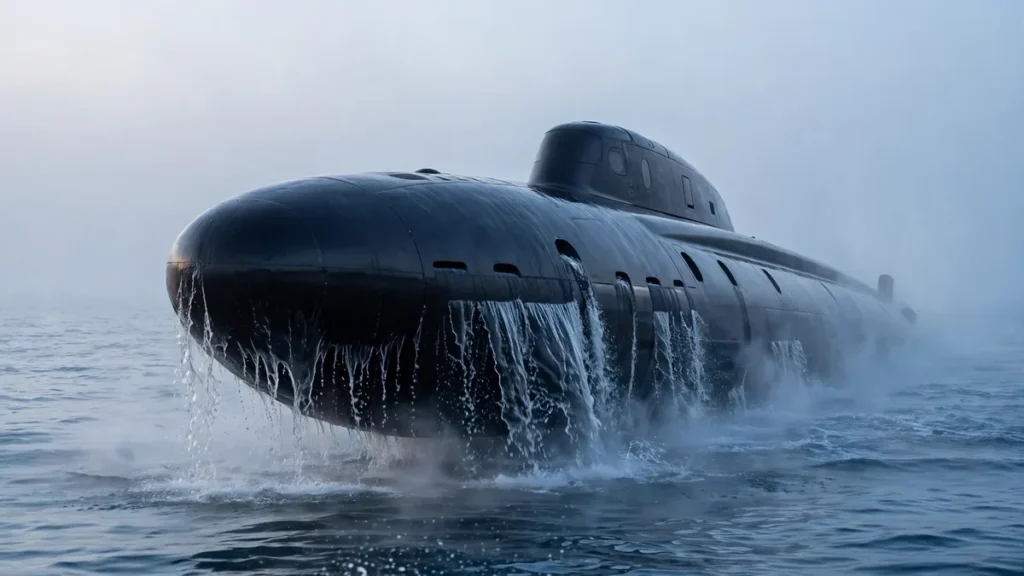
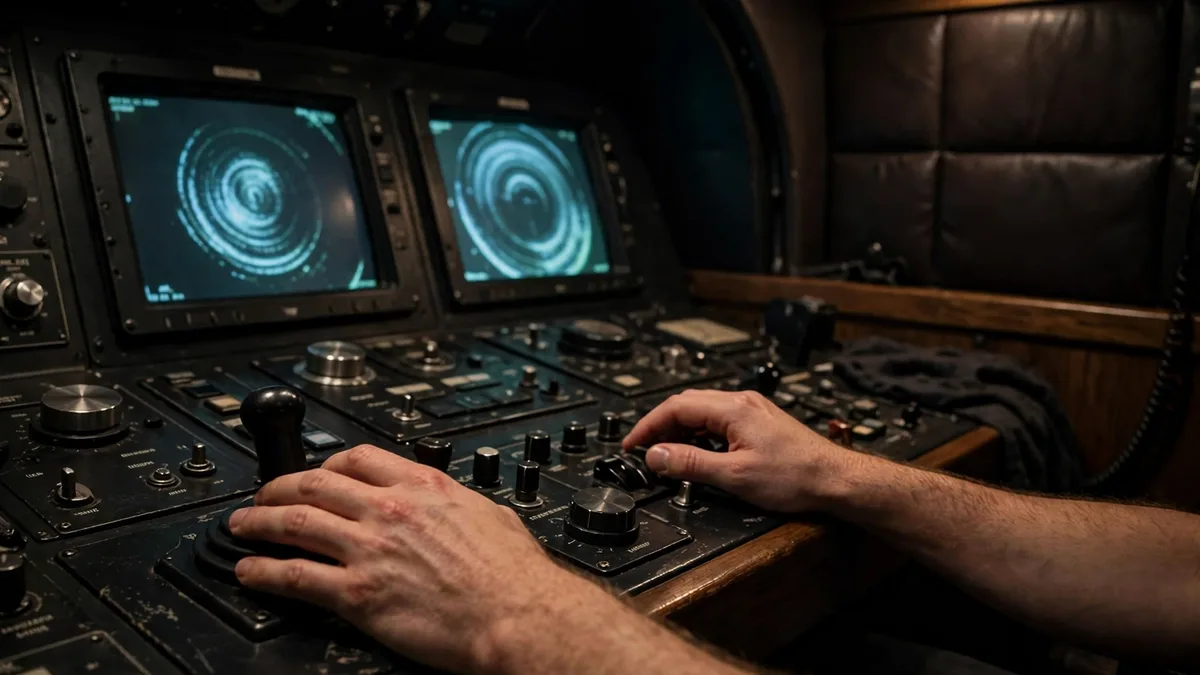
The ocean went dark long before the submarine reached its cruising depth, and the crew inside could no longer see anything at all. No windows, no horizon, no stars. The only eyes the boat had were its ears, and the men and women watching the glowing screens in the control room were listening to a world they could never look at directly. A whale call fifty miles away, the churn of a distant freighter, the faint echo of their own ping returning from a cliff face: every sound arrived as a number, a trace, a decision.
Sonar is the sense that makes a submarine possible, and on a luxury submarine it is also one of the most expensive systems on board. The word itself is a shorthand for sound navigation and ranging, and the idea is simple enough: send sound through water, listen for what comes back, and build a picture from the echoes. The engineering behind that simple idea is anything but simple, and the specification sheet of a sonar suite reads like a foreign language until somebody explains what each figure actually buys.
The spec sheet at a glance
| Specification | Typical luxury figure |
|---|---|
| Sonar type | Active and passive, hull-mounted plus towed array |
| Operating frequency | Roughly 1 to 10 kilohertz, low frequency for long range |
| Detection range, passive | Tens of kilometres in quiet water, often further |
| Detection range, active | Several kilometres, depending on depth and seabed |
| Array elements | Hundreds of hydrophones across the hull and towed cable |
| Bearing accuracy | Within one degree on a modern digital array |
| Depth rating, transducers | Rated to the submarine’s full operating depth |
| Processing | Digital beamforming with automatic target tracking |
| Display | Waterfall and bearing displays, plus audio listening |
| Power draw | A few kilowatts in passive mode, more when pinging |
| Dome material | Acoustically transparent composite, flooded with water |
| Self-noise limit | Machinery mounted on dampers so the boat hears others first |
Active and passive: two ways of listening
Every sonar system works in one of two modes, and the difference between them is the difference between shouting and eavesdropping. Active sonar sends a pulse of sound into the water and listens for the echo, which gives a precise range and bearing but also announces the submarine’s presence to anyone listening. Passive sonar only listens, collecting the sounds other vessels make, and it can hear a noisy ship from tens of kilometres away without giving anything away. Luxury submarines carry both, and the crew switches between them the way a driver switches between headlights and darkness.
The guide to how luxury submarine sonar works follows a single ping from the transducer to the screen, and the most important lesson is that passive listening is the default. A boat that pings constantly is a boat that can be found, so the crew spends most of its time silent, reading the ocean the way a musician reads a score, picking one thread of sound out of hundreds.
Frequency: the trade between range and detail
Frequency is measured in kilohertz, and it decides what the sonar can see. Low frequencies travel further through water, so a low-frequency pulse can reach a contact many kilometres away, but the picture it returns is coarse, like recognising a friend from a long way off by their walk. High frequencies give a sharp, detailed picture of a nearby object, but they fade quickly, so they are used for close work such as mapping the seabed or docking. A luxury suite carries several frequencies at once, and the operator chooses the way a photographer chooses a lens.
The array: hundreds of ears working as one
A single hydrophone hears in all directions at once, which is not very useful, so modern sonar uses arrays: hundreds of small listening elements spread across the bow, along the flanks, and on a cable towed behind the boat. By comparing the tiny differences in when a sound reaches each element, the computer works out the direction it came from, and the array can be steered electronically without moving anything. The more elements, the sharper the bearing, and the bearing accuracy of a modern digital array is within about one degree.
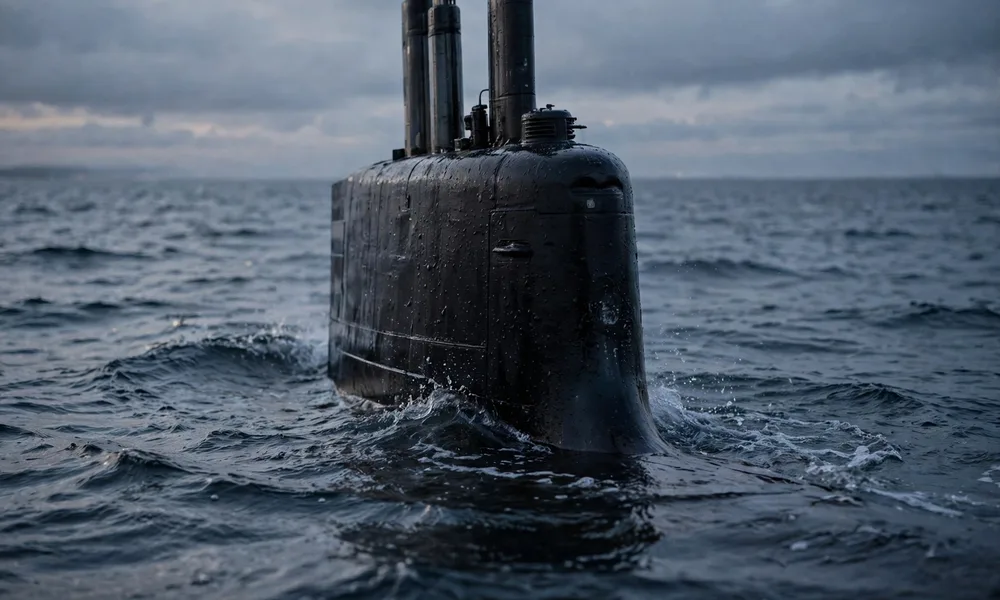
The towed array is the longest ear of all, a cable hundreds of metres long that trails behind the submarine, away from the noise of its own machinery. It hears things the hull array cannot, and it is also the most delicate part of the system, winched in carefully before the boat changes depth quickly or enters shallow water. The account of luxury submarine periscope specs covers the boat’s other sense, the one that works above the surface, and together the two systems give the crew a picture of the world above and below.
The dome: a window made of sound
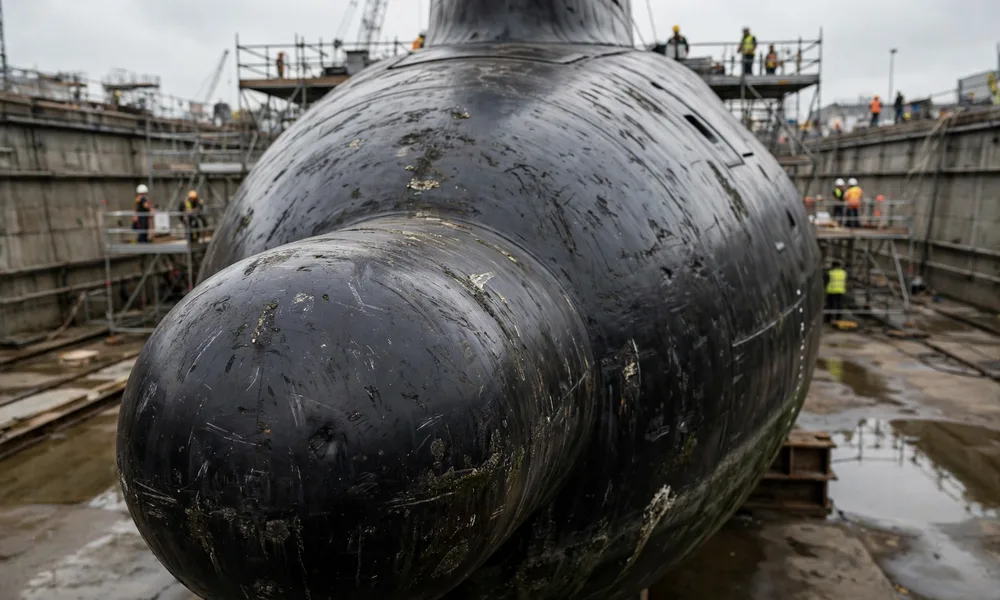
The bow of a submarine carries a smooth, rounded dome, and inside it sits the main sonar array. The dome itself is made from a composite that lets sound pass through almost as if it were water, and the space behind it is flooded so there is no air gap to reflect the pulse.
Processing: turning noise into a picture
Raw sound from the ocean is mostly noise, and the job of the sonar computer is to find the signal inside it. Digital beamforming combines the hundreds of hydrophone signals into a focused beam, automatic tracking follows a contact as it moves, and the display paints a waterfall of sound over time, with each contact a bright line drifting across the screen. The operator still listens with headphones, because the human ear is remarkably good at telling a fishing boat from a freighter by the rhythm of its propeller.
Power draw is modest in passive mode, a few kilowatts, and rises when the boat pings, which is another reason the crew pings sparingly. The whole suite is also built to be quiet itself: pumps and motors sit on rubber dampers, pipes are lagged, and the crew walks softly, because every sound the boat makes is sound its own sonar must hear through. The explanation of luxury submarine battery specs shows where that power comes from, and the battery is sized for long, silent listening as much as for speed.
Price
A full sonar suite for a luxury submarine typically costs an estimated $2 million to $8 million, depending on the size of the array, the processing power, and whether a towed array is included, with the largest and most sensitive systems at the top of that range. These are estimates, not list prices, because sonar is built to order for each hull, and the final figure depends on the boat’s size and mission. What the buyer is paying for, in the end, is the ability to move through darkness with confidence, hearing the ocean before the ocean hears them.
A rare fact
Sonar operators can sometimes identify an individual ship by the sound of its propeller alone, the way a person recognises a friend’s voice on the phone. Every propeller has tiny imperfections that leave a unique pattern in the water, and experienced listeners keep mental libraries of the ships they have heard before.