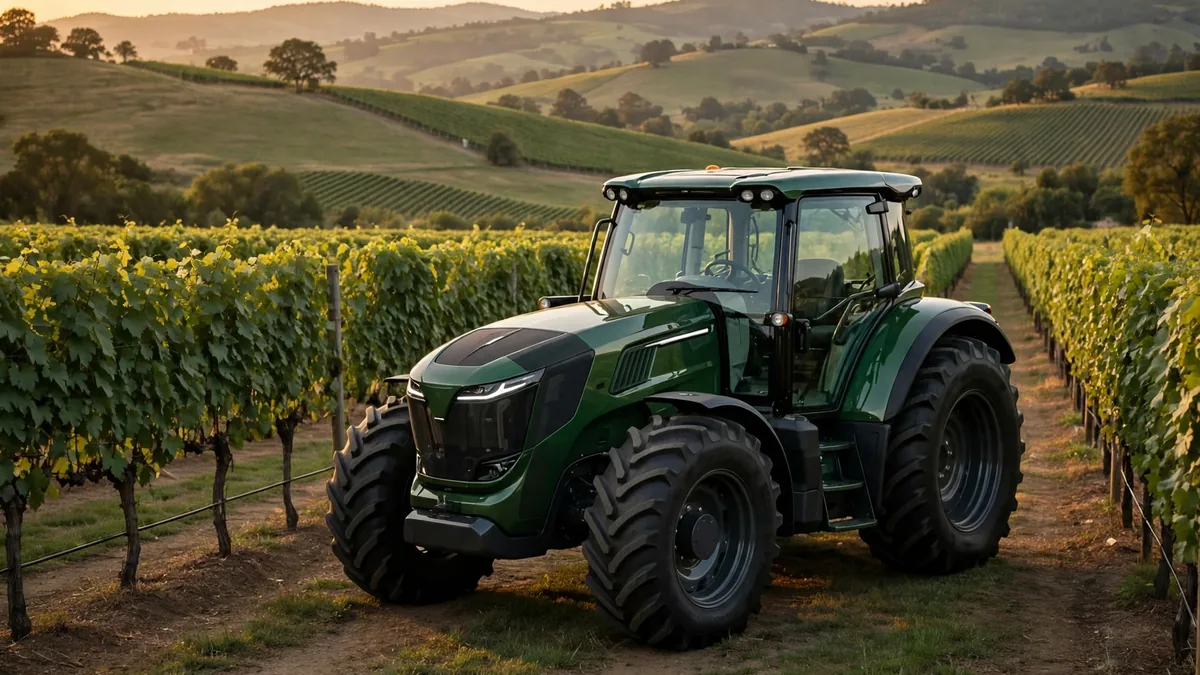
Dawn in a Napa vineyard, and the rows of vines are still wet with dew. A tractor rolls down the row, but there is no rumble, no puff of diesel smoke, no smell of fuel drifting over the grapes. The driver is listening to the birds. The vines, which are sensitive to exhaust and vibration, notice nothing at all. The only sound is the soft crunch of tyres on gravel.
That silence is the point. A luxury electric tractor is not a farm machine with a battery bolted on; it is a new kind of vehicle, designed from the wheels up around an electric drivetrain, and built for vineyards, estates and orchards where quiet, clean air and precise control matter more than raw horsepower. Here is how one is made.
Estate owners did not choose electric tractors to save the planet, though that helps. They chose them because diesel exhaust settles on grapes and changes how wine tastes, because vibration shakes fruit from delicate branches, and because a noisy machine at dawn wakes guests in the farmhouse hotel. An electric tractor solves all three at once, and it does something a diesel never could: it works through the night without disturbing anyone, its headlights sweeping the rows while the house sleeps. For a vineyard that sells bottles for hundreds of dollars, that quiet is worth more than the fuel it saves, and it is why the most expensive estates in the world were among the first to order one.
How It Is Made
Step 1: The chassis is built around the battery
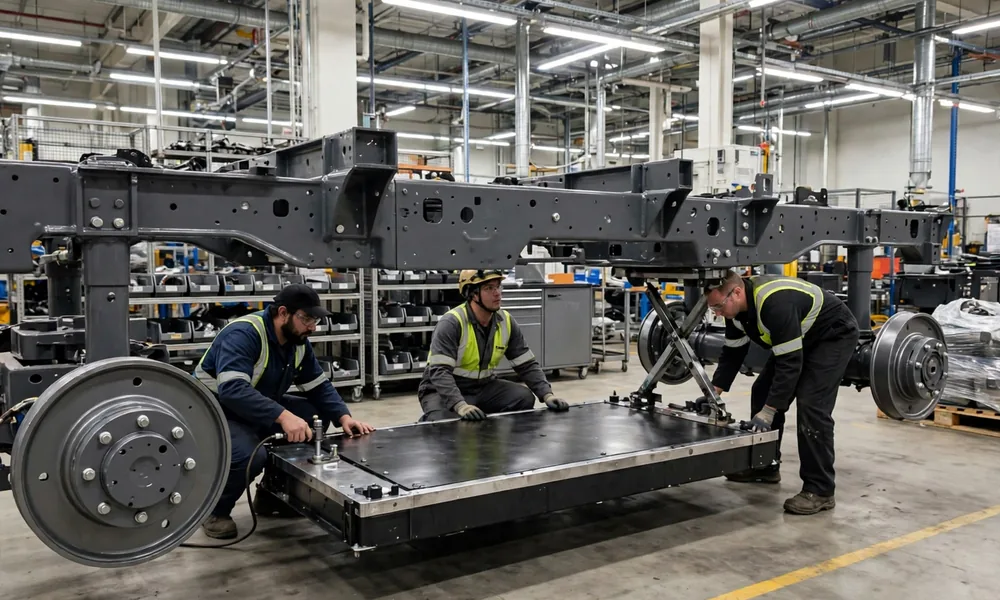
A luxury electric tractor starts with its chassis, but unlike a diesel tractor the frame is designed around the battery pack first. The pack sits low, between the axles, forming the structural spine of the machine and keeping the centre of gravity close to the ground. That low weight is what lets the tractor work on steep vineyard slopes without tipping, and the chassis is built from high-strength steel so it can carry the pack, the cab and a full load of implements without flexing.
Step 2: The battery pack is assembled and sealed
The battery is the most expensive single part of the tractor, and it is assembled in a clean room. Hundreds of lithium cells are grouped into modules, wired together and sealed inside a steel case that is waterproof, dustproof and strong enough to survive a knock from a rock or a fence post. Liquid cooling channels run between the modules, because a battery that stays cool lasts longer and charges faster. Before it leaves the line, every pack is charged, discharged and checked cell by cell.
Step 3: Electric motors replace the engine and gearbox
Where a diesel tractor has an engine, a clutch and a gearbox, the electric tractor has one or two compact electric motors driving the axles directly. Each motor is a sealed unit of copper windings and magnets, with no exhaust, no oil changes and almost no moving parts to wear out. Because electric motors make full torque from a standstill, the tractor can creep along a vine row at walking pace with perfect control, then pull a loaded trailer up a hill without ever changing gear.
Step 4: The cab is fitted like a luxury car
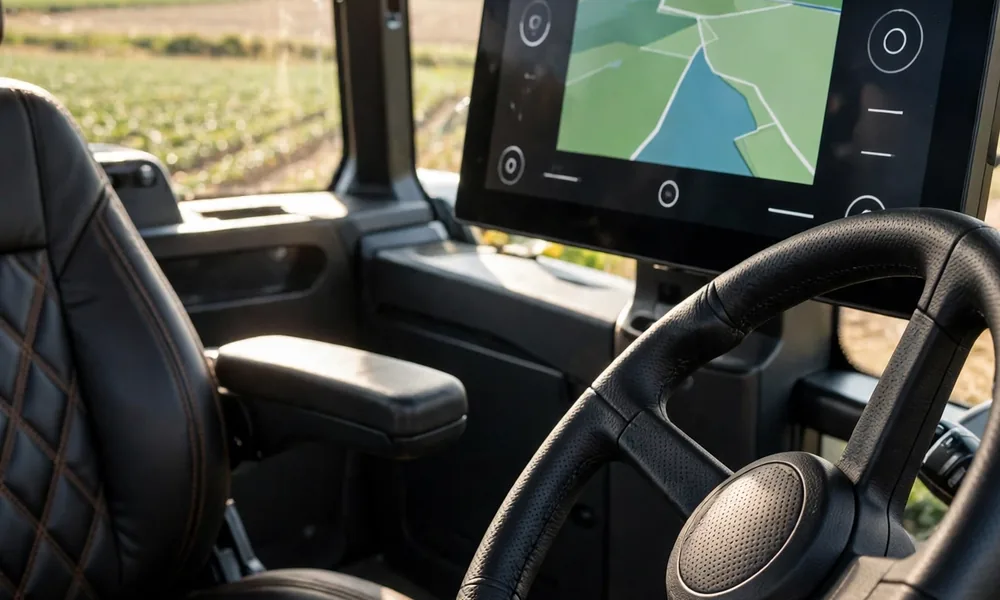
The cab is where a luxury electric tractor earns its name. It is a sealed, air-conditioned space with a panoramic glass roof, a leather seat that swivels to watch the implement behind, and a touchscreen that controls everything from the hitch to the headlights. Sound insulation is so thorough that the loudest thing in the cab is usually the radio, and the glass is tinted and laminated to keep out heat, dust and ultraviolet light during long summer days.
Step 5: Software, sensors and self-driving are installed
Next comes the brain. Cameras, radar and satellite positioning are fitted around the tractor, feeding a computer that can steer it down a vine row to within a couple of centimetres, turn at the end, and start the next row without the driver touching the wheel. The software also manages the battery, deciding when to save power, when to send it to the wheels and when to run the power take-off for implements. Every update arrives over the air, like a phone. The same screen shows the battery charge, the hours left in the working day and the health of every cell, so the driver always knows whether there is enough energy to finish the row, and the estate manager can check the whole fleet from an office miles away.
Step 6: Testing in mud, dust and heat
Before a luxury electric tractor is delivered, it is tested the way a vineyard will test it. It works in mud and dust, in heat and rain, pulling implements for hours while engineers watch battery temperature and motor load. It is driven up slopes, across ditches and through water, to prove the sealed battery and motors shrug off everything a farm can throw at them. Only when it has passed does it get its paint polished and its cab detailed, ready for the estate that ordered it.
Luxury Electric Tractor Specifications
The figures below describe a typical luxury electric tractor built for vineyards and estates. Larger models exist, but the way they are built is the same.
| Specification | Typical figure | What it means |
|---|---|---|
| Battery capacity | 60 to 150 kilowatt-hours | The energy store, sealed low in the chassis between the axles. |
| Motor power | 75 to 150 horsepower | Full torque from a standstill, with no gearbox to shift. |
| Working time | 4 to 10 hours | A full working day on one charge, depending on the job. |
| Charging time | 2 to 8 hours | Faster on a three-phase farm supply than on a standard socket. |
| Top speed | 25 to 40 kilometres per hour | Road speed for moving between fields and vineyards. |
| Build time | 4 to 8 weeks | Battery, motors and cab fitted and tested before delivery. |
What It Costs
A luxury electric tractor costs an estimated $120,000 to $350,000 to build and buy, including the battery pack, motors and smart cab, depending on the size of the battery and the level of self-driving fitted, with the largest estate models costing more. Those are estimates, not quotes, and they reflect a battery that can be a third of the price of the whole machine, plus software that keeps improving after delivery. The way the finished tractor behaves in the field is covered in how a luxury electric tractor works, and the numbers behind it are explained in luxury electric tractor specs explained.
A Rare Fact
Here is a detail most people never guess. A luxury electric tractor can feed power back out again. Its battery can run a vineyard’s irrigation pump, a barn’s lights or even a house during a power cut, turning the tractor into a mobile power station when it is parked. Farmers call it vehicle-to-load, and it means the most expensive part of the tractor earns its keep even on days when nobody is driving it, a trick its diesel ancestor could never do, as how a luxury tractor is made shows.