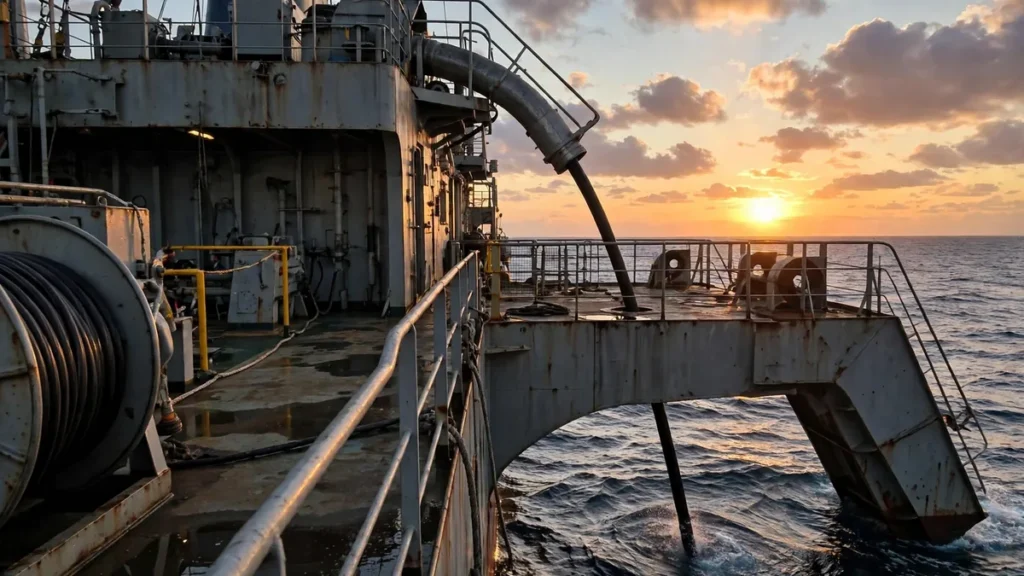
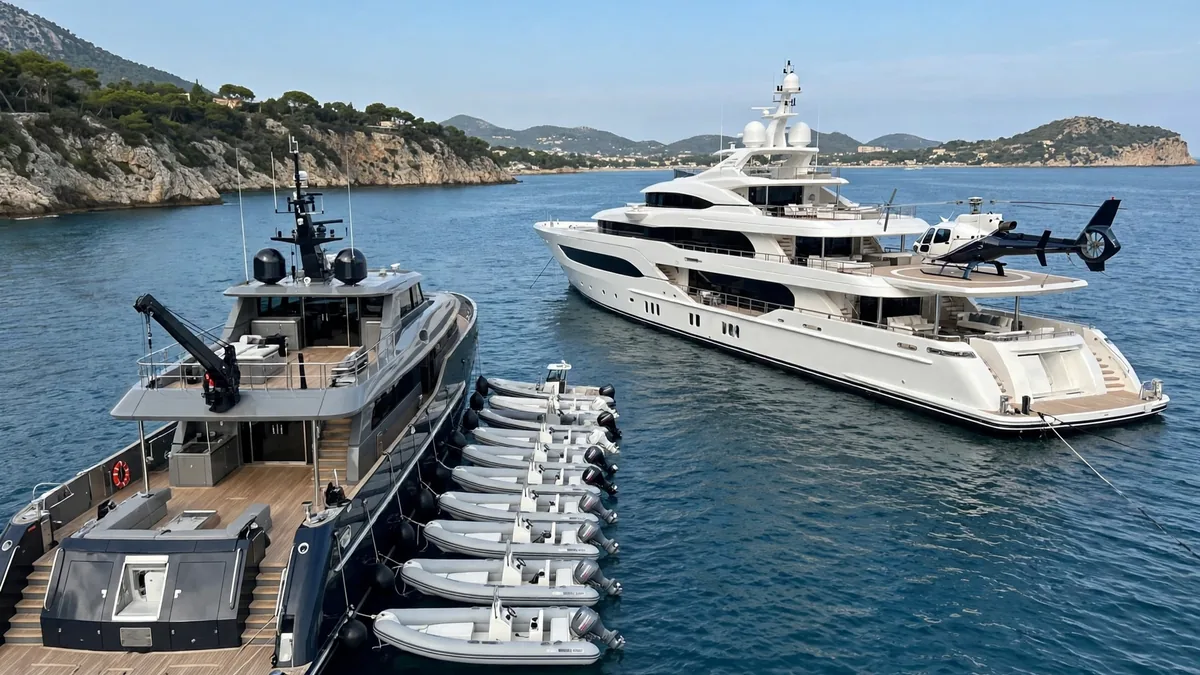
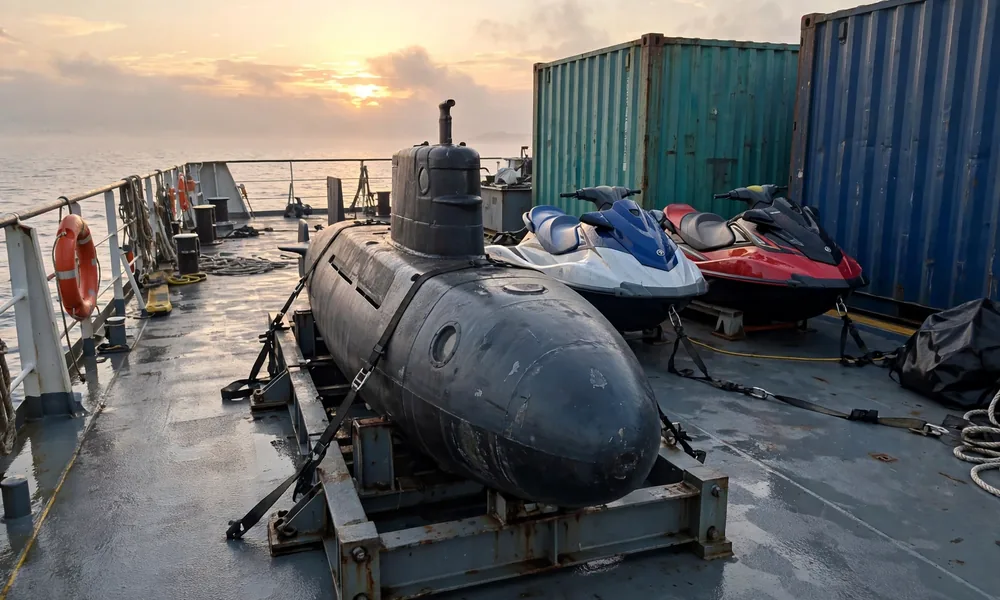
The superyacht is anchored in a bay so beautiful it looks painted, and nobody on deck is looking at it. They are looking at the ship anchored a hundred metres away, which is longer, plainer and far more interesting. It has a helicopter on its deck, a small submarine in a cradle, three tenders lined up in a row, and a crane that could lift a car.
This guide reads a luxury support vessel spec sheet the way a yacht captain would, number by number, so you can tell which figures decide what the yacht can actually do and which are only there to fill the page. The vessel in question is a modern luxury support ship of around 50 to 70 metres, and as an estimate, one like it costs around $30 million to $80 million to build, depending on its crane, hangar and toys.
The spec sheet at a glance
| Specification | Typical luxury figure | What it tells you |
|---|---|---|
| Length overall | 50 to 70 metres | How much deck space there is for toys |
| Deck area | 400 to 800 square metres | How many tenders and toys fit on board |
| Crane capacity | 10 to 30 tonnes | How heavy a load it can lift |
| Helicopter deck | Certified for landing | Whether the helicopter can land at sea |
| Fuel capacity | 200,000 to 500,000 litres | How far it can follow the yacht |
| Cruising speed | 12 to 16 knots | How fast it can keep up with the yacht |
| Range | 5,000 to 8,000 nautical miles | How far it can roam without refuelling |
| Crew | 15 to 30 people | How many hands run the toys and the ship |
Deck area: the number that matters most
The first number to read is the deck area, because a support vessel is a floating garage, and its deck is its whole reason for existing. A deck of 600 square metres can carry a helicopter, three tenders, a submarine, jet skis, diving gear and a stack of containers, all tied down and ready to launch, while a small deck forces the owner to choose between the helicopter and the submarine. The guide to how a luxury support vessel is made follows the ship from the yard, and it shows how the hull is shaped for deck space rather than speed.
Crane capacity: what the ship can lift
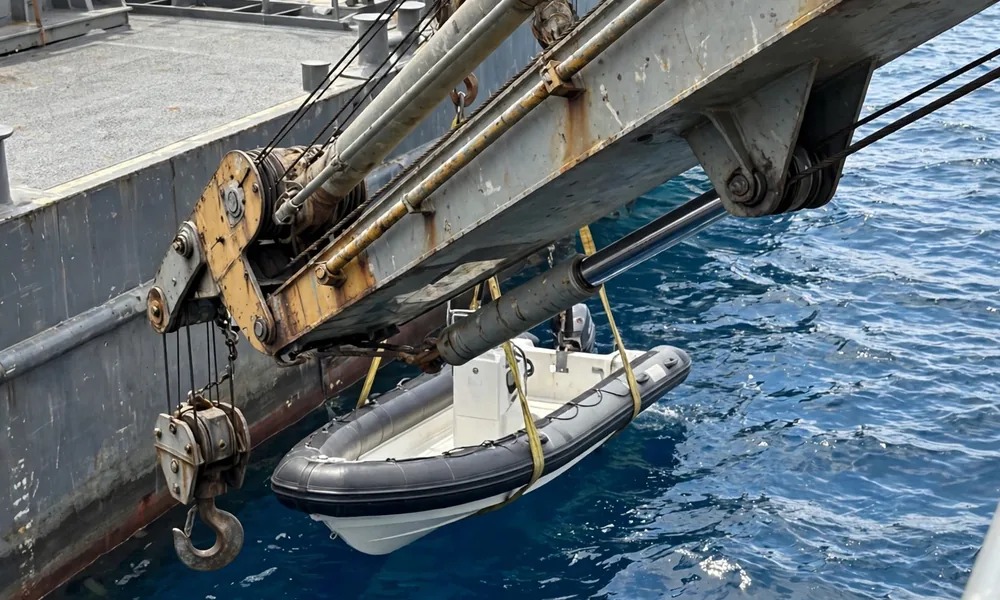
Crane capacity is the number that decides which toys the vessel can actually carry, and it is the figure most buyers misunderstand. A crane rated at 20 tonnes can lift a tender, a submarine or a container of fuel, but it can only lift its full load close to the ship, and at full reach over the side its safe load drops sharply, so the sheet should say what the crane can lift at the distance the crew really work at. A good support vessel carries a crane with a long reach and a steady motion compensator, a system that keeps the load still while the ship rolls, because a tender swinging over the side in a swell is a tender about to be damaged.
Helicopter deck and hangar: the sky above the ship
The helicopter deck is the most glamorous line on the sheet, and it is the one to read most carefully. A deck certified for landing means the helicopter can land at sea, which needs a proper landing circle, tie-down points, firefighting equipment and a crew trained to guide the pilot in, while a deck marked for touch-and-go only means the helicopter can drop a passenger and leave again without ever shutting down. A hangar changes everything, because a helicopter kept inside stays dry and ready, while one left on deck in salt spray needs hours of cleaning before it can fly. Read the hangar figure next to the helicopter the owner actually flies, because a hangar built for a small helicopter will not fit a large one, and the most expensive mistake in support vessel buying is a hangar one metre too short.
Fuel capacity and range: following the yacht
Fuel capacity is the number that decides how useful the vessel is, because a support vessel that must refuel every week cannot follow its yacht to remote islands. A tank of 300,000 litres sounds enormous, but it feeds the main engines, the generators, the helicopter and the tenders, and a support vessel burns fuel like a small town, so the honest figure is the range at the speed the yacht really cruises at. A range of 6,000 nautical miles means the vessel can cross an ocean with its yacht and still have fuel to spare, while a short-range vessel is tied to the fuel dock and the yacht must wait for it. The offshore supply vessel is the support vessel’s working cousin, and the guide to luxury offshore supply vessel specs reads a similar sheet for a ship that carries cargo to oil platforms.
Cruising speed and crew: keeping up and keeping busy
Cruising speed on a support vessel is a working number, usually 12 to 16 knots, and it matters because the vessel must keep up with the yacht it serves. A yacht that cruises at 15 knots will leave a slow support vessel behind, and the toys will arrive a day late, so the vessel is built to match the yacht, not to race it. Crew size is the companion figure, because a vessel with 20 crew can launch the helicopter, the submarine and the tenders all at once, while a vessel with 10 crew must choose which toy to launch first.
What the spec sheet leaves out
Every spec sheet leaves out the numbers that matter most, and on a support vessel the missing numbers are the ones about the toys themselves. No sheet lists how fast the crane can launch a tender in a swell, how long the helicopter takes to refuel, or how many divers the vessel can support at once, and those three things decide the day more than any figure in the table. A rare fact worth knowing is that some support vessels carry a small hospital room with a recompression chamber, so a diver hurt on a remote reef can be treated on board, and a few even carry a second, smaller support boat of their own, a tender for the tender. The semi-submersible yacht is the support vessel’s strangest cousin, a yacht that sinks its deck to float toys on and off, and the guide to how a luxury semi-submersible yacht works shows a different answer to the same problem of carrying toys to sea.
Read the sheet in this order, and it stops being a list of working numbers. Start with deck area and crane capacity, because they decide what the vessel can carry and lift. Then read the helicopter deck and the fuel capacity, because they decide how the vessel flies and how far it can follow the yacht. Then check the cruising speed and the crew, because they decide whether the vessel keeps up and whether it can launch everything at once. The rest of the numbers are decoration, and a vessel that scores well on the working figures is a vessel its yacht can rely on.