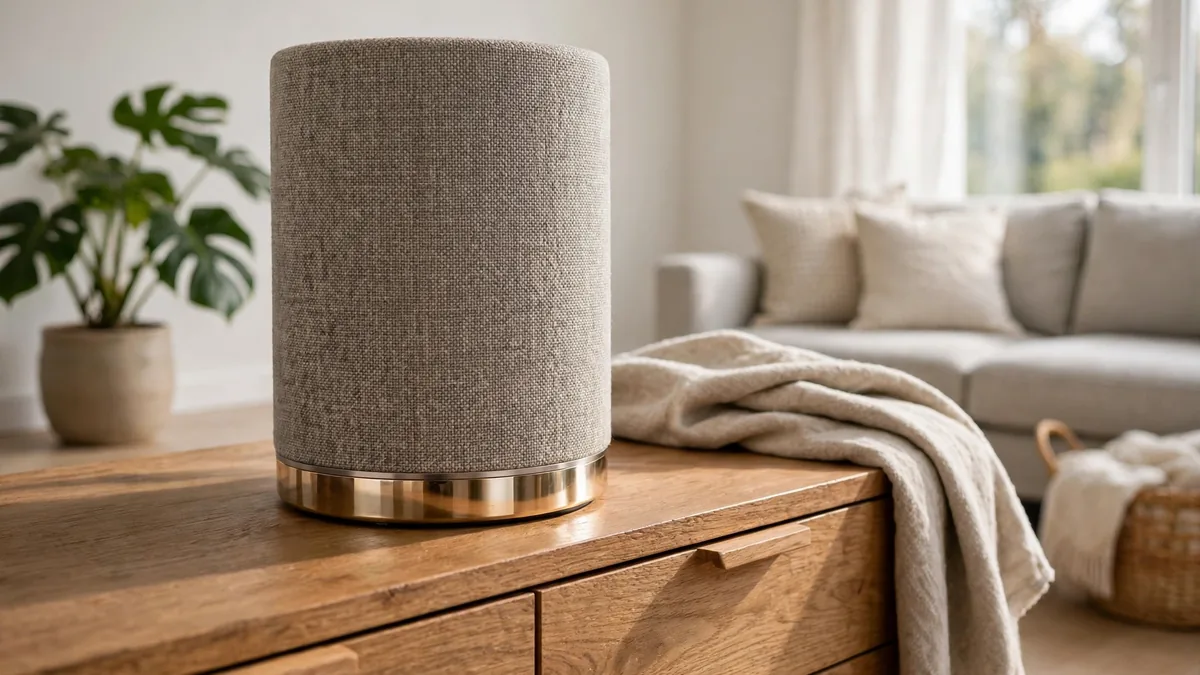
The first time I stood in front of a luxury wireless speaker, I did not listen to it at all. I read it. The little card beside it was crowded with numbers and abbreviations, and the salesman spoke about drivers and decibels as if they were the names of old friends. The speaker itself sat quietly on its wooden plinth, a fabric cylinder with a metal base, looking far too calm for the amount of engineering it was supposed to contain. I went home, played my favourite record through the ordinary speaker I already owned, and realised I had no idea what any of those numbers actually meant.
That is the problem with a spec sheet. It is written for people who already know how to read one, and everyone else is left to guess whether a bigger number is better, or whether it is simply bigger. A luxury speaker is not a cheap gadget, so guessing is an expensive habit. The good news is that the sheet is not as mysterious as it looks. Once you know what each line is measuring, the whole thing starts to read like a short story about how the speaker makes sound, how loud it can go, and how long it will keep doing it.
What the numbers on the box are really saying
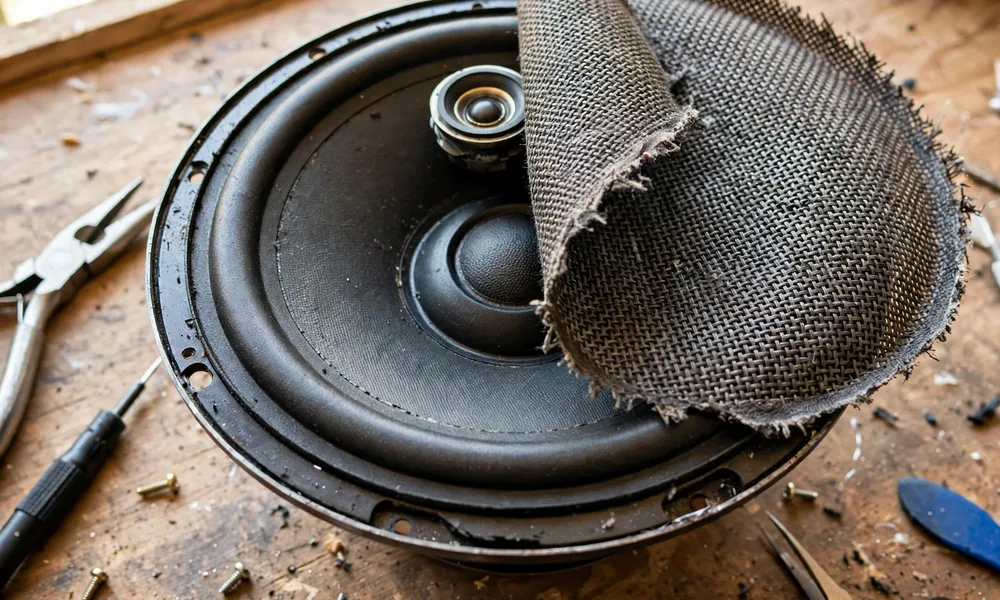
Every speaker is a small argument between physics and furniture. It has to move air, and moving air takes space, power and control. The spec sheet is where the maker confesses how that argument was settled. The most important lines are the ones about the drivers, because the drivers are the parts that actually push the air. A woofer handles the low notes, a tweeter handles the high ones, and a midrange driver, where one exists, fills the middle ground where most voices live. When a maker lists two or three drivers instead of one, it usually means each one can concentrate on a narrower job, and the sound stays cleaner when the music gets busy.
Power is the line people misunderstand most. Watts on a speaker box are not a measure of loudness on their own. They describe how much electrical power the amplifier can deliver to the drivers, What matters more is sensitivity, the figure that tells you how much sound the speaker produces from a single watt at a distance of one metre. A sensitive speaker needs less power to fill a room,
Frequency response is the line that describes the range of notes the speaker can reproduce, from the deepest bass to the highest treble. A typical figure might run from around forty hertz to twenty thousand hertz, The small print matters here, because a range quoted with a tolerance of plus or minus three decibels is an honest measurement, while a range quoted without any tolerance at all may only describe what the speaker can do at whisper volume. How a luxury wireless speaker actually works is the natural companion to this guide, because it explains the journey from a digital file to the air in your room.
The spec table, line by line
| Specification | Typical luxury figure | What it means |
|---|---|---|
| Drivers | One woofer, one tweeter, sometimes a midrange | More drivers let each one specialise, so busy music stays clear. |
| Amplifier power | 50 to 200 watts total | How much power the built-in amplifier can deliver to the drivers. |
| Sensitivity | 85 to 92 decibels at one watt, one metre | Higher means louder sound from the same power. |
| Frequency response | 40 hertz to 20,000 hertz, plus or minus three decibels | The range of notes the speaker can play honestly. |
| Wireless codecs | Wi-Fi, Bluetooth, and high-resolution audio support | Better codecs carry more musical detail from phone to speaker. |
| Battery life | 12 to 24 hours on portable models | How long a portable speaker plays before it needs charging. |
| Weight | 2 to 8 kilograms | Heavier cabinets vibrate less, which keeps bass tight. |
The wireless section of the sheet deserves a slower look, because it decides what your music sounds like before the drivers ever move. Bluetooth is convenient and works with almost everything, but the codec it uses decides how much detail survives the journey. Wi-Fi streaming usually carries more detail, and some luxury speakers support high-resolution audio formats that preserve the fine texture of a recording.
How to judge a speaker before you buy it
Start with your room, not the shop. A small room does not need a huge speaker, and a huge speaker in a small room will spend its life turned down, which is a waste of good engineering. A speaker with a sensitivity of around eighty-eight decibels will fill an ordinary living room comfortably, while a larger open-plan space rewards a more sensitive design or a second speaker paired in stereo.
Next, listen for the middle. Shops love to demonstrate bass, because bass is dramatic and easy to sell, but most of the music you love lives in the middle frequencies, where voices and guitars and pianos sit. A speaker that keeps voices natural and clear at normal volume is doing the hard job well. The bass should support the music, not swallow it.
Finally, check the practical lines that never make the advertising. Battery life matters if the speaker is portable, Charging time, water resistance and the weight all decide whether the speaker actually travels with you or quietly becomes a piece of furniture. The story of how a luxury wireless speaker is made shows why those practical details are engineered in from the start, not added as an afterthought.
What a luxury speaker costs, roughly
Prices for luxury wireless speakers vary widely, and the figures here are estimates, not a price list. A well made compact luxury speaker typically costs somewhere in the region of five hundred to one thousand five hundred dollars, while a large flagship model with multiple drivers, a heavy braced cabinet and high-resolution streaming can reach three thousand dollars or more. A cheap speaker can be loud. A luxury speaker is supposed to be truthful, and truth costs more to build.
There is a rare fact tucked into the history of these machines that still surprises people. Some of the earliest wireless speakers were not designed to be admired at all. They were built to disappear into a room, and their makers spent as much effort hiding the technology as they did improving the sound. The modern luxury speaker has reversed that idea completely. Today the speaker is meant to be seen, touched and talked about, and the fabric, metal and wood are part of the pleasure, not a disguise. The sound still matters most, but the object matters too, and that is a very modern kind of luxury.

The short version to carry into the shop
Read the spec sheet in this order and you will not go far wrong. First the drivers, because they make the sound. Then the sensitivity, because it tells you how easily the speaker fills your room. Then the frequency response with its tolerance, because that is the honest measure of range. Then the wireless codecs, because they decide how much detail arrives in the first place. Everything else, from battery life to weight, tells you how the speaker will live in your home. If a speaker passes all five of those tests, listen to it with a song you know by heart. The numbers will have done their job, and your ears can take over from there. For a smaller cousin of the same idea, see how a luxury smart speaker works and notice how much of the same engineering hides inside a much smaller box.