Pick up a magnesium alloy wheel with one hand and the first thing you notice is how little of it there seems to be. It looks like it should weigh as much as an aluminium wheel of the same size, and your arm expects that weight, but the wheel arrives early, as if someone had quietly hollowed it out. That surprise is the whole point of magnesium. It is the lightest structural metal engineers can actually build with, about a third lighter than aluminium and three quarters lighter than steel, and in machines where every gram is a penalty, that difference is worth real money.
Magnesium has tempted engineers since the 1930s, when racing cars and aircraft first used it for parts that had to be light above all else. The trouble was never the weight. It was everything else: the metal burns when machined carelessly, corrodes when left unprotected, and early alloys cracked under loads aluminium handled easily. Modern chemistry, coatings and casting have closed most of that gap, turning a temperamental metal into a reliable material used in gearboxes, steering wheels, laptop frames, racing wheels and aircraft seat frames. The numbers on a specification sheet tell you exactly how far it has come. Here is what those numbers mean, and how a magnesium alloy part actually works.
How It Works
Step 1: Alloying the magnesium
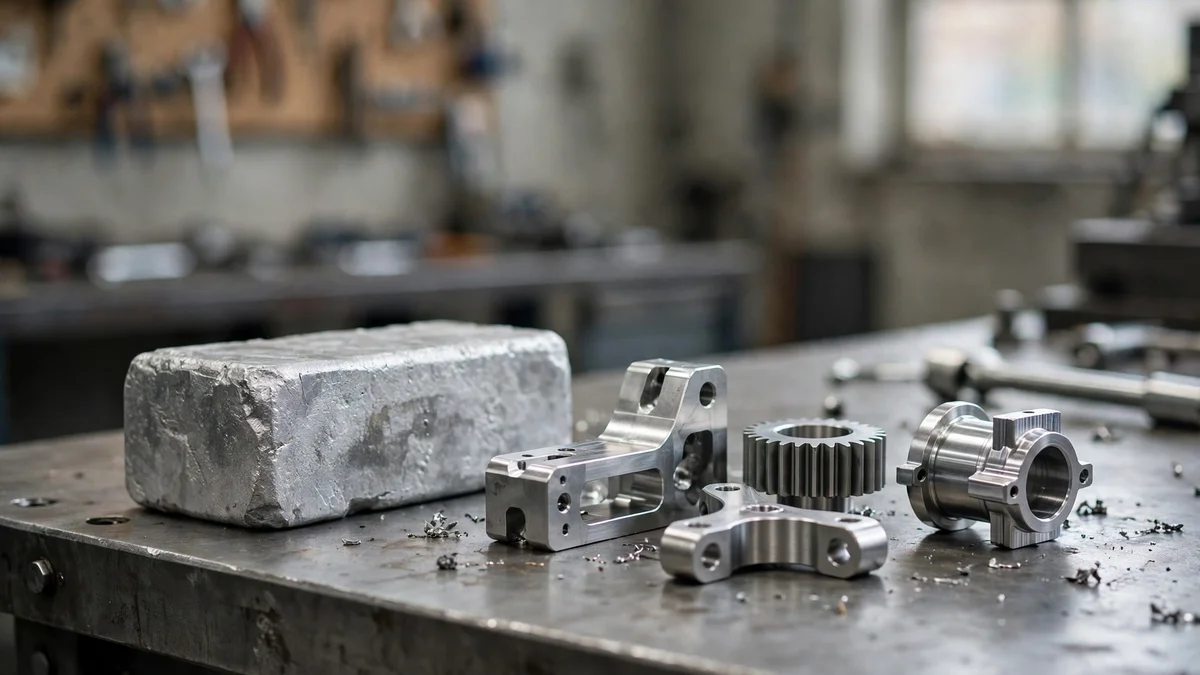
Pure magnesium is too soft and too reactive to build much from, so alloying comes first. Aluminium is the most common partner, usually three to nine percent, with zinc and manganese added in smaller amounts. The common AZ91D alloy is roughly ninety percent magnesium, nine percent aluminium and one percent zinc, while premium alloys add rare-earth elements such as yttrium for hot parts.
Step 2: Casting the shape
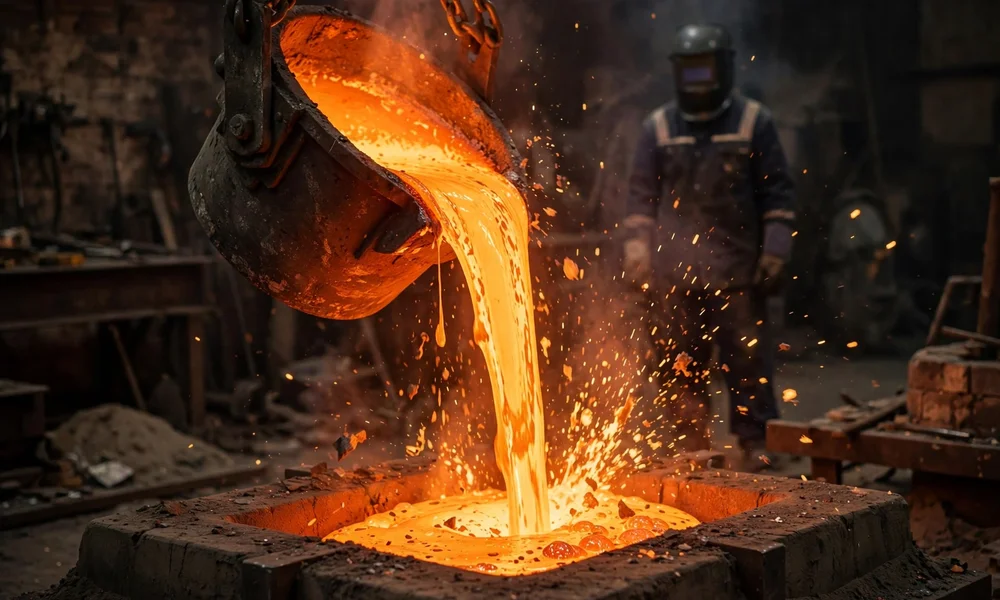
Most magnesium parts start as a casting, because the metal flows beautifully into a mould. High-pressure die casting forces molten alloy into a steel die in a fraction of a second, producing thin-walled parts with fine detail. The melt is kept under a blanket of protective gas, because molten magnesium will happily catch fire in air, and sand casting handles the larger parts.
Step 3: Refining the grain
Strength in magnesium comes largely from grain size, and small grains are better. As the casting cools, engineers want a fine, even grain structure rather than large crystals that give cracks somewhere to run. Rapid cooling and grain-refining additives push the grains smaller, while forging or extrusion can nearly double the strength of a cast part.

Step 4: Machining to tolerance
Machined magnesium cuts beautifully, which is both a gift and a hazard. Tools last longer and finishes come out smooth, but the fine chips are flammable, so shops machine it dry or with mineral oil, never water-based coolant, and keep the chips swept up and sealed. Modern mills hold parts to tolerances of a few hundredths of a millimetre.
Step 5: Protecting the surface
Bare magnesium corrodes quickly in salty or damp air, so almost every part gets a protective finish. The classic treatment is a chromate conversion coating, a thin chemical layer that turns the surface passive, followed by paint or powder coat. Newer parts use plasma electrolytic oxidation, which grows a hard ceramic-like skin on the metal.
Step 6: Joining and testing
The finished part is joined to its neighbours by bolts, adhesives or friction stir welding, which stirs the metal together without melting it and avoids the cracking that can plague fusion welding. Every critical part is then tested: X-ray or ultrasound for hidden voids, pressure testing for housings, and fatigue testing that bends the part millions of times.
The Specs, Explained
Every number on a magnesium specification sheet answers a real question. Density decides how much weight you save. Tensile strength decides how much load the part can carry before it breaks. Yield strength decides how much it can carry before it bends permanently. The table below shows typical values for the most widely used alloys, alongside aluminium and steel.
| Property | AZ91D (cast) | AZ31B (wrought) | WE43 (high-temp) | Aluminium 6061 | Steel |
|---|---|---|---|---|---|
| Density | 1.81 g/cm³ | 1.78 g/cm³ | 1.84 g/cm³ | 2.70 g/cm³ | 7.85 g/cm³ |
| Tensile strength | 230 MPa | 260 MPa | 250 MPa | 310 MPa | 400–550 MPa |
| Yield strength | 150 MPa | 200 MPa | 185 MPa | 275 MPa | 250–350 MPa |
| Elastic modulus | 45 GPa | 45 GPa | 44 GPa | 69 GPa | 200 GPa |
| Melting point | 595 °C | 605 °C | 640 °C | 652 °C | 1,370 °C |
| Thermal conductivity | 72 W/m·K | 96 W/m·K | 51 W/m·K | 167 W/m·K | 50 W/m·K |
| Specific strength | 127 kN·m/kg | 146 kN·m/kg | 136 kN·m/kg | 115 kN·m/kg | 51–70 kN·m/kg |
The headline number is density. At about 1.8 grams per cubic centimetre, magnesium is roughly a third lighter than aluminium and nearly four times lighter than steel, so a part redesigned in magnesium can lose a third of its weight overnight. The trade-off is stiffness: at 45 gigapascals against aluminium’s 69, a magnesium part flexes more under load, so engineers make it thicker or add ribs. The table also shows specific strength, where magnesium beats both aluminium and steel. The comparison with titanium machining is instructive too: titanium is far stronger, but heavier and harder to cut.
What It Costs
Magnesium is not a cheap material, and its price is the main reason it has not replaced aluminium everywhere. Raw magnesium ingot typically trades at roughly two to three times the price of aluminium per kilogram, and the protective gas, careful handling and coatings add cost at every step. Even so, the finished part is usually priced by the component, and the numbers are more reasonable than the raw material price suggests.
As a rough guide, and these are estimates, a die-cast magnesium gearbox housing costs roughly $40–$90 per unit in volume, against $25–$60 in aluminium. A forged magnesium racing wheel runs roughly $1,200–$2,500 each, and an aircraft seat frame is typically $300–$800. The premium is justified by the weight saved: in motorsport and aviation, shedding a kilogram is often worth hundreds of dollars. Similar trade-offs shape carbon fibre curing, where the material is far dearer still but the weight saving is greater.
A Rare Fact
During the Second World War, magnesium was so strategically important that the United States built entire towns around its production, including Basic Magnesium in Nevada, which made the metal from dolomite rock on a scale never attempted before. But the rarer story is older: in the 1930s, the German Silver Arrows racing cars used magnesium alloy bodies so light their panels were said to be flammable enough to burn if a crash sparked, a risk the drivers accepted for the speed it bought.
That is the quiet appeal of the metal. It asks engineers to work harder, to coat it, cast it carefully and machine it with respect, and in return it gives them something no other structural metal can: a part that feels almost too light to be real. From a gearbox housing in a family car to a seat frame at 35,000 feet, magnesium earns its place one gram at a time, and the same logic drives carbon monocoque production, where lightness is engineered gram by gram rather than bought in bulk.