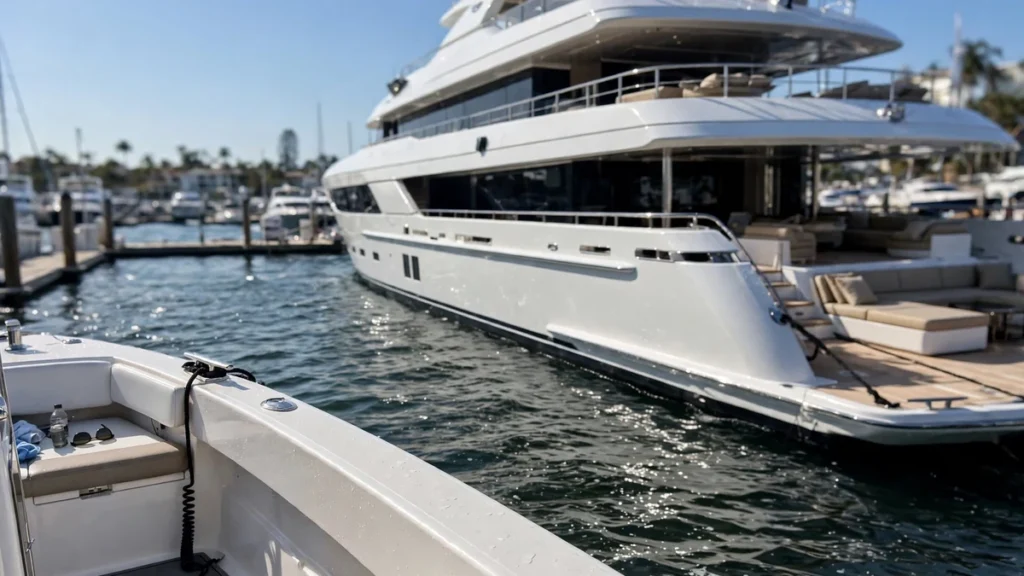
Stand on the swim platform of a large yacht at anchor and you will hear it before you see it: a low hydraulic hum, a seam of light widening along the transom, and then a door swings up to reveal a garage. Inside, in a space no bigger than a double garage at home, sits a tender worth more than most houses, a jet ski, diving gear, and a wall of neatly racked toys.
That disappearing act is an engineering trick, and the materials make it possible. The garage is a hole cut into the most stressed part of the hull, and everything in it has to survive salt water, fuel vapour, heavy loads and constant motion. It is a floodable compartment, a crane bay and a workshop in one.
Here is what those materials are, and why each one earned its place.
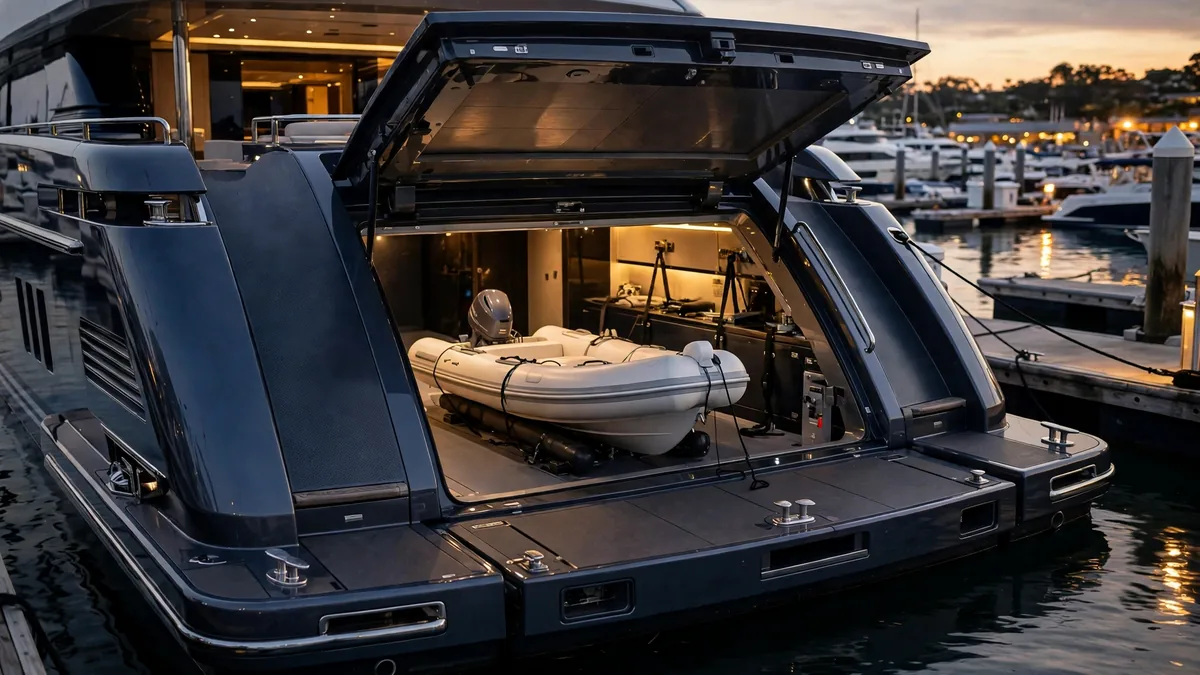
The Materials Behind the Superyacht Tender Garage
1. Marine-grade aluminium, the frame that holds the hole open
The garage is a large opening in the hull, and the structure around it has to carry the loads the missing plating used to carry. That job usually falls to marine-grade aluminium, most often 5083 alloy, which keeps its strength after welding and resists salt corrosion far better than ordinary aluminium. The frames, door guides and cradle rails are built from it, often anodised or painted for a second layer of protection. The same alloy shows up across the yacht, as how a superyacht aluminium superstructure works explains, and it is light, which matters, because every kilogram saved in the stern is one that does not drag the yacht down by the transom.
2. Composite panels, the walls that stay dry and quiet
The inner walls of the garage are rarely bare metal. They are usually glass-reinforced plastic panels, often with a foam or balsa core, bonded to the structure and finished with a tough gel coat. Composites do not rust, they do not mind being hosed down, and they can be moulded into the curves and recesses a garage needs. They also dampen sound, so the rattle of a tender shifting in its cradle does not travel into the cabins above. A damaged panel can be cut out and a new one bonded in, far easier than re-welding a metal wall in a finished yacht.
3. Stainless steel, the door, hinges and tracks that must never jam
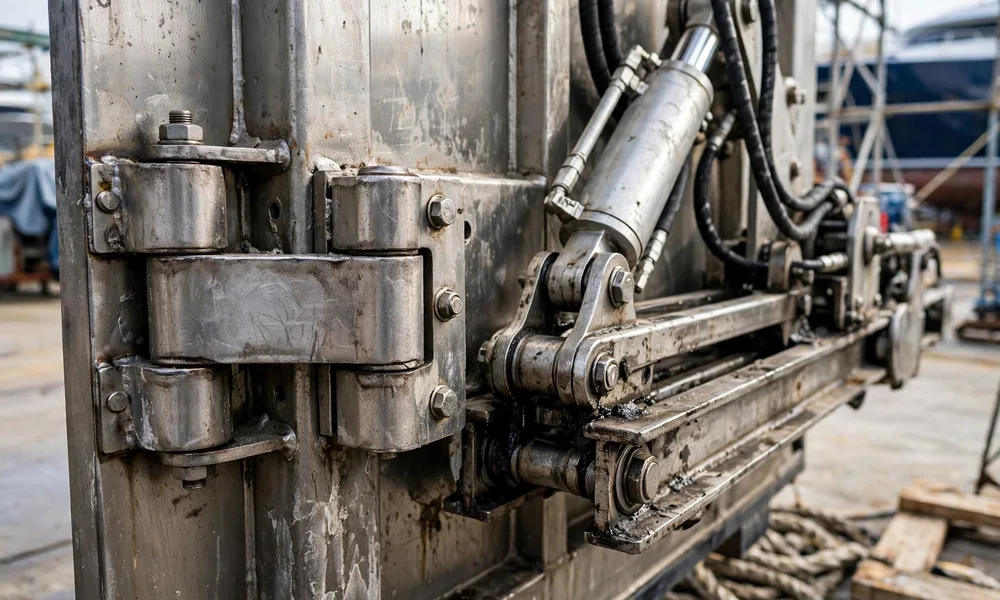
The garage door is the hardest-working part of the whole arrangement. It may weigh several tonnes, it has to seal against the sea, and it has to open smoothly after months at anchor in salt air. Its hinges, rollers, tracks and rams are made from 316 marine-grade stainless steel, the grade that resists the pitting salt water causes in lesser steels. The door panel is often a composite skin over a steel or aluminium frame, stiff but not impossibly heavy. A door that jams is not a minor fault: it can trap the tender inside or leave the stern open to the sea, which is why the hardware is over-specified and inspected often.
4. Teak or synthetic decking, the floor that takes the punishment
The garage floor has a hard life. A tender weighing two or three tonnes is winched across it on rollers, fuel is spilled on it, and seawater sloshes over it every time the boat is recovered. The floor is usually teak or a synthetic teak made from PVC, over a sealed composite or aluminium subfloor. Real teak is grippy when wet and shrugs off salt, while synthetic teak costs less, needs no oiling and resists fuel stains. Under either surface, the floor slopes towards stainless scuppers and drains that lead overboard, never into the bilge, so a flooded garage can empty itself.
5. Rubber seals and fenders, the soft parts that keep the sea out
For all the metal and composite, the part that keeps the ocean out is soft: a thick rubber gasket around the door, compressed by the locking mechanism into a watertight seal. The rubber is usually EPDM or neoprene, which stays flexible in cold water and does not perish in sun and salt. Inside, the tender sits in a cradle lined with rubber fenders and chocks that grip the hull without scratching it. These soft parts are consumables: a seal gone hard or a fender split is the most common reason a garage starts to leak, and replacing them is one of the cheapest jobs on the yacht, which is why it is so often left too late.
6. Coatings and drainage, the invisible defence against corrosion
Everything in a tender garage is coated for a wet, fuel-splashed environment. Steel parts get epoxy primers and polyurethane topcoats, aluminium gets chromate or anodised finishes, and the bilge area under the floor gets a thick epoxy coating that can be washed down. The garage also has its own bilge pump and high-water alarm, because the first sign of a failed seal is water where it should not be. The cost of getting it wrong is steep, as why a superyacht tender garage is so expensive shows, and done right the garage is the quietest room on the yacht: dry, clean, and ready to launch a boat in minutes.
Superyacht Tender Garage Materials
| Material | Where it is used | Why it is chosen |
|---|---|---|
| 5083 marine-grade aluminium | Frames, door guides, cradle rails | Strong after welding, resists salt, light |
| Glass-reinforced plastic panels | Inner walls and lockers | Will not rust, easy to mould, damps sound |
| 316 stainless steel | Door hinges, tracks, rams | Resists salt-water pitting, strong under load |
| Teak or synthetic teak | Garage floor | Grippy when wet, shrugs off salt and fuel |
| EPDM or neoprene rubber | Door seals, cradle fenders | Stays flexible, seals against the sea |
| Epoxy and polyurethane coatings | Steel, aluminium and bilge surfaces | Seals out water and fuel, easy to wash down |
What Does a Superyacht Tender Garage Cost?
A tender garage is one of the most expensive spaces on a yacht for its size. The door mechanism alone is estimated at roughly $150,000 to $400,000, and the structure, waterproofing and fit-out can easily double that. A complete garage on a 50-metre yacht is estimated at roughly $500,000 to $1.5 million, before the tender itself, which can cost as much again. The beach club is built to a similar standard, as how a superyacht beach club is made shows, and owners pay gladly, because a working garage turns a yacht into a base for everything from diving to dinner ashore.
A Rare Fact
Some of the largest tender garages are designed to flood on purpose. The door opens, seawater comes in, and the tender floats off its cradle and out through the transom, with no crane or winch needed. The garage is then pumped dry and the door closes. It only works because every material in the garage was chosen to survive being underwater regularly.
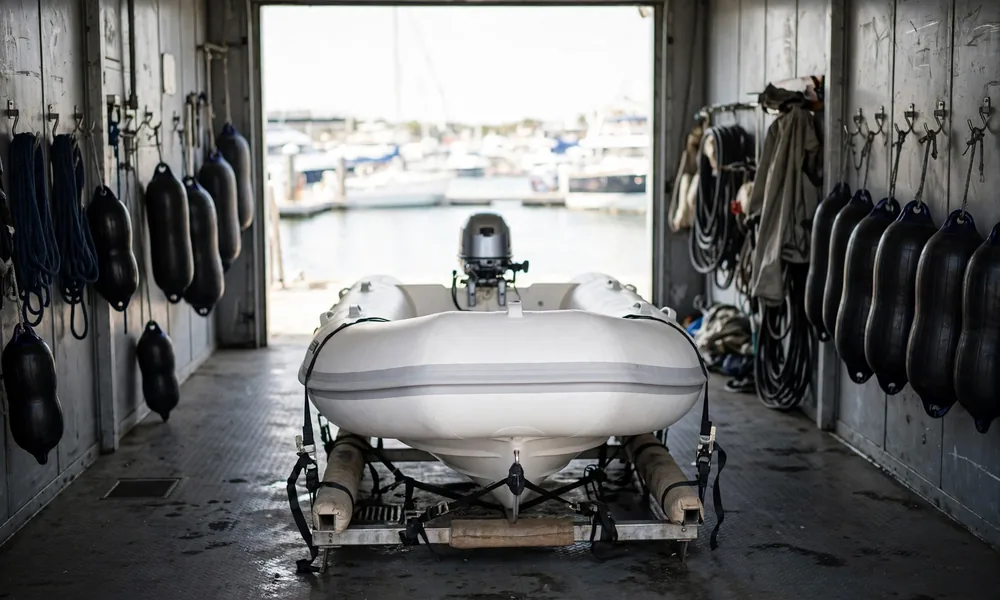
A superyacht tender garage looks like simple storage from the dock, but it is a watertight room built into the most stressed part of the hull. The aluminium carries the loads, the composites keep it dry and quiet, the stainless steel keeps the door moving, and the rubber keeps the sea out. Keep them working together and the stern stays a clean curve with a boatyard hidden inside it.