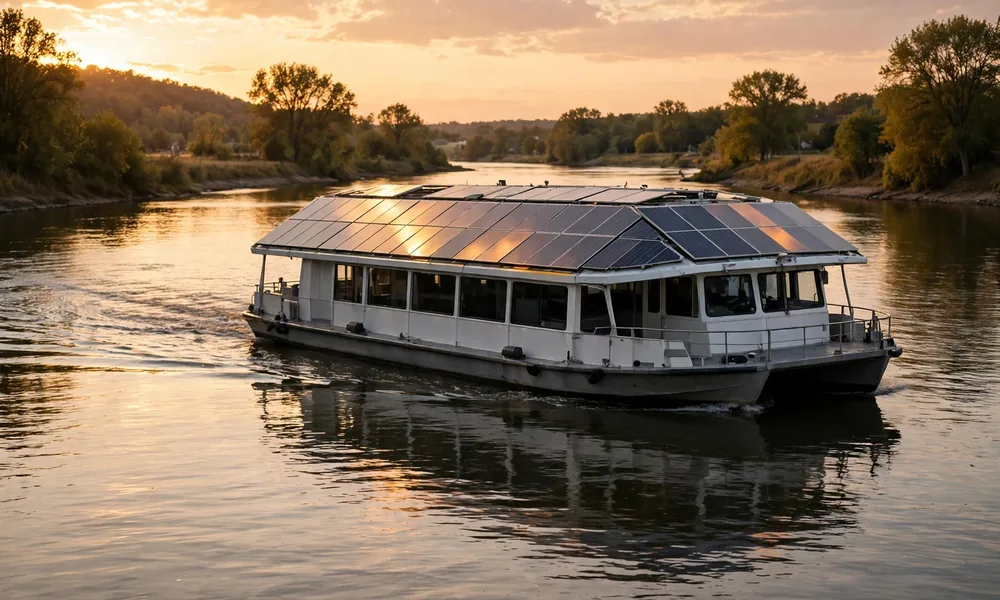
A solar electric ferry is a passenger ferry that runs on electricity, with solar panels on its roof helping to charge its batteries. It is not a science experiment or a concept boat. Solar ferries already carry commuters across rivers, lakes and short sea crossings in several countries, quietly and without exhaust fumes, and their numbers are growing as batteries get cheaper and panels get more efficient. The idea is simple: a ferry follows the same short route many times a day, so it can charge often, and its big flat roof is an ideal place for solar panels.
The appeal is easy to understand. A conventional diesel ferry burns fuel all day, idles at the dock, and fills the waterfront with noise and exhaust. A solar electric ferry does the same job with motors that are almost silent, no local emissions, and running costs that come mostly from electricity rather than diesel. For a city, that means cleaner air at the dock, lower fuel bills, and a ferry neighbours are happy to have nearby.

How the system works
The heart of a solar electric ferry is its battery bank, usually lithium iron phosphate, chosen for safety and long life in marine use. The batteries drive electric motors connected to propellers or podded drives, and the whole drivetrain has far fewer moving parts than a diesel engine. There is no gearbox in the usual sense, no exhaust, and no fuel system to maintain. The motors deliver full torque from a standstill, which suits a ferry that is constantly accelerating away from a dock and then slowing to stop at the next one.
The solar panels sit on the roof, where they have a clear view of the sky and do not take up passenger space. They feed electricity into the batteries whenever the sun shines, whether the ferry is moving or tied up at the dock. On a sunny day they supply a useful share of the ferry’s energy, and on a cloudy day less, which is why they are a supplement rather than the sole source of power. The ferry also charges from shore at its terminals, plugging in while passengers board, like an electric bus at a depot.
How much power the sun really provides
Solar panels on a ferry roof can generate tens of kilowatts in good sun, but a ferry’s motors may draw hundreds of kilowatts while underway. That gap is the key to understanding the technology honestly: the sun alone cannot power a large ferry, and nobody building one claims it can. What the panels do is reduce the amount of energy the ferry must take from the grid, extend the range between charges, and keep the batteries topped up while the ferry waits at the dock.
The share of energy from solar depends on the route, the climate and the size of the roof. A small river ferry with a big roof and a short crossing can get a large share of its energy from the sun, especially in a sunny climate. A larger ferry on a longer route in northern Europe will get less, and will rely mostly on shore charging. The solar electric yacht faces the same maths on a smaller scale, with a roof that is large relative to its energy needs. Operators size the panels and the batteries together, so the ferry can complete its timetable even on a dull winter day.
Batteries, charging and the daily timetable
The timetable is what makes an electric ferry work. A ferry runs the same route on a fixed schedule, so its energy use is predictable, and charging can be planned around its stops. Short top-up charges at each terminal, called opportunity charging, keep the batteries in a comfortable middle range, and a longer charge overnight brings them back to full. This is gentler on the batteries than deep discharges, and the ferry never needs a large reserve of range it will not use.
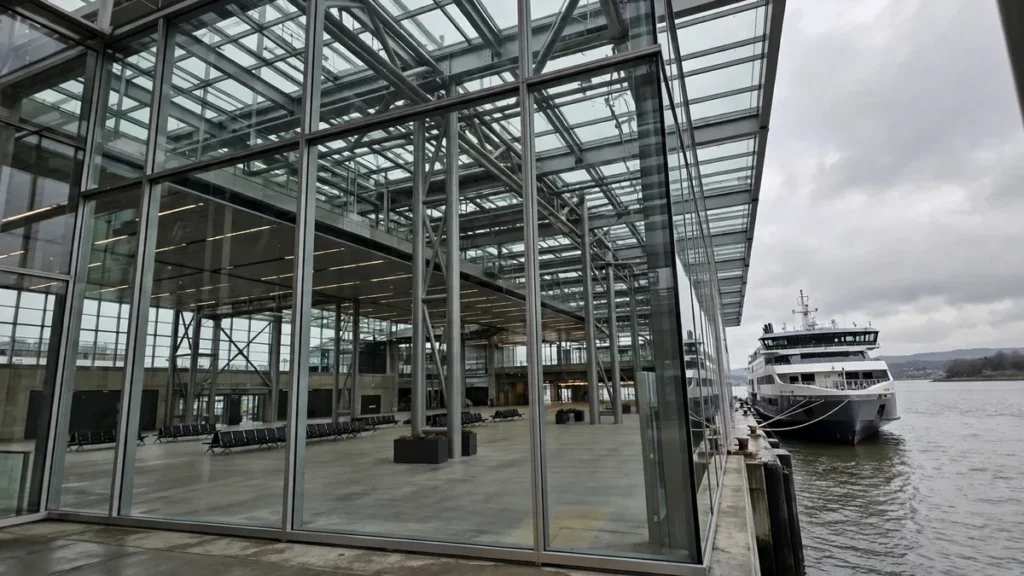
Charging infrastructure is part of the vessel, not an afterthought. Terminals need a grid connection and a charger that can deliver power quickly during a short stop, and the ferry needs a charging plug that can be connected and disconnected in seconds by the crew. Some ferries charge automatically when they dock, with a plug that engages as the vessel settles against the pier. The electric ferry propulsion system is designed around this rhythm of short runs and frequent charging, which is very different from a yacht that may sail for days between ports.

What it is like aboard
Passengers notice the difference immediately, and it is mostly about what is missing. There is no diesel smell, no engine vibration through the deck, and no roar as the ferry pulls away. The ride is smooth and quiet enough for conversation at normal volume, and the large windows and open decks feel calmer without the thrum of an engine below. For commuters who ride the ferry twice a day, that quiet is a real quality-of-life improvement, not a gimmick.
The design of the ferry follows from the technology. Without a tall engine room and exhaust stacks, the superstructure can be lower and lighter, with more space for passengers and better views. The flat roof that carries the panels also shades the upper deck, which is welcome in hot climates. Some ferries carry bicycles, wheelchairs and prams more easily than their diesel predecessors, because the flat electric drivetrain leaves the deck layout free of engine intrusions.
Where solar ferries make sense
Solar electric ferries make the most sense on short, regular routes: river crossings, harbour services, lake ferries and island hops of a few kilometres. These routes have frequent stops for charging, calm water, and a roof area that is large compared with the energy each crossing needs. Cities with clean-air targets and waterfronts where diesel exhaust is a problem are the natural early adopters, and several have already replaced whole fleets of diesel ferries with electric ones.
Longer routes are harder. A ferry crossing open sea for an hour or more needs a much larger battery, and the weight and cost grow quickly. For those routes, hybrid ferries that combine batteries with a diesel generator, or hydrogen fuel cells, are often a better fit for now. The solar ferry is not a universal replacement for every vessel; it is the right answer for a specific job, and its operators are careful to match the vessel to the route. The solar-powered catamaran shows the same logic in leisure boating, where short days and sunny anchorages suit solar power well.
Costs, emissions and the future
A solar electric ferry costs more to build than a diesel ferry of the same size, mostly because of the batteries and the charging infrastructure. The running costs are lower, though: electricity is cheaper than diesel per kilometre, the motors need far less maintenance, and there is no exhaust treatment system to service. Over the life of the vessel, which can be twenty years or more, the total cost often comes out in the electric ferry’s favour, especially where electricity is cheap or the route is busy.
Emissions depend on where the electricity comes from. A ferry charged from a clean grid is close to zero-emission in operation, while one charged from coal power still produces emissions, just at a power station rather than at the dock. Even then, the local air at the waterfront is cleaner, which matters to the people who live and work there. As grids get cleaner and batteries get cheaper, the case for solar electric ferries only strengthens, and the next generation will carry bigger batteries, more efficient panels and faster charging.