Step onto the bridge of a new electric yacht and the first thing you notice is not the sea. It is the screen. A single slab of glass, sometimes a metre wide, glowing with charts, battery levels, motor data and camera feeds, with more screens on the walls and at the guest stations. It looks like the future, and that is the problem. The case against giant screens on electric yachts is that they make the helm worse at its one real job: helping a person steer a boat safely, in daylight, in bad weather, when things go wrong.
A helm display has to be readable in seconds, in bright sunlight, with wet hands, while the boat is moving. That is a hard design brief, and size does not solve it. A giant screen solves a different problem: how to impress a buyer at a boat show. In a showroom, a huge glowing display looks advanced. At sea, on a bright day, the same display is a sheet of glare. Polarised sunglasses, which most skippers wear, can make parts of it go dark. Salt spray dries on it. The sun hits it at an angle and the chart disappears into a reflection of the sky. A smaller display, hooded against the sun and set at the right angle, is readable when the giant one is not, and readability is the whole point.

One screen is one point of failure
Giant screens also concentrate risk. Put navigation, battery management, motor control, tank levels and cameras on one display and that display becomes a single point of failure. When it freezes, when its software crashes, when a voltage dip restarts it at the worst possible moment, the skipper loses everything at once: the chart, the depth, the speed, the battery state. A helm built from several smaller instruments, each doing one job, degrades gracefully. One fails and the others keep working. The giant screen fails and the bridge goes dark.
That risk is not theoretical. Touchscreen systems run complex software, and complex software has bugs, updates and reboots. A physical switch does not need an update. A dedicated depth gauge does not freeze because a chart app crashed. The more a yacht depends on one computer to run its helm, the more it depends on that computer never having a bad day, and computers have bad days at sea just as they do on land. The difference is that at sea there is no IT department and no reboot-and-try-again while you drift towards a rock.
The same concentration of risk shows up in cost. A bespoke giant marine display is expensive to buy, expensive to replace, and often tied to one supplier. When it is discontinued, the owner faces a refit rather than a repair. Smaller standard instruments are cheaper, interchangeable, and available from many makers. The argument against giant electric yachts themselves is partly about this same sprawl: bigger is not better when it makes the vessel harder to run and harder to fix. The screen is the clearest example of that mistake in miniature.
Touchscreens are the wrong tool at sea
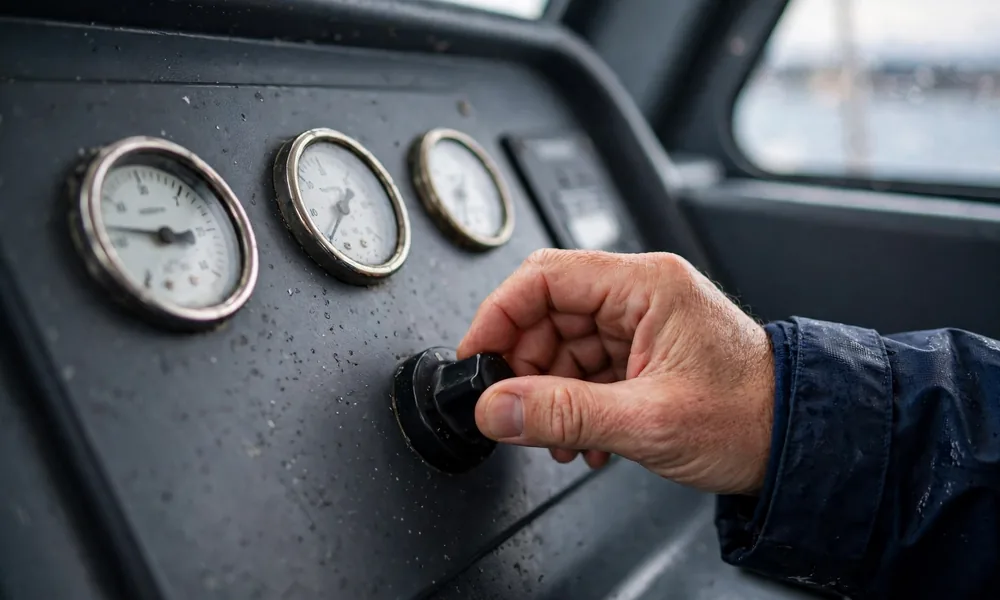
Then there is the interface itself. A touchscreen demands that you look at it, find the right icon, and tap it accurately, all while the boat is pitching. A physical knob or button can be found by feel, operated with gloves on, and confirmed without looking down. That matters when the skipper’s eyes should be on the water, not on a menu. Every second spent hunting through a touchscreen menu is a second not spent watching for a fishing boat, a buoy, or a change in the weather. Good helm design keeps the skipper’s head up. Giant touchscreens keep it down.
The problem gets worse in rough weather, which is exactly when the helm matters most. Wet fingers do not register reliably on a touchscreen. A wave that throws the boat sideways throws the skipper’s hand across the glass, and the screen cannot tell a deliberate tap from an accidental one. A stray touch can silence an alarm, change a route, or switch off a camera feed. Physical controls have guards, detents and resistance that make accidental operation unlikely. A flat sheet of glass has none of that. It is a fair-weather interface on a vessel that must work in foul weather.
Cars have learned this lesson the hard way, and the case against giant touchscreens in cars rests on the same complaint: burying essential controls in menus makes drivers slower and less safe. On a yacht the stakes are higher and the help is further away. A car can pull over. A yacht cannot. If a control is hard to reach in a car, it is annoying. If it is hard to reach on a yacht, in a squall, it is dangerous.
Distraction is not a luxury feature
Giant screens also invite distraction in a way small instruments do not. A screen that can show a film, a video feed, a social feed or a game will, sooner or later, show one while the boat is under way. Even when it is showing navigation data, a large bright display fills the skipper’s peripheral vision with movement and colour, pulling attention away from the water. At night the problem is worse: a huge glowing rectangle destroys night vision, making it harder to see unlit boats, buoys and the shoreline. A good night helm is dim, red-lit and minimal. A giant screen is the opposite of all three.
None of this is an argument against electronics. Modern navigation, battery monitoring and motor control are genuine advances, and an electric yacht needs them. The argument is about proportion and placement. The best helm stations, ranked for how well they actually work, keep displays modest, hooded, and secondary to the view out of the window. The best yacht helm stations are designed around the skipper, not around the screen. They put the essential information where it can be read at a glance, and they leave the rest for when the boat is at anchor.
There is also the matter of what a giant screen does to the resale value of a yacht. A buyer looking at a five-year-old vessel with a discontinued display faces a costly refit before they can even use the helm properly, and that cost comes straight off the price they are willing to pay. A helm built from standard instruments, by contrast, can be serviced and upgraded piece by piece, and it ages far more gracefully. The giant screen is a depreciating asset bolted to the most important station on the boat.
The verdict
Giant screens on electric yachts are a showroom feature pretending to be a navigation feature. They glare in sunlight, fail all at once, demand attention when attention belongs on the water, and cost a fortune to replace. Smaller displays, physical controls and dedicated instruments do the same job better, more safely and more cheaply.
The helm of a yacht should be built for the worst day at sea, not the best day at a boat show. On that worst day, the skipper needs a chart they can read, a depth they can trust, and a control they can find without looking. A giant screen gives them none of those things reliably. Take the screen down a size, put the buttons back, and let the sea, not the glass, be the biggest thing on the bridge.