Electric yachts were supposed to be the quiet, clean answer to the superyacht’s worst habits. No diesel smoke, no engine roar, no fuel barge trailing behind. And for modestly sized boats, that promise largely holds. The trouble starts when the idea is scaled up without anyone asking whether it should be. A giant electric yacht is not a bigger version of a good idea. It is a different machine altogether, and most of what made the small electric yacht appealing disappears somewhere along the way.
The case against giant electric yachts is not a case against electric boats. It is a case against gigantism dressed up as progress. A seventy-metre yacht with a battery bank the size of a small warehouse is an engineering stunt, not a solution, and the compromises it demands are so large that they swallow the benefits the electric drivetrain was meant to deliver.
The battery problem is a size problem
Everything about a giant electric yacht comes back to the battery. A small electric boat can cross a bay on a modest pack and recharge overnight from shore power. A giant yacht needs to move tens or hundreds of tonnes of steel, glass and marble through the water at cruising speed, and the energy required is enormous. Batteries are heavy, and on a yacht, every tonne of battery is a tonne that is not guest space, not fuel reserve, not tender, not range.
The maths is unforgiving. To give a giant yacht a useful range under electric power alone, the battery bank has to be so large that it eats into the very luxury the yacht exists to provide, and even then the range is a fraction of what a diesel yacht manages. Owners who expected silent, clean cruising discover that their giant electric yacht spends much of its time running a diesel generator to recharge the batteries, which is the worst of both worlds: the weight and cost of the electric system plus the noise and emissions of the diesel one.
Smaller electric yachts avoid this trap because their ambitions are proportionate to the technology. They cruise short distances, charge often, and treat the battery as the whole propulsion system rather than a token. The giant yacht treats the battery as a statement, and statements do not move boats. How electric yacht propulsion works lays out the energy chain from battery to propeller, and it is easy to see where the losses pile up when the hull gets too big.
Charging a giant is a fantasy
Ask where a giant electric yacht charges and the answers get vague. A marina berth with a domestic socket will not do it. The shore power needed to recharge a multi-megawatt-hour battery bank in any reasonable time does not exist at most harbours, and where it does, it is usually booked, expensive, or both.
In practice, the giant electric yacht charges the way every hybrid does when the infrastructure is not there: from its own generator. The generator burns diesel to make electricity to charge the batteries that drive the motors, and each conversion loses energy along the way. The result is a boat that is less efficient than a straightforward diesel yacht, more complex to maintain, and far more expensive to build, all in the name of a green credential that only holds up in the brochure.
What the size does to the sea
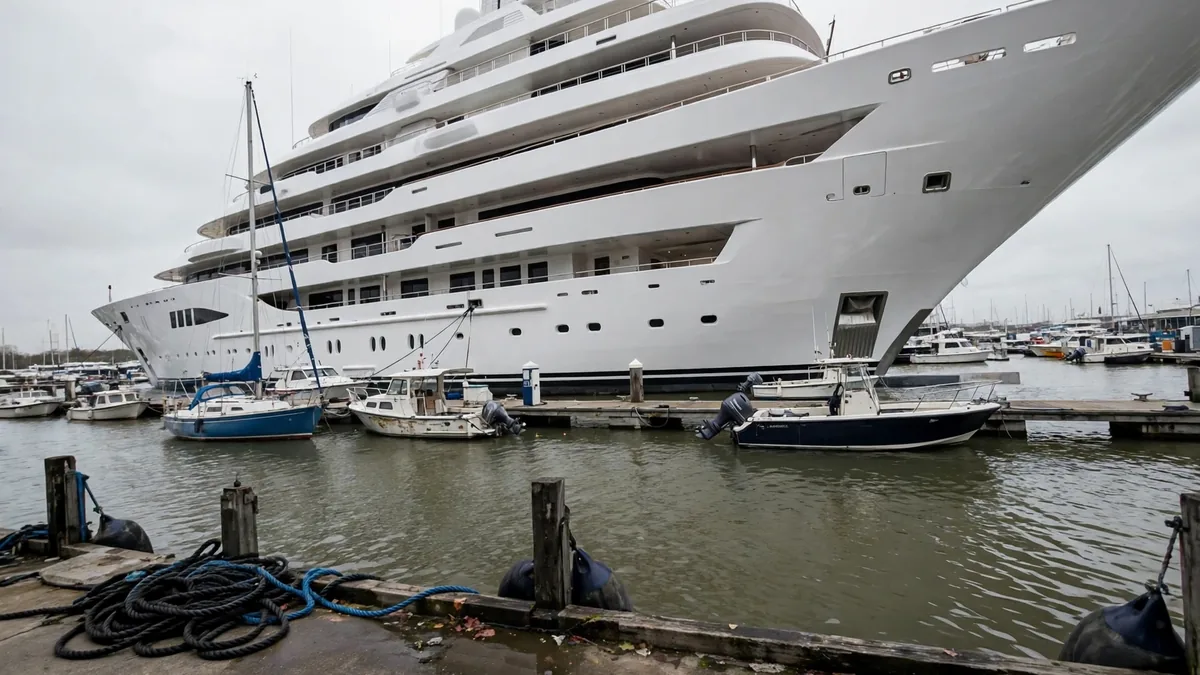
There is a second problem with giant electric yachts, and it has nothing to do with the drivetrain. A very large yacht is a very large presence in a small anchorage. It blocks the view, it churns the water with its thrusters, it crowds out smaller boats, and its sheer bulk changes the character of every bay it enters. The electric motor makes it quieter, but it does not make it smaller, and size is most of the problem.
Coastal communities have noticed. Harbours that once welcomed yachts are now restricting the largest ones, and anchorages that used to be shared are increasingly dominated by a single hull. An electric badge does not buy goodwill when the boat itself is the issue.
A smaller electric yacht slips into the same harbours without a fuss. It can anchor in shallower water, turn in tighter spaces, and leave room for everyone else. It is a guest in the anchorage rather than an occupation of it.

The honest counterargument
None of this means giant yachts should be banned or that electric propulsion has no place on large boats. A giant yacht can carry a battery bank that a small boat never could, and used sensibly, that bank can run the hotel loads at anchor in silence for hours, which is a genuine improvement over a diesel generator humming all night. The technology is real, and on a large hull it can do real work.
There is also the argument that someone has to go first. The first giant electric yachts are expensive, compromised and impractical, but they fund the research, the shipyard experience and the charging infrastructure that will eventually make the second and third generations work. Every new technology starts with an overpriced flagship that makes little sense on its own terms.
Both points are fair, and they are the reason the verdict here is against giant electric yachts as they exist today, not against the idea forever. The early adopters are doing useful work, but they are paying a fortune to do it, and the rest of us should not mistake their experiment for a product. Diesel versus electric yacht propulsion compared weighs the two approaches honestly, and the comparison favours electric most strongly at modest sizes.
The right size for electric
So where does electric yachting actually work? On boats built around the battery rather than in spite of it. A yacht of twenty to thirty metres, designed from the keel up for electric cruising, can offer silent running, clean air and genuine range on the routes its owners actually sail. It charges from a normal marina supply overnight, it carries a battery that leaves room for proper accommodation, and it costs a fraction of its giant cousin to build and run.
That is the electric yacht worth wanting, and it is being held back by the industry’s obsession with the biggest possible statement. Shipyards chase the headline because the headline sells, and buyers chase the headline because it impresses the neighbours. Meanwhile the sensible, right-sized electric yacht gets built in smaller numbers, with less fanfare, and quietly proves the concept while the giants prove the problem. The best electric yacht brands ranked shows where the serious builders are putting their effort, and the most convincing work is happening well below the giant end of the range.
The market will sort this out eventually. But it will sort it out faster if buyers, journalists and the industry stop treating size as a proxy for progress. The best electric yacht is not the biggest one.

The verdict
Giant electric yachts are a contradiction: a clean technology stretched past the point where it can stay clean, a quiet idea made heavy, expensive and dependent on the very diesel it was meant to replace. The electric yacht has a bright future, but it is not seventy metres long. It is smaller, simpler and honest about what a battery can do, and it is already out there, quietly proving the point while the giants hog the headlines.
If the industry wants electric yachting to succeed, it should stop building monuments and start building boats. The sea, the harbours and the owners will all be better for it.


