There is a number that hypercar makers love to shout about, and it keeps getting bigger: horsepower. A thousand, twelve hundred, fifteen hundred, sixteen hundred. The engines behind those numbers keep getting bigger too, with more cylinders, more displacement, more turbos, and more cooling. It is a magnificent spectacle, and it is also a dead end. The case against huge hypercar engines is that they make the car worse at being a car: heavier, hotter, thirstier, and harder to drive, all to chase a number that electric motors can now beat with a fraction of the fuss.
Weight is the price of every cylinder
A hypercar’s job is to go fast, stop fast, and turn fast, and every one of those jobs gets harder as the car gets heavier. A huge engine is heavy in itself, but the real cost is everything it drags along with it: a bigger gearbox to handle the torque, bigger brakes to stop the mass, bigger cooling systems to shed the heat, and a stronger chassis to hold it all together. Engineers call this the weight spiral, and a big engine is the best way to start one. Each kilogram of engine can add several kilograms of supporting hardware before the car is finished.
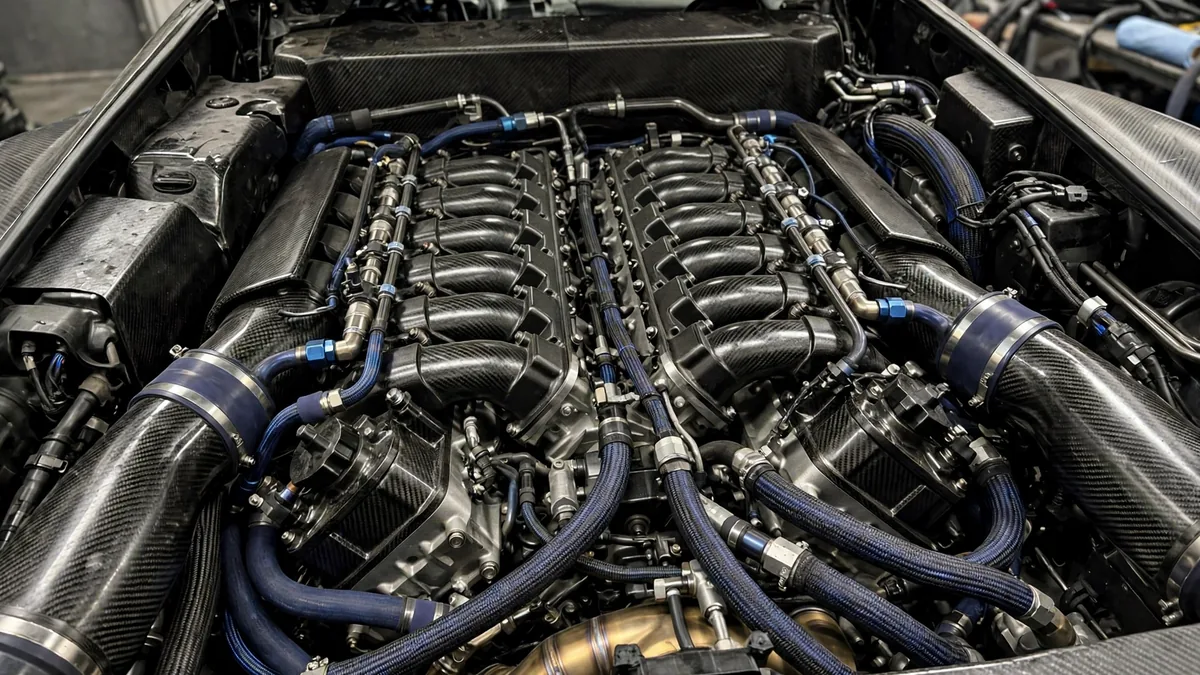
The V12 engine is a wonderful piece of engineering, and the sound it makes is one of motoring’s great pleasures, but the physics is unforgiving: a big engine makes the car heavier, and a heavier car is slower where it matters most.
Heat is the hidden enemy
A huge combustion engine is, at its heart, a controlled explosion that turns most of its fuel into heat rather than motion. Even the best petrol engines convert only around a third of their fuel’s energy into power at the wheels, and the rest has to go somewhere. In a hypercar, that somewhere is a maze of radiators, intercoolers, oil coolers, and vents, all of which add weight, drag, and complexity. The cooling system on a modern hypercar is a major engineering project in its own right, and it exists only because the engine is so big and so wasteful.
That heat also limits how the car can actually be used. A hypercar with a huge engine can deliver its headline power for a short burst, but sustained hard driving pushes temperatures up, and the car’s electronics start pulling power back to protect the engine. A smaller, cooler-running powertrain, especially an electric one, can deliver its full performance again and again, because it is not fighting the heat its own size creates.
Electric motors have changed the argument
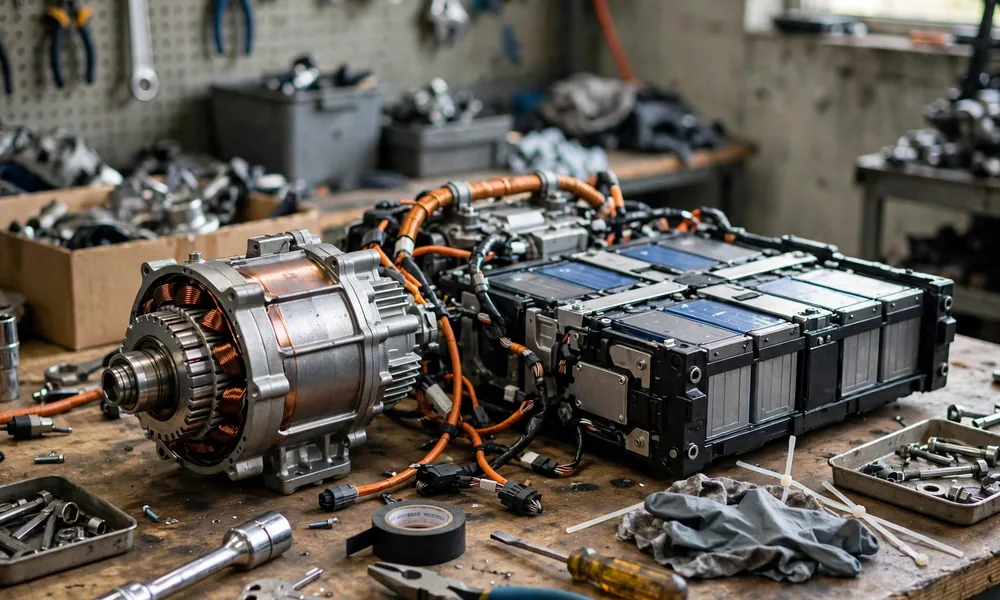
Ten years ago, the defence of the huge engine was that nothing else could make that much power. That defence is gone. A modern electric motor can produce enormous torque instantly, from zero revs, with no gearbox, no turbo lag, and no need to rev to eight thousand rpm to find its power. A compact electric powertrain can match or beat a huge combustion engine’s acceleration while weighing less, taking up less space, and producing a fraction of the heat. The W16 engine is a masterpiece, but it is a masterpiece solving a problem that electric motors have already solved more elegantly.
If the goal is speed, a smaller, lighter, electrically assisted powertrain gets there with less weight and less waste. The huge engine survives on emotion, on sound and character and heritage, and those are real things worth valuing. But they should be valued honestly, as a choice about feeling rather than a claim about performance.
Big engines make bad road cars
Hypercar makers like to say their cars are road cars first, but a huge engine makes that claim hard to believe. A big engine is thirsty, and thirsty means a big fuel tank, which means more weight and less luggage space. It is hot, which means the cabin fills with heat and the air conditioning works overtime. It is wide and tall, which means the car is wide and tall, and harder to place on a narrow road. And it is expensive to service, because everything around it is packed tight and built to cope with enormous stresses.
On a real road, at real speeds, a hypercar with a huge engine spends most of its life using a small fraction of its power. The owner cruises at motorway speeds, idles in traffic, and waits for a clear stretch of road that rarely comes. The best V12 engines ever built earned their reputation on the road and the track, but the road has changed, and the engine that once defined the hypercar now holds it back.

The sound argument, honestly stated
The strongest argument for a huge engine is the sound. A naturally aspirated V12 at full throttle is one of the great experiences in motoring, and no electric motor can reproduce it. That argument deserves respect, and it also deserves honesty about its limits. Sound is a reason to love a car, not a reason to pretend the car is faster. A buyer who chooses a huge engine for its sound is making a legitimate choice about pleasure, and the industry should sell it as that, rather than dressing it up as a performance necessity.
There is also a question of what the next generation of drivers will value. Younger buyers have grown up with instant electric torque, silent running, and cars that are fast without drama. A hypercar that bets its future on the size of its engine is betting against that shift, and it is a bet that gets worse every year as electric powertrains get lighter, cheaper, and more powerful.
What the future should look like
The hypercar of the future does not need to be silent, soulless, or boring. It needs to be light, and lightness starts with the powertrain. A compact, high-revving small engine paired with electric motors, or a pure electric powertrain with carefully tuned character, can deliver the drama and the speed without the weight spiral. The engineering effort that currently goes into cooling a huge engine could go into aerodynamics, chassis, and handling, the things that actually make a car fast and enjoyable.
That future is already arriving. The fastest accelerating production cars are electric, the most agile track cars are getting lighter, and the hybrid hypercars that pair a small engine with electric motors are showing what is possible when engineers stop chasing displacement. The huge engine had a magnificent run, and it deserves its place in history. But history is where it belongs.
The verdict: size is not speed
Huge hypercar engines are a triumph of engineering and a failure of judgement. They make the car heavier, hotter, thirstier, and harder to live with, all to produce a headline number that electric motors can now match more cleanly. The hypercar should be judged by how it drives, not by how many cylinders it carries, and on that measure the huge engine loses. Keep the drama, keep the character, but lose the displacement. The future of the hypercar is lighter, cooler, and smaller under the bonnet, and it will be faster for it.


