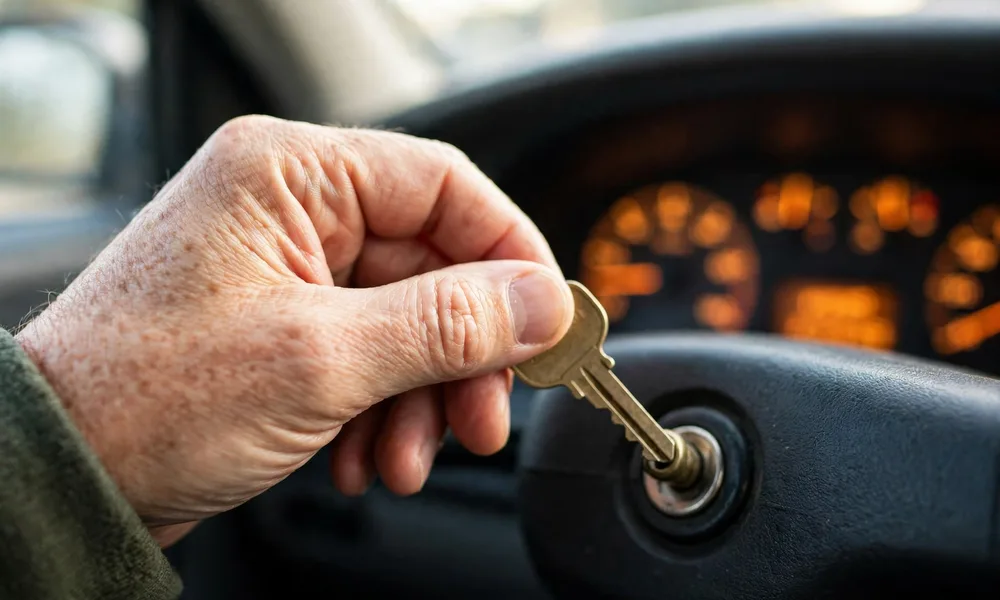
There is a small ritual at the start of every journey in a car with a physical key. You take the key out of your pocket, you push it into the ignition, you turn it, and the engine starts. It is not elegant. It is not impressive. It works, every time, in any weather, with no battery, no signal and no software update. Now compare that with the modern alternative: a keyless fob that broadcasts a radio signal all day and all night, waiting to be intercepted by thieves with a relay device that costs less than a hundred pounds. The case for physical keys in cars is the case for a machine that cannot be stolen from your hallway while you sleep.
This is not nostalgia. Nobody is arguing that cars should lose their immobilisers, their alarms or their central locking. The argument is narrower and stronger: the thing that starts the car and unlocks the doors should be a piece of metal that has to be physically present, not a radio that can be tricked into thinking it is present when it is sitting on a table inside your house. Convenience is a fine thing. It is not worth a car.

Relay theft is not a theory. It is an industry
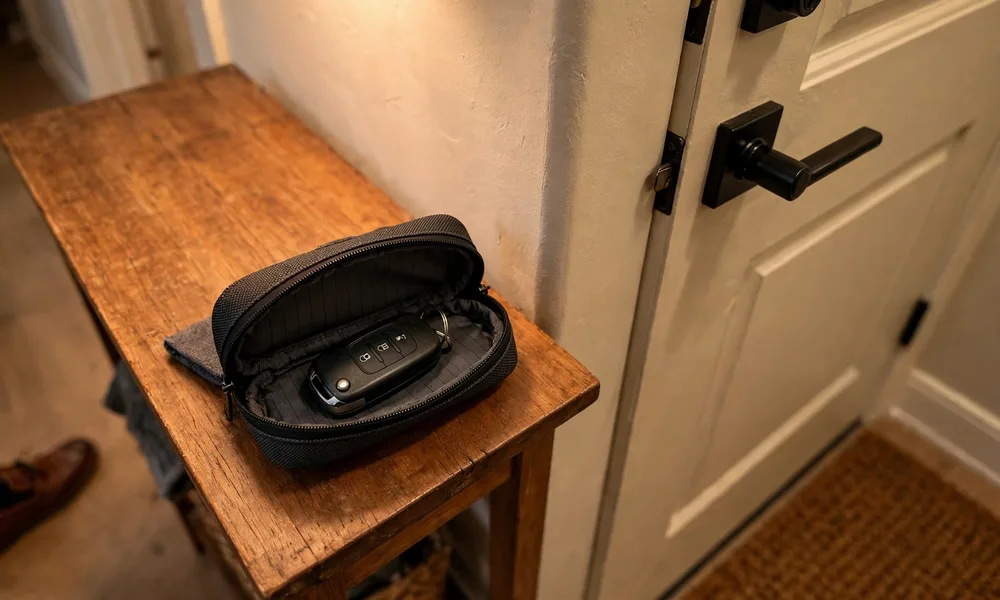
The vulnerability of keyless entry is not a hypothetical. It is a documented, industrial-scale method of car theft, and it works with embarrassing simplicity. One thief stands near the car with a device that captures the car’s low-frequency challenge signal. A second thief stands near the house with a device that picks up the key fob’s reply from inside the home and relays it back. The car, convinced the key is beside it, unlocks and starts. The whole thing takes under a minute, makes no noise, leaves no broken glass, and the car is gone before the owner wakes up.
Researchers at ETH Zurich demonstrated successful relay attacks against 24 out of 25 major car makers’ systems, including BMW, Mercedes-Benz, Audi, Ford and Toyota, using off-the-shelf hardware costing under a hundred dollars. In the UK, vehicle thefts involving keyless entry exploitation rose by 32 percent between 2022 and 2023, even as overall car thefts fell. In the United States, the National Insurance Crime Bureau reported that 43 percent of luxury vehicle thefts in the first quarter of 2024 involved relay or signal amplification techniques. German police logged more than 12,700 relay-theft incidents in a single year. This is not a flaw in one brand’s implementation. It is a flaw in the idea itself: a car that unlocks when it hears a radio signal can be fooled by a louder radio signal.
A physical key has no signal to intercept, no frequency to amplify and no software to spoof. To steal a car with a metal key, a thief must physically possess the key or defeat a mechanical lock and an immobiliser, which is slow, noisy, skilled work. There is no documented case of a mass-scale remote compromise of mechanical keys, because there is nothing remote about them. The security model is the oldest one there is: possession. You have the key, or you do not. That is the whole system, and it cannot be hacked from the pavement.
It works when everything else fails
Security is only half the argument. The other half is reliability, and it is the half owners discover at the worst possible moment. A keyless fob has a battery, and batteries die — usually in a car park, in the rain, at night. A keyless car has software, and software glitches. A keyless car has sensors, and sensors fail. A physical key has none of these dependencies. It does not care about battery state, temperature, firmware or signal interference. It is a piece of cut metal, and cut metal does not need a software update.
There is also the question of cost. A replacement keyless fob, with its programming, commonly costs several hundred pounds and requires a dealer visit. A cut metal key costs a few pounds from a locksmith and takes minutes. The same logic runs through the rest of the car. Our argument against subscription features in cars makes the wider point: the more of a car that depends on software and services, the more of the car its owner does not really control.
The convenience argument, taken seriously
The honest case for keyless entry is convenience, and it is a real benefit. Walking up to a car with full hands and having it unlock itself is genuinely pleasant. Push-button start is smoother than turning a key. Keyless systems can carry driver profiles, remember seat positions and welcome their owner with light and sound.
What a physical key really is
It is worth being precise about what this argument asks for, because the word “key” has been blurred by marketing. The ask is not for cars to lose their immobilisers, their alarms or their remote locking. A modern car can have all of those and still be started by a physical key, and many already are — the key blade carries a transponder chip that the immobiliser checks before the engine starts, so the car is protected against hot-wiring and the key is protected against copying. What the argument asks for is a key that must be inserted and turned, a lock that must be physically operated, and no passive radio system that unlocks and starts the car from a distance.
That combination — mechanical key, electronic immobiliser — is the best of both worlds. It keeps the anti-theft electronics that genuinely work and drops the radio link that genuinely does not. It is also, not coincidentally, the combination that the cheapest cars in the world already use, because it is cheap, durable and reliable. The luxury industry moved away from it for showroom reasons, not engineering ones: a keyless car feels more modern in a test drive, and modern is what sells. But a test drive is the one place where keyless entry is flawless. On a driveway at three in the morning, with a relay device on the other side of the wall, the modern choice is the vulnerable one.
The same principle runs through the whole cabin. Our case for physical buttons in cars argues that controls a driver uses while driving should be physical, because touchscreens demand eyes that should be on the road. Keys are the same argument, one step further back: the thing that gives access to the car should be physical too, because the alternative gives access to anyone with a radio. And the fashion for screens everywhere is the same story again — our argument against giant touchscreens in cars shows how the industry keeps choosing the impressive interface over the safe one.
Verdict
Cars should bring back the physical key — a metal key, inserted and turned, backed by a modern immobiliser and nothing that broadcasts. It cannot be relay-attacked, it cannot be hacked, it cannot be bricked by a dead battery, and it costs almost nothing to replace. Keyless entry trades all of that for a few seconds of convenience a day, and the thieves of the world have noticed the trade and taken full advantage of it. The key is the oldest security device on the car, and it is still the best one. Put it back in the ignition, where it belongs, and let the radio stay in the dashboard, where it can do no harm.