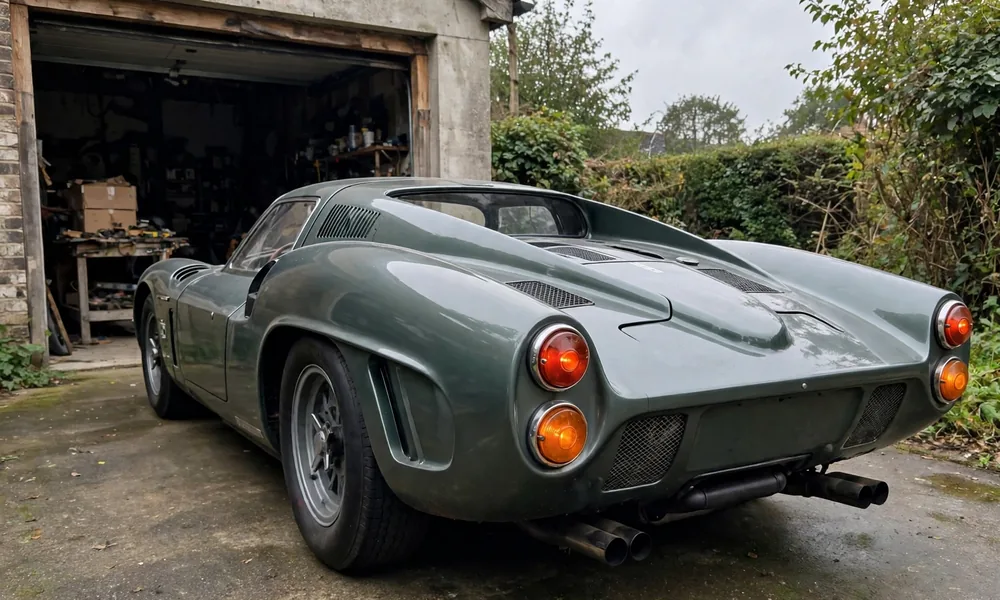
Park a modern supercar next to one from forty years ago and the difference is not speed. The modern car is faster in every measurable way. The difference is that you can recognise the old car from a hundred metres away, in the rain, with your eyes half closed. It has a shape. The new car has a surface, sculpted by software, that looks like every other surface sculpted by the same software. This is the case for retro supercar design: the supercar should look like something again.
Retro design does not mean copying old cars. It means recovering the things old supercars did well — clear proportions, honest shapes, details a human being chose rather than a wind tunnel dictated — and building them with modern engineering underneath. A retro supercar is not a tribute act. It is a correction.

Shape used to mean something
The great supercars of the past were drawn around an idea you could describe in a sentence. A long bonnet and a cabin pushed to the back meant a big engine in front. A wedge meant speed. A wide rear and narrow front meant power going to the back wheels. You could read the car the way you read a face, and the reading was usually right.
Modern supercars have lost that legibility. Active aerodynamics, cooling demands and shared platforms have pushed every car toward the same blob: a low nose, a cab-forward cabin, a tall tail with a wing on top. The shapes are efficient, and they are also interchangeable. Retro design restores the idea that a car’s shape should say what the car is, and that saying it clearly is worth a small sacrifice in aerodynamic perfection.
Restraint is a design skill, not a failure
Old supercars were designed by small teams with pencils, and their restraint shows. A single clean line runs the length of the car. The surfaces are mostly flat, the details are few, and each one earns its place.
Modern supercars suffer from the opposite problem: too many tools, too many ideas, too little editing. Every vent, strake, splitter and fin is justified by a simulation, and the result is a car that looks busy from every angle. Retro design is an argument for editing — for a designer deciding what to leave out, not just what to add. A supercar with one strong idea is more memorable than one with twenty small ones, and the cars people still poster on their walls prove it.
People buy supercars with their eyes first
A supercar is not a rational purchase. Nobody needs a car that does three hundred kilometres an hour, and nobody buys one by comparing spreadsheets. They buy it because of how it makes them feel, and the first feeling comes from looking at it. The cars that hold their value best are rarely the fastest of their era. They are the ones people cannot stop looking at.
That is why retro design makes commercial sense, not just aesthetic sense. A supercar that borrows the proportions and details of a beloved classic — the low nose, the round lights, the long tail — arrives with forty years of affection already attached. Buyers recognise it instantly, collectors trust it, and the car photographs well from every angle, which matters more than ever in an age when a car’s first audience is a phone screen. Why vintage sports cars cost so much shows how much value the market already puts on the cars retro design takes as its starting point.
Retro details are made to be touched
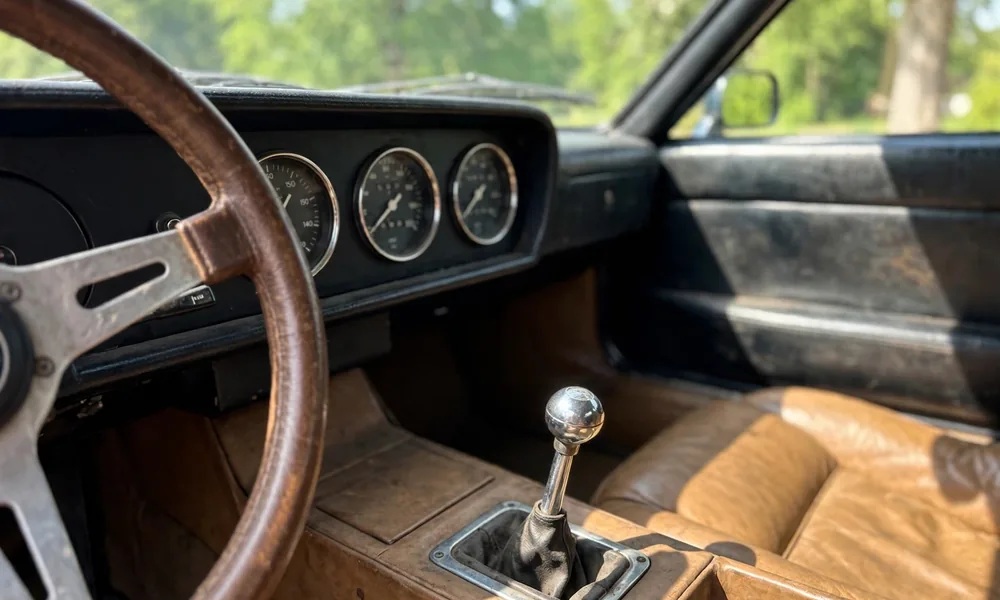
There is a physical pleasure to old supercars that new ones have engineered away. A metal gear lever that slots into a gated shift. A round dial with a needle that sweeps. A toggle switch that clicks. These are not nostalgia. They are controls designed for human hands, and they make driving the car feel like operating a machine rather than using an appliance.
Retro design brings that tactility back into the cabin as well as the body. It is an argument against the idea that every function should live on a screen, and for the idea that a supercar should feel mechanical. The best modern retro cars pair a classic-looking cabin with modern reliability underneath — the romance of the old car, without the old car’s habit of breaking down on the way home. The engineering underneath can be as modern as anything on the road. Only the experience needs to feel old.
Modern engineering makes retro better, not worse
The strongest version of the retro argument is not about the past at all. It is about the present. A designer today can build a car that looks like it came from the golden age of supercars and performs like a car from today: a stiff modern chassis, a reliable modern engine, brakes and tyres that the original designers could only dream of.
This is what separates retro design from mere revival. A faithful copy of an old car, built with old methods, is a museum piece. A retro supercar takes the proportions, the stance and the details that made the original beautiful and builds them with everything engineering has learned since. The result is a car that looks timeless and drives like a modern machine. How a hypercar aerodynamic body works shows how much modern science goes into shaping a fast car — and a retro supercar can use all of it, while choosing to wear a shape people actually love.
The honest counter-case
Retro design has real weaknesses, and the worst retro cars show all of them. A car that copies an old shape too literally ends up looking like a costume, and a costume ages faster than an original. There is also a genuine performance cost: the long bonnets, flat fronts and clean surfaces of the past are rarely the fastest way through the air, and a supercar that gives up speed for style invites the obvious question of what the buyer is paying for.
Then there is the creative risk. An industry that keeps looking backwards stops inventing, and the supercar has always been a place for invention — new materials, new shapes, new ideas about what a car can be. If every manufacturer builds retro cars, the road becomes a heritage display, and the next great design never gets drawn.
The answer is not to copy the past but to learn from it. The best retro cars take a proportion or a detail and make it new, rather than reproducing a whole car from memory. The counter-case is a warning against laziness, not against retro design itself.
The verdict
Supercars exist to be desired, and desire is not a technical specification. The fastest car in the world is a forgettable one if nobody can picture it a week later. Retro design is the recognition that beauty is part of performance — that how a supercar looks is not decoration on top of engineering, but engineering aimed at the eye.
The industry should build more cars that borrow the clarity, restraint and tactility of the classics, and build them with modern engineering underneath. Not copies, and not costumes, but new supercars that remember what made the old ones unforgettable. A supercar that looks like something is a supercar worth wanting, and the past has already shown us what those shapes look like. The best V12 engines ever built powered cars people still dream about — and they dreamed about them because of the shape as much as the sound.