Built in a small workshop in Italy in 1962, the sports car sits under a cover in a private garage, and it has not been driven in months.
When the cover comes off and the car goes to auction, the bidding starts at a figure that would buy a house. It climbs past the price of a new supercar, past the price of two, and it does not stop until the hammer falls at a number that makes the newspapers. The car is sixty years old. So why is it worth so much?
A vintage sports car is not transport. It is a machine that was built by hand, raced by heroes, and kept alive by a tiny group of people who know how to look after it.
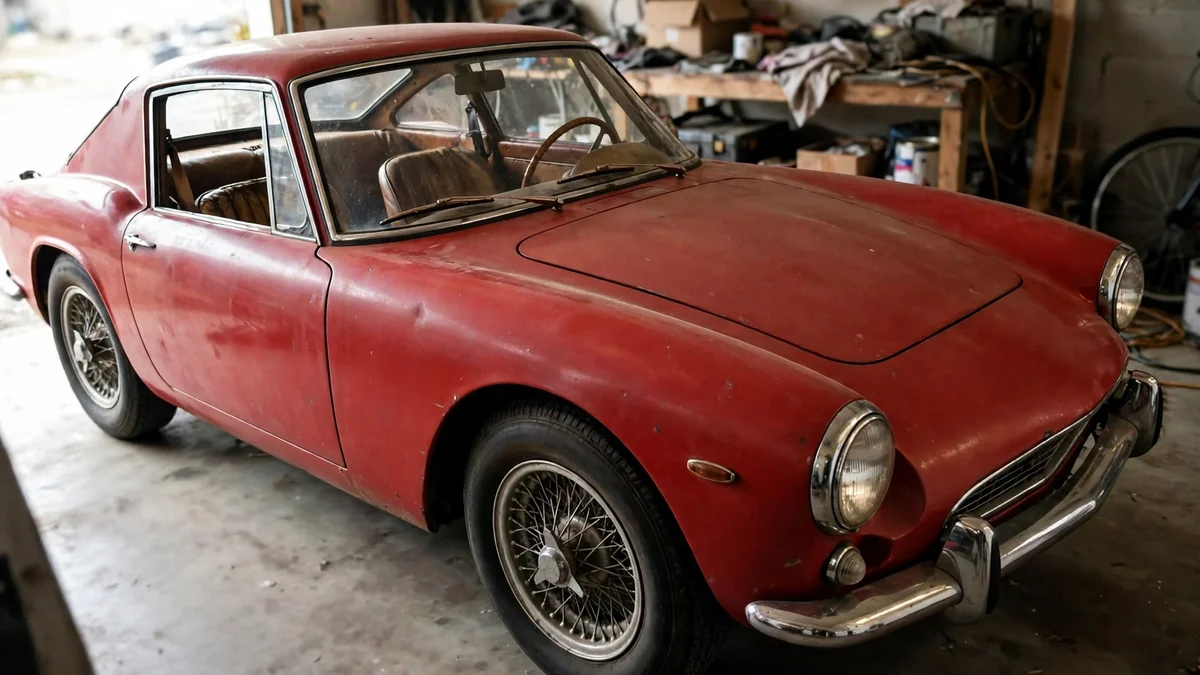
Why a Vintage Sports Car Costs So Much
The craft: assembled by hand, one at a time
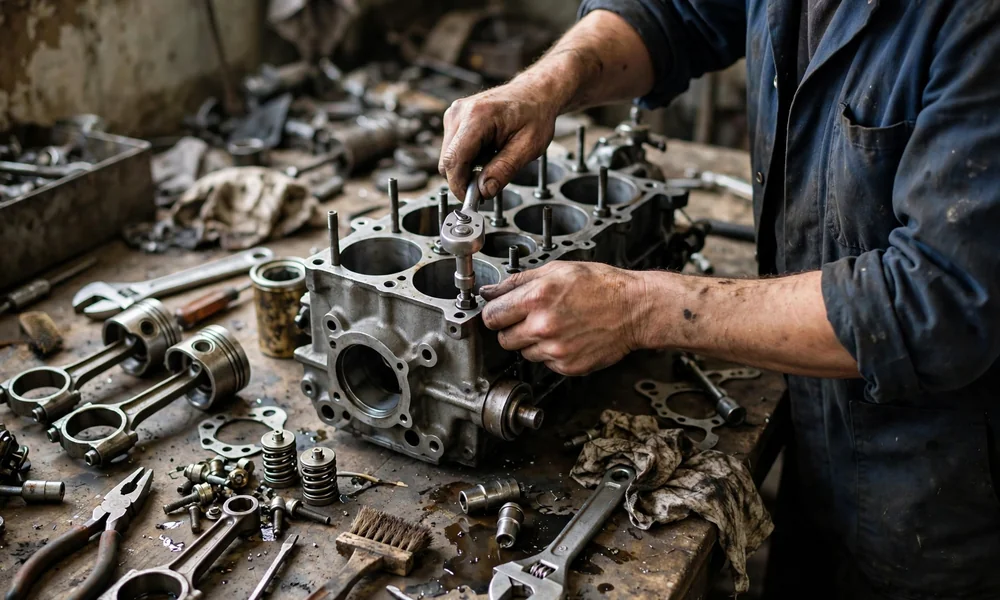
A vintage sports car was not built on a production line. Its body was shaped by hand over a wooden buck, its panels were beaten out with a hammer and an English wheel, and its engine was assembled by one man who signed his work. The leather was cut and stitched by hand, the wood on the dashboard was a single piece of walnut, and the instruments were made by a company that has long since closed. That labour is impossible to reproduce at any price, because the men who did it are gone and the skills they used are taught almost nowhere. A restoration that tries to match that work needs a panel beater, a trimmer, and an engine builder who each spent decades learning their trade, and each of them charges for that knowledge.
The engine: a machine inside a machine
The engine in a vintage sports car is often worth more than the rest of the car. A hand-built V12 or straight-six from the 1960s was made in tiny numbers, with parts that were machined to fit one engine and no other, and the knowledge of how to rebuild one lives in a handful of workshops around the world. The way those great engines were put together is the same tradition described in how a hypercar V12 engine is made, and the modern version is easier to build, because it is made by machines. The old version was made by a man with a set of feeler gauges and a lifetime of practice.
The rarity: few were built, fewer survived
A vintage sports car is valuable because there are so few of them. A famous model might have been built in only a few hundred examples, and many of those were crashed, raced to destruction, or left to rust in a barn. The survivors are counted in the dozens, and every time one is lost, the ones that remain become more valuable. Collectors track them by chassis number, and a car with its original engine, its original gearbox, and its original body is worth far more than one that has been rebuilt with new parts, because originality cannot be faked.
The racing history: heroes drove them
Many vintage sports cars are expensive because of what they did, not what they are. A car that raced at Le Mans, that was driven by a famous driver, or that won a championship carries a history that no amount of money can create. The most expensive vintage cars in the world are usually the ones with the best racing record, and their prices reflect the fact that they are not just cars, they are the machines that made motorsport history. The same force drives the price of the rarest racing machinery, and why a vintage race car is so expensive shows how a competition record can double or triple a car’s value.
The materials: leather, wood and chrome
The materials in a vintage sports car are part of the price. The leather came from animals raised and tanned in ways that are now restricted or banned, and the hides were thicker and more durable than modern leather. The wood on the dashboard was cut from a single tree, matched for grain, and polished by hand. The chrome was laid on thick, in layers, by a process that is now too expensive and too polluting for mass production. When those materials wear out, replacing them properly means finding a specialist who still works the old way, and that specialist is rare.
The labour: maintenance that never ends
Owning a vintage sports car is a commitment. The car needs regular servicing by a specialist, the carburettors need tuning, the brakes need bleeding, and the oil needs changing far more often than a modern car. The annual running costs are often estimated at five to ten per cent of the car’s value, and a major service can cost tens of thousands of dollars. The same pressure affects the fastest and rarest cars of all, and why a vintage hypercar is so expensive shows how scarcity and specialist labour combine to push prices to the top of the market.
Vintage Sports Car Specs
| Specification | Typical range |
|---|---|
| Era | Mostly 1950s to 1970s |
| Engine | Hand-built V12, V8 or straight-six |
| Power | About 200 to 400 horsepower |
| Top speed | About 150 to 180 miles per hour |
| Production run | Often fewer than 500 examples |
| Body construction | Hand-beaten aluminium or steel |
| Annual running costs | About 5 to 10 per cent of value |
| Engine rebuild time | About 3 to 6 months |
What Does a Vintage Sports Car Cost?
A vintage sports car is estimated to cost roughly $500,000 to $10 million, depending on the model, its racing history, and its originality. A well-kept example of a less famous model is estimated at the lower end, while a famous racing car with a documented history and its original engine is estimated at the top end or beyond. A full restoration is estimated at $200,000 to $1 million, and the yearly running costs are estimated at five to ten per cent of the car’s value. Some owners spend more keeping the car than they paid to buy it, and they do it because the car is not a purchase, it is a piece of history that they happen to own.
A Rare Fact
Some vintage sports cars were built with an engine that was assembled by a single man, and that man’s name is stamped on a small brass plate on the engine block. If that man is still alive, owners will fly their car to his workshop for a rebuild, because nobody else knows that engine the way he does.
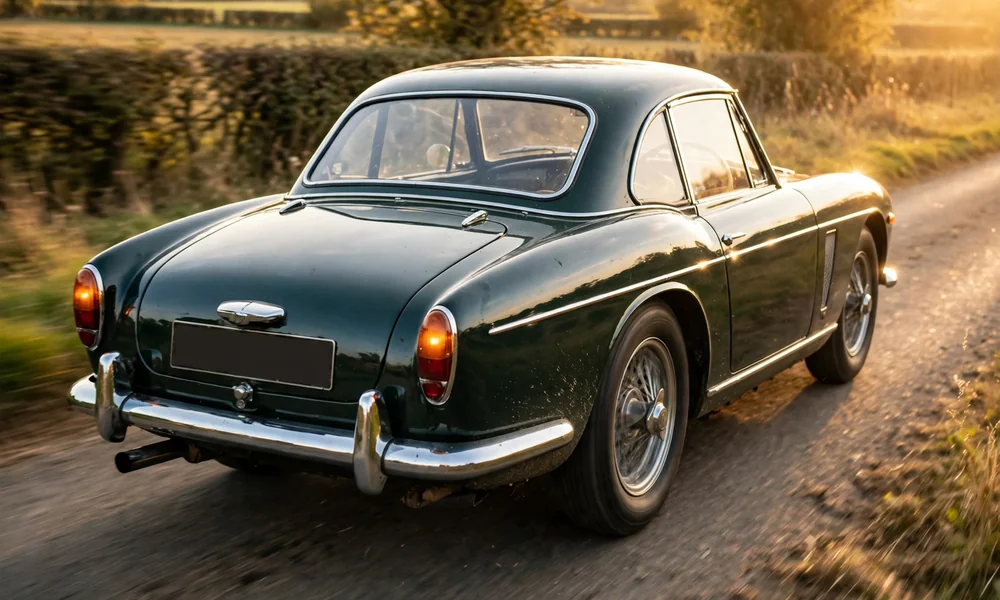
A vintage sports car costs so much because it was built by hand, raced by heroes, made in tiny numbers, and kept alive by a handful of people who know how to look after it. It is the one that cannot be made again, and that is what makes it worth a fortune to the people who buy it.


