Electric motorcycles are trapped in a numbers race they cannot win. Every launch promises more power, more torque and a higher top speed, as if the goal were to beat a petrol superbike at its own game. It is the wrong game. The electric motorcycle’s real strengths are instant response, silence, simplicity and a low centre of gravity, and none of those needs two hundred horsepower. The case for slower electric motorcycles is that a bike built for real roads, real riders and real journeys is better than a bike built for a spec sheet, and slower is how you get there.
This is not an argument against performance. It is an argument about what performance means on two wheels. A motorcycle’s speed is limited by its rider’s skill, the road’s condition and the traffic around it, long before it is limited by its motor. A bike that is quick to sixty kilometres per hour, calm at cruising speed and light enough to enjoy on a twisty road delivers more pleasure than a bike that is terrifying at twice that speed and exhausting everywhere else.
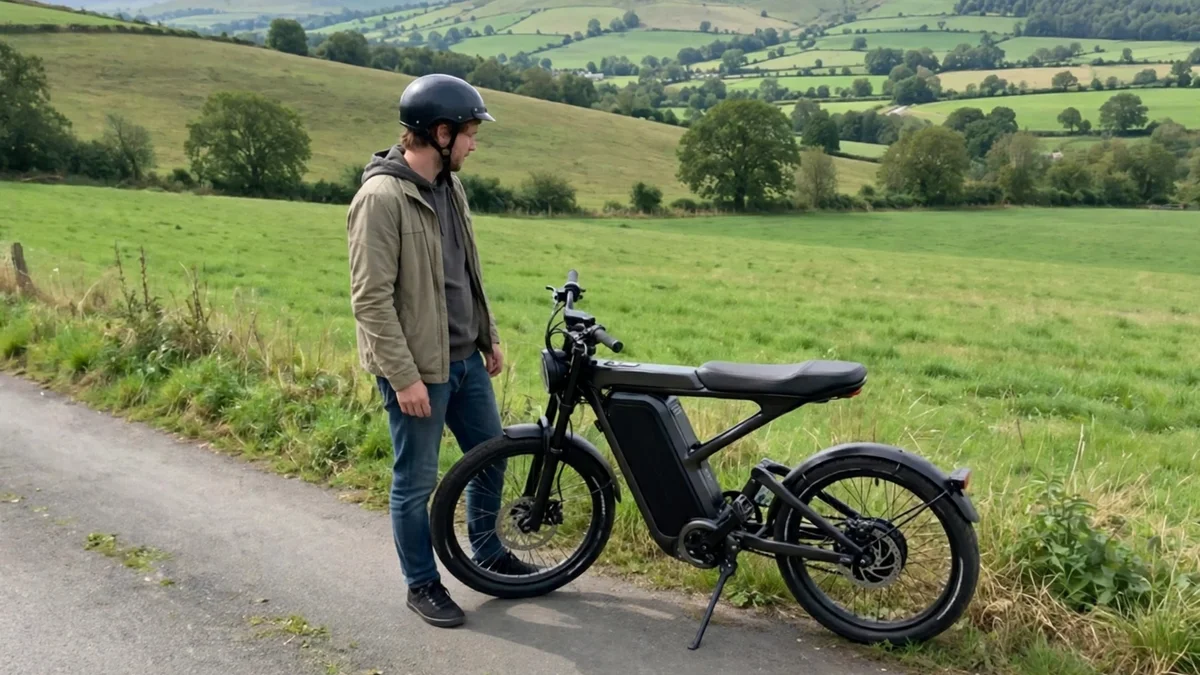
Range is the rider’s real freedom
Ask a motorcyclist what limits their riding and the answer is rarely top speed. It is range. A fast electric motorcycle burns through its battery at a frightening rate, because aerodynamic drag rises with the square of speed, and a bike has the aerodynamics of a barn door. At motorway speeds a powerful electric bike can drain its pack in well under an hour, which turns every ride into a calculation and every charging stop into a wait.
A slower motorcycle changes that maths completely. Cruising at a relaxed pace, the same battery lasts far longer, the motor runs in its efficient band, and the rider can plan a day’s riding around roads they want to take rather than chargers they must reach. The extra range is not a number on a brochure; it is the difference between riding to the next town and riding home again without worry. The case for slower electric scooters makes the same point at a smaller scale, and the physics is identical: speed is expensive, and the rider pays for it in range.
Skill grows at sane speeds
Motorcycling is a skill, and skills are learned at the edge of comfort, not beyond it. A motorcycle with brutal acceleration punishes a small mistake with a big consequence, and it teaches its rider to be afraid of the throttle rather than to understand it. A slower bike is forgiving. A new rider can open the throttle fully, feel the bike respond, and learn what the machine does without being frightened by it, and an experienced rider can use all of the bike’s performance on a public road without breaking the law or their nerve.
This matters because the electric motorcycle needs new riders. The industry’s future depends on people who have never owned a bike deciding that an electric one is for them, and a machine that is approachable, predictable and unintimidating is the one that converts them. A superbike that does nought to a hundred in three seconds converts nobody; it impresses people who were already convinced. The best electric motorcycle brands ranked shows makers beginning to understand this, with commuter and mid-range bikes getting the attention once reserved for flagships.
Lighter, cheaper, simpler
A slower motorcycle needs a smaller motor, a smaller controller and, crucially, a smaller battery to deliver the same useful range. That makes the whole bike lighter, and weight is everything on two wheels. A light bike steers more easily, stops shorter, is easier to push around a garage and far easier to pick up when it falls over. It also costs less, which puts electric motorcycles within reach of the riders who actually commute, rather than only the enthusiasts who can afford a flagship.
Charging gets easier too. A smaller battery can be filled overnight from an ordinary domestic socket, while a huge pack demands a fast charger and a long stop. For a rider without a garage full of charging equipment, the bike that charges from a wall socket at home is the bike that actually gets used, and a slower motorcycle with a modest battery is exactly that bike. The infrastructure follows the machine, not the other way round.
Simplicity follows. A modest motor produces less heat, needs less cooling and puts less strain on the battery, the tyres and the brakes. The bike lasts longer, costs less to maintain and spends less time in the workshop. For a commuter who needs the bike every morning, reliability is worth far more than a top speed they will never legally reach, and a slower bike is simply a more dependable machine.

Safety, honestly
The safety argument is uncomfortable but it cannot be avoided. Motorcycles are already the most dangerous vehicles on the road, and adding instant electric torque to inexperienced hands makes them more dangerous still. A slower bike does not remove the risk, but it changes its shape: the rider has more time to react, the consequences of a mistake are smaller, and the bike is less likely to get its rider into a situation their skill cannot get them out of.
Insurers notice the difference as well. A moderate motorcycle is cheaper to insure than a flagship superbike, and for a young or new rider that saving can be the difference between owning a bike and only dreaming about one. Lower insurance, lower purchase price and lower running costs add up to a motorcycle that ordinary people can actually afford to ride, which is the whole point of the electric transition.
There is a social consequence too. Fast, loud motorcycles draw complaints, restrictions and hostility from the communities they ride through, and electric bikes have a chance to reset that relationship. A quiet, moderate motorcycle that passes through a village without drama is welcome back; a missile that tears through it is not. The case for slower electric ferries reaches the same conclusion on the water: slower machines are better neighbours, and better neighbours are allowed to keep operating.
The verdict
Slower electric motorcycles are not lesser motorcycles. They are motorcycles designed for the riding that actually happens: commuting, touring, weekend roads and the daily pleasure of two wheels. They go further on a charge, they cost less, they weigh less, they teach their riders instead of frightening them, and they are welcome on the roads they ride. Speed was the petrol era’s answer to excitement, and electric motorcycles do not need it.
The bike to build is the one that disappears under its rider: light, quiet, quick enough to be fun and slow enough to be used fully, every day, on real roads. That is a harder machine to design than a fast one, because it demands efficiency, balance and restraint instead of brute force. But it is the machine that will put electric motorcycles on the road in numbers, and the numbers are what the future actually needs.


