Stand on the top deck of a mega-ship at sailaway and you will see ten thousand people leaving port at once, if you count the crew. The Icon of the Seas carries up to 7,600 passengers, plus 2,350 crew, which makes it larger than many small towns. There are water parks, ice rinks, more than two dozen places to eat, and neighbourhoods designed to keep different crowds apart. It is an astonishing piece of engineering, and it is also, for a growing number of travellers, the wrong way to go to sea.
The case for smaller cruise ships is not nostalgia. It is an argument about what a cruise is actually for. A ship is not a resort that happens to float. It is a way of reaching places, and the places worth reaching do not have terminals built for vessels the size of a city block. Smaller ships go where big ships cannot, they treat passengers like guests instead of inventory, and they keep the sea, rather than the ship, at the centre of the trip. The industry has spent twenty years building bigger. It is time to admit that bigger stopped being better a long time ago.
Start with the simplest measure: the crowd. A small ship carrying a few hundred passengers has a crew-to-guest ratio that a mega-ship cannot match, and the difference is felt within hours of boarding.
The Case for Smaller Cruise Ships
1. Small ships reach the places worth visiting
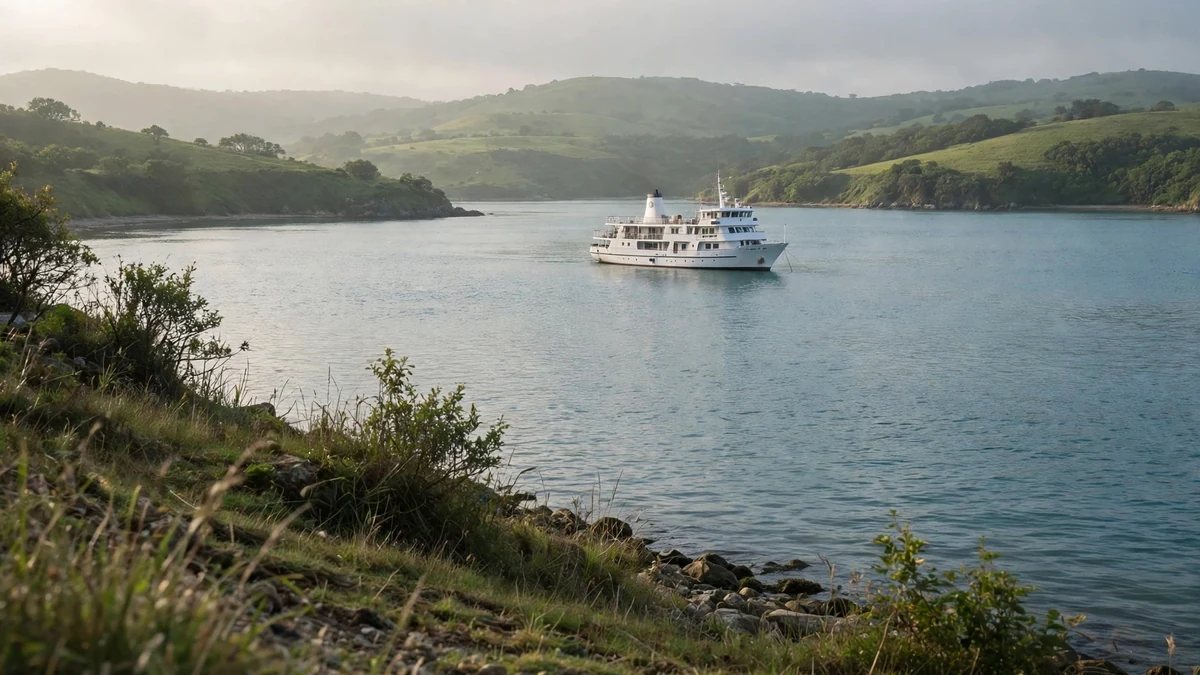
The strongest argument for a smaller ship is written on the map. A vessel of 248,663 gross tons, the size of the Icon class, can only call at ports with deep water, long piers, and terminals built to handle thousands of people at once. That rules out most of the interesting coastline on earth: the small Greek harbours, the Norwegian fjord villages, the Pacific islands where the tender pier is a wooden jetty. Small ships, often under 50,000 gross tons and carrying fewer than 1,000 guests, slip into those places easily. The destination stops being a backdrop glimpsed from a balcony and becomes somewhere you actually set foot.
This is not a marginal benefit. It changes the whole shape of a voyage. A mega-ship itinerary is built around ports that can take it, which means the same dozen big terminals, visited in rotation, year after year. A small ship itinerary is built around places worth seeing, and the ship is sized to fit them. Expedition ships reach Antarctica and the Galapagos precisely because they are small enough to operate there.
2. The experience is personal, not industrial
On a small ship, the dining room does not need three seatings and a reservation app. You do not queue for twenty minutes to get off the ship, and you do not queue again to get back on. These sound like small comforts, but they add up to a holiday that feels like a holiday rather than a shift at a theme park. The engineering of a mega-ship is devoted to moving crowds efficiently, and it does that job well, but efficiency is a poor substitute for ease.
There is a human cost to scale as well. Crew on small ships stay with the same guests for the whole voyage, and the bartender remembers that you drink your coffee black. The engineering inside a cruise ship engine is remarkable, but no amount of power changes the arithmetic of attention: divide the crew by the passengers and the answer is the service you will actually get.
3. Smaller ships are kinder to the places they visit
When 7,600 passengers step ashore in a town of 5,000 people, the town does not get a tourism boost, it gets an invasion. Shops fill, streets clog, and the place that passengers came to see disappears under the weight of its own visitors. Venice, Barcelona, and Dubrovnik have all pushed back against mega-ships for exactly this reason, and several have restricted or banned the largest vessels from their historic centres. A ship carrying a few hundred guests can visit the same town without overwhelming it, spend money in local restaurants rather than onboard franchises, and leave the place recognisable when it sails away.
The environmental argument points the same way. A smaller ship burns less fuel in total, needs less infrastructure ashore, and can use cleaner propulsion more easily. The best electric ferries show what is possible when a vessel is sized for its route rather than for maximum capacity.

4. The counterargument, and why it fails
Defenders of the mega-ship have a fair point. Big ships are cheaper per passenger, they offer more choice, and for a family with children they are hard to beat: water parks, climbing walls, ice rinks, and twenty restaurants mean nobody is ever bored. A small ship cannot match that range, and it should not try. But choice is not the same as quality, and a ship that offers everything usually does nothing particularly well. The restaurant with 2,000 covers is a canteen, however good the menu.
The price argument is real but narrower than it looks. Mega-ships are cheap because they spread fixed costs across thousands of fares, and because much of the profit comes from onboard spending rather than the ticket. Small ships cost more upfront, but the fare usually includes more, the drinks, the excursions, the gratuities, and the total bill is often closer than the headline price suggests. Paying more for a smaller ship is not paying for less. It is paying for a different product, one where the sea and the shore matter more than the shopping mall in between.
5. What small-ship cruising does better
The best small ships understand their advantage and build on it. They hire expedition teams, naturalists, and local guides, and they design itineraries around wildlife, culture, and history rather than around port capacity. The specs that steer a cruise ship from its bridge matter on every vessel, but on a small ship the bridge team works with the expedition team, changing course for a whale sighting or a weather window, in a way a mega-ship’s fixed schedule never allows.

6. The verdict
The cruise industry will keep building mega-ships, because mega-ships make money, and there will always be travellers who want the biggest floating resort afloat. That is fine. But the future of cruising, the part of it that is actually about the sea, belongs to smaller ships. They reach the places worth visiting, they treat their passengers like people, and they remember that a ship is a way of travelling, not a destination in itself.
Choose a ship by the size of the experience it offers, not the size of the vessel. A few hundred fellow passengers, a crew who know your name, and a harbour too small for a mega-ship will give you a better week at sea than any water park ever built. The sea has not changed. The ships just got too big for it, and it is time to go back to a size that fits.


