A methanol-fuelled ship looks, from the outside, like any other ship. There is no cryogenic tank the size of a house, no high-pressure gas system, no plume of anything unusual from the funnel. The fuel is a clear liquid that pumps at ordinary temperature and pressure, stored in ordinary-looking tanks, burned in an engine that would be familiar to any marine engineer.
Methanol, CH3OH, is the simplest alcohol: a single carbon atom with three hydrogens and a hydroxyl group. As a marine fuel it is the easiest of the clean alternatives to handle, which is why it won the first round of shipping’s fuel race. More than 150 methanol-fuelled vessels are already in service and nearly 300 more are on order, with over 450 expected by 2030. The ships run on dual-fuel engines that can burn methanol or conventional fuel, so an owner can order the ship today and switch to greener methanol as supply grows. But methanol is not a single fuel with a single climate story — where it comes from decides whether it helps the climate at all.
How It Works
Step 1: Methanol is stored as an ordinary liquid
The first advantage of methanol is how unremarkable it is to store. Unlike liquefied natural gas, which must be kept at around minus 162 degrees, or liquid hydrogen at minus 253 degrees, methanol stays liquid at ambient temperature and pressure. It is pumped into tanks that look much like conventional fuel tanks, though they need to be roughly twice as large: methanol holds about 19.9 megajoules per kilogram, less than half the energy of marine diesel, so a ship needs about double the tank volume to travel the same distance, and that eats into cargo space.
Step 2: A small pilot injection of diesel starts the burn
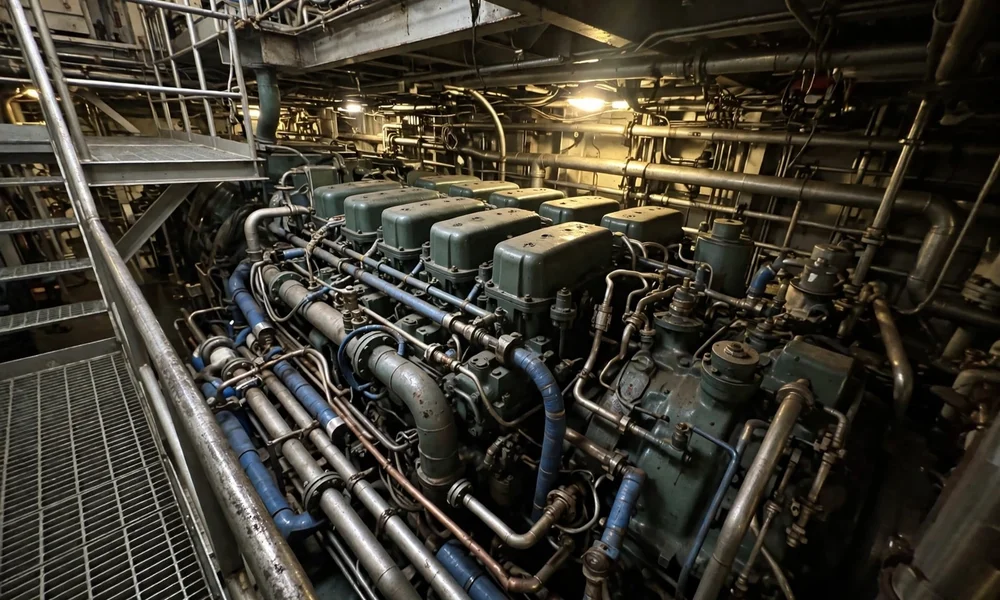
Methanol does not ignite easily on its own — its cetane number, the measure of how readily a fuel self-ignites under compression, is very low. So a methanol dual-fuel engine uses a tiny amount of pilot diesel, injected through a separate high-pressure nozzle, to create the spark that lights the main methanol charge. In a large two-stroke engine, the methanol is injected at high pressure into the cylinder just as the pilot diesel fires, and the two burn together. That dual-fuel safety net is a large part of why owners trust the technology.
Step 3: The burn is cleaner than heavy fuel oil
When methanol burns, the exhaust is strikingly clean by shipping standards. Because the fuel contains no sulphur, sulphur oxide emissions fall by up to 99 percent — effectively to zero. Particulate matter, the soot that blackens ports and lungs, is virtually eliminated. Nitrogen oxides fall by up to 80 percent depending on the engine type and aftertreatment. Tailpipe carbon dioxide drops by only about 5 to 7 percent compared with marine gasoil on an energy-equivalent basis, because methanol still contains carbon. The real climate benefit depends entirely on how the methanol was made, which is where the story splits in two. The LNG carrier tanks that hold the previous generation of clean fuel show the contrast: methanol needs no cryogenic engineering at all, just careful handling of a liquid.
Step 4: Green methanol is made from biomass or captured carbon
There are several kinds of methanol, and the colour label matters more than the chemistry. Grey methanol is made from natural gas and, measured from well to wake, can emit as much greenhouse gas as conventional fuel — or more. Blue methanol uses captured carbon and renewable electricity. Green methanol is made in two main ways: bio-methanol, produced by gasifying biomass, and e-methanol, made by reacting green hydrogen from an electrolyser with captured carbon dioxide over a copper and zinc-oxide catalyst at around 250 degrees. Green methanol can cut well-to-wake carbon dioxide by more than 90 percent, or around 70 to 80 percent on more conservative estimates.
Step 5: Bunkering uses adapted port equipment
Getting methanol onto a ship is far simpler than bunkering LNG or hydrogen. Because it is a liquid at ambient conditions, existing bunker barges need only minor modifications — double-walled pipes and nitrogen purging — to transfer it safely. The crew needs specific training: methanol is toxic if swallowed or absorbed through the skin, its flame is nearly invisible in daylight, and the engine room must be heavily ventilated and fitted with explosion-proof equipment. Safety procedures are strict, but they are built on familiar liquid-fuel practice rather than entirely new cryogenic routines.
Step 6: The ship keeps its options open
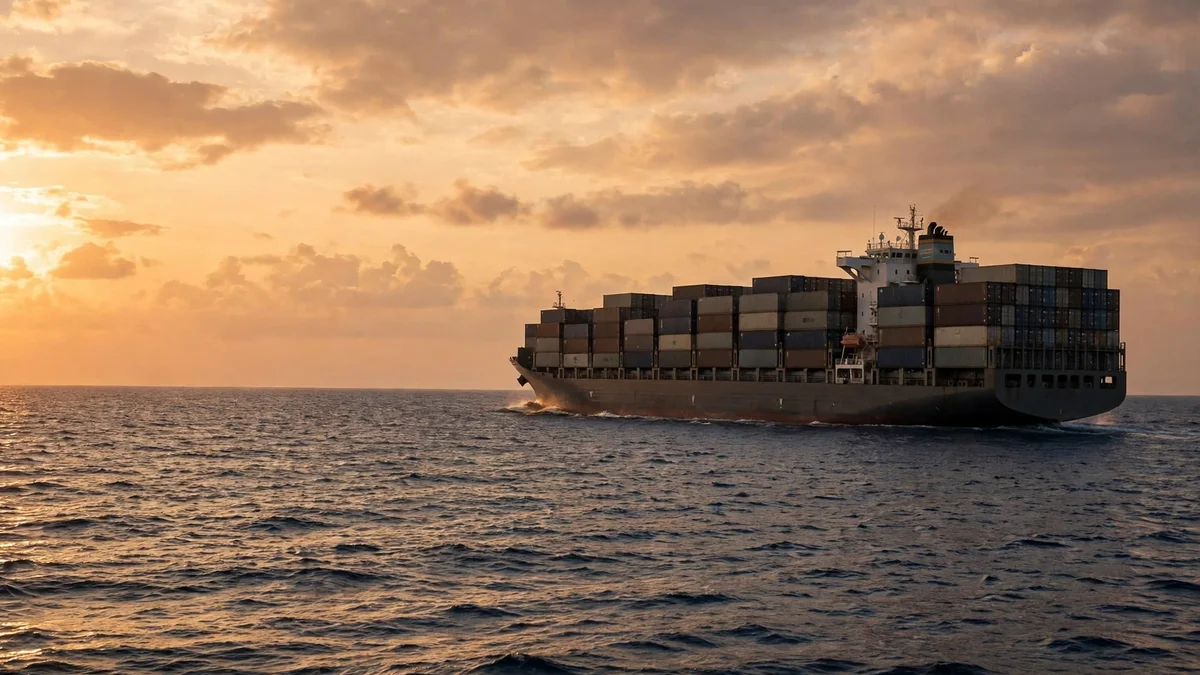
The dual-fuel design is also a commercial strategy. An owner ordering a methanol-ready container ship today is buying a hedge: the vessel can run on conventional fuel now, on grey methanol where that is available, and on green methanol as production scales up and prices fall. Methanol-powered designs already account for roughly 9 percent of total new vessel orders, second only to LNG among alternative fuels, and the fleet is concentrated in container shipping, where the big operators have made public decarbonisation commitments.The cruise ship engine of the next decade may well be a dual-fuel methanol unit, chosen not because it is the perfect fuel, but because it is the practical one.

Specs
| Specification | Typical figure |
|---|---|
| Fuel | Methanol, CH3OH |
| Energy density (lower heating value) | 19.9 MJ/kg, under half of marine diesel |
| Storage | Liquid at ambient temperature and pressure |
| Flashpoint | 11°C |
| Engine type | Dual-fuel two-stroke or four-stroke |
| Ignition | Pilot diesel injection |
| Sulphur oxide reduction | Up to 99% |
| Nitrogen oxide reduction | Up to 80% |
| Particulate matter | Virtually eliminated |
| Green methanol well-to-wake CO2 cut | Over 90% in best cases |
Price
A methanol-fuelled ship costs more to build and more to run than a conventional one. As an estimate, a dual-fuel methanol container ship costs roughly 10 to 15 percent more than a conventional equivalent, adding tens of millions of dollars on a large vessel, and green methanol currently costs several times more than fuel oil on an energy basis — these are estimates, and the real figures depend on the ship size, the engine maker, and the methanol market at the time of ordering. The premium is smaller than for LNG or hydrogen ships, because the storage and bunkering changes are modest, and that is the core of methanol’s appeal: it is the cheapest clean-fuel ship to build. Whether it pays depends on fuel prices, carbon regulation, and the IMO’s target of net-zero shipping emissions around 2050.
A Rare Fact
Methanol entered marine service in 2016 with the first dual-fuel product tankers, and it now has over a decade of operational experience — longer than any other alternative marine fuel in regular service. Yet the most important number in the whole methanol story is not a ship count but a carbon one: grey methanol made from fossil gas can have higher well-to-wake greenhouse gas emissions than the very low sulphur fuel oil it replaces. A methanol ship is only as clean as the methanol in its tanks, which is why owners now buy fuel with certificates proving exactly how it was made.