Walk into a workshop that prints metal and the first thing you notice is how little there is to see. No sparks fly, no presses slam, no workers wrestle with heavy steel. A sealed grey box hums quietly in the corner, and through its small window you can watch a laser draw, line after line, across a bed of fine powder. Where the beam passes, the powder melts and freezes into solid metal.
Then the owner shows you the invoice, and the quiet suddenly makes sense. That small grey box cost more than a house. The powder inside it costs more per kilogram than silver. The part it just made, which fits in the palm of your hand, took fourteen hours to grow and will need another day of finishing before anyone can use it. Additive manufacturing can build shapes no other process can touch, but every one of those shapes carries a price that surprises even experienced engineers.
The surprise is not a single expensive thing. It is a pile of expensive things, each one reasonable on its own, stacking up until the total looks absurd. The machine, the material, the energy, the expertise, the inspection, the finishing — remove any one of them and the part fails. Keep them all and the part costs what it costs.
Why It Costs So Much
1. The machine itself is a small factory
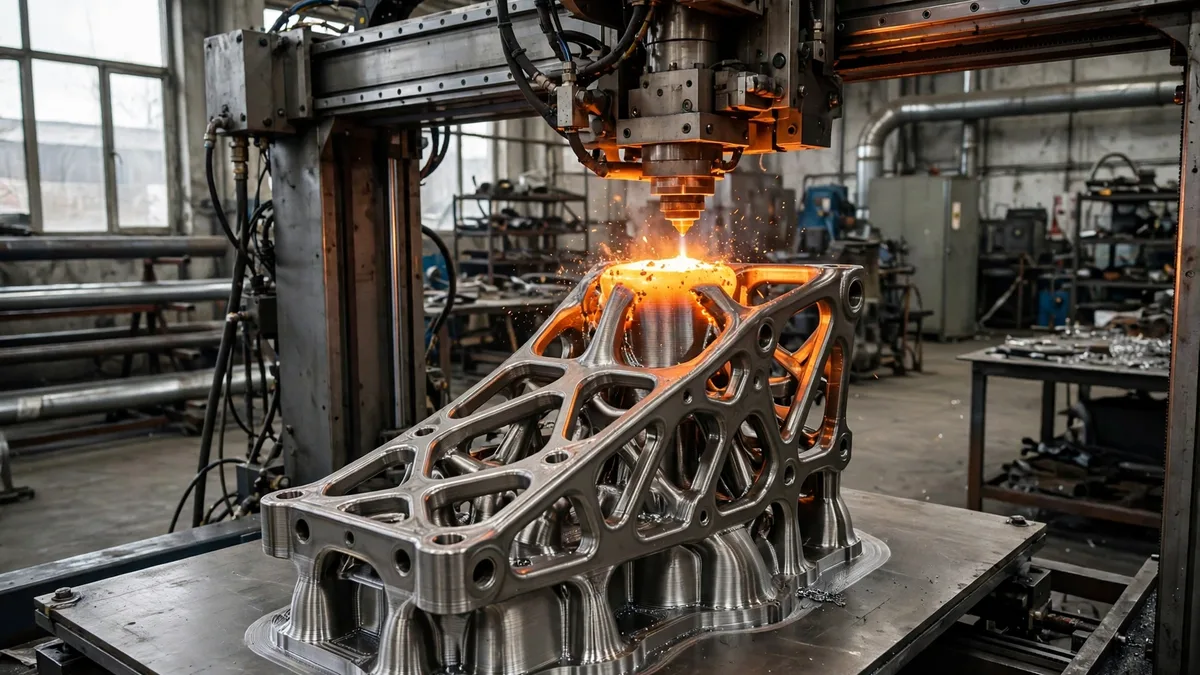
An industrial metal printer is not a bigger version of a desktop printer. It is a precision instrument wrapped around a high-powered laser, a sealed chamber filled with inert gas, a powder handling system, and motion controls that position the beam to within a few microns. A single machine is estimated to cost roughly $250,000 to more than $1,000,000, depending on its size and laser count. The step-by-step build, from powder to finished part, is described in how additive manufacturing is made, and it shows how much hardware stands behind every layer.
2. The powder is precious
Metal powder for printing is not ordinary metal dust. It must be almost perfectly spherical, with grains of a tightly controlled size, made from pure alloy with almost no contamination. Producing it means melting the alloy and spraying it through a nozzle in inert gas, then sieving out every grain that is too big or too small. Titanium powder is estimated at roughly $100 to $500 per kilogram, and nickel superalloys can cost even more.
3. Printing is slow, and slowness is expensive
A laser powder-bed machine lays down roughly 10 to 100 cubic centimetres of metal per hour. A part the size of a coffee mug can take twelve hours or more, and a large aerospace bracket can take days. During all of that time the machine is occupied, the laser is burning electricity, and the chamber is consuming argon. The physics behind that trade — melt pools, scan speed, and layer thickness — is laid out in how additive manufacturing works, from the first layer to the last.
4. The part is not finished when the print ends
When the build finishes, the part is still buried in loose powder, stuck to a steel build plate, covered in supports, and full of internal stress from rapid heating and cooling. Workers must dig it out, remove the supports, cut it free, heat-treat it to relieve stress, and often machine its critical surfaces to a smooth finish. Finishing often costs as much as the printing itself.
5. Almost every part must be inspected like it will fly
Printed metal can hide flaws you cannot see: tiny pores, cracks, or layers that did not fully bond. For aerospace, medical, and energy parts, that is unacceptable, so every critical part goes through X-ray tomography or ultrasound, and some are cut open and destroyed just to prove the batch is sound. The numbers that decide whether a part passes or fails are explained in additive manufacturing specs explained, where density, accuracy, and strength are read like a report card.
6. Failure is part of the price
Even in a well-run shop, builds fail. A layer peels, a recoater blade drags, a power dip ruins a day of printing, and the whole build goes in the scrap bin. Failed builds waste powder, machine time, and labour, and the cost of those failures is spread across the builds that succeed. Printing is a process that rewards repetition, and the early parts pay for the learning.

Additive Manufacturing Specs
| Specification | Typical range |
|---|---|
| Layer thickness | About 20 to 100 microns for metal; 50 to 300 microns for plastic |
| Build volume | About 200 x 200 x 200 mm desktop; up to 600 x 400 x 500 mm industrial |
| Print speed | About 10 to 100 cubic centimetres per hour; over 200 with multiple lasers |
| Density | About 99.5 percent of solid metal or better when well tuned |
| Surface roughness | About 10 to 25 microns Ra as printed; under 1 micron after machining |
| Tensile strength | About 900 to 1,100 MPa for printed titanium alloy; 500 to 700 MPa for stainless steel |
| Dimensional accuracy | About plus or minus 0.1 mm on small features; plus or minus 0.2 percent on larger parts |
| Materials | Titanium, stainless steel, aluminium, nickel alloys, polymers, and ceramics |
What Does Additive Manufacturing Cost?
The price depends on size, material, and finishing, but the ranges are stark. An industrial metal printer is estimated to cost roughly $250,000 to over $1,000,000, while a good desktop plastic printer is estimated at roughly $300 to $5,000. Metal powder is estimated at roughly $100 to $500 per kilogram, and a single printed part can be estimated at roughly $50 for a small plastic piece to several thousand dollars for a large metal component. All prices are estimates only and vary widely by material, machine, and supplier.
A Rare Fact
The most famous printed part in the world is one you will never see. Inside the LEAP jet engine, which powers many modern airliners, the fuel nozzle was once an assembly of twenty separate pieces, welded and brazed together. Engineers redesigned it as a single printed part: it came out 25 percent lighter, five times more durable, and with internal passages no drill could ever reach. The nozzle is expensive to print, yet it saves fuel on every flight for decades, which is the quiet arithmetic behind additive manufacturing — a part that costs ten times more to make can still be the cheap option over its lifetime.
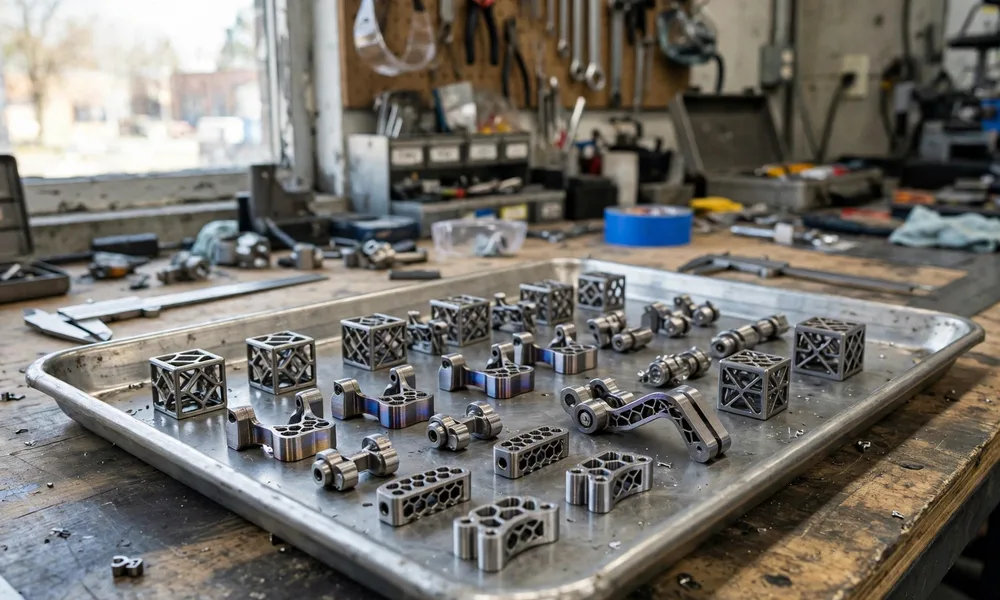
That is the real story of the price tag. Additive manufacturing is expensive because it asks a laser, a bed of precious powder, a sealed chamber, and a rare team of specialists to do something no other process can: grow a finished shape out of nothing, layer by patient layer. When the part is a fuel nozzle, a rocket injector, or a custom implant, there is no other way to make it at all — and the cost, however steep, is simply the price of the impossible.