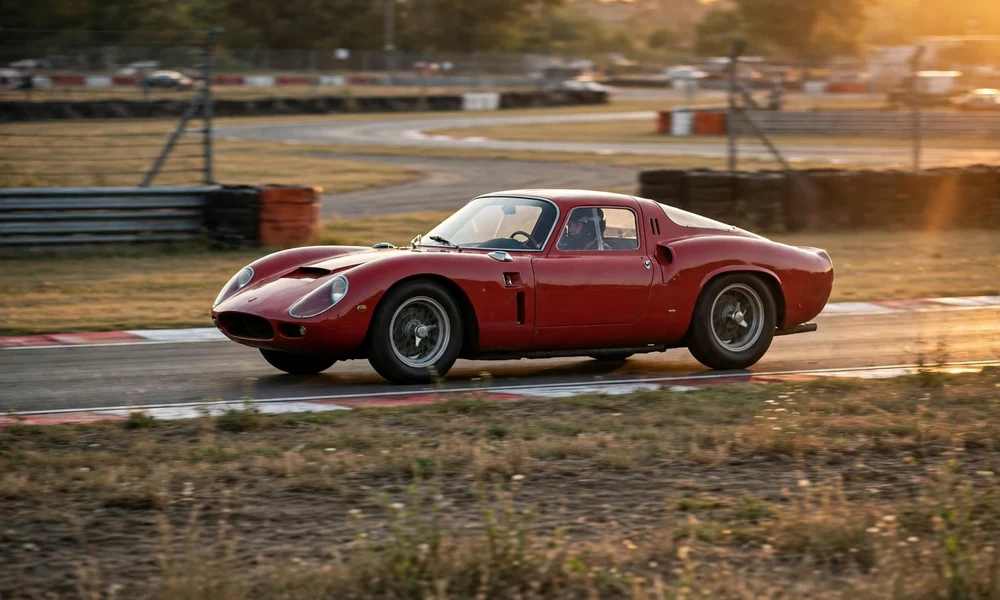
In the summer of 2022, a 1955 Mercedes 300 SLR Uhlenhaut Coupe sold at auction for 135 million euros, making it the most expensive car ever sold. It is not the fastest car ever built, nor the most comfortable, nor the most practical. It has no air conditioning, no touchscreen, and no driver assistance of any kind. What it has is something no new car can ever have: a story that cannot be repeated, and a production run of exactly two.
Vintage hypercars occupy a strange and wonderful corner of the car world. They were the fastest, most advanced machines of their day — the McLaren F1, the Ferrari 250 GTO, the Porsche 959, the Jaguar XJ220 — and time has only added to their value. New hypercars are faster, safer and more comfortable, yet the old ones command prices that dwarf their modern successors. The reason is not speed. It is scarcity, provenance and the simple fact that no one is making any more of them.
The market for these cars is small, private and often invisible. Many sales happen off the record, between collectors who know each other, and the prices that do surface at auction are only the visible tip. To understand why a thirty-year-old car can cost 20 million dollars, look at what makes it rare, what keeps it running, and who is buying.
Where the Money Goes: A Vintage Hypercar Price Breakdown
| Cost area | Share of value (estimate) | What it covers |
|---|---|---|
| Scarcity and production numbers | 30–40% | Tiny build runs, lost cars, survivors still on the road |
| Provenance and history | 20–25% | Racing wins, famous owners, documented life story |
| Originality and matching numbers | 15–20% | Original engine, gearbox, bodywork, factory records |
| Condition and restoration | 10–15% | Concours condition, correct parts, expert restoration |
| Market demand and investment | 10–15% | Collector demand, auction results, asset appeal |
These shares are estimates, and they shift with every car. But the pattern holds: the price is driven by what cannot be changed — how many were made, who owned it, and what it did — far more than by what the car can do today.

How a Vintage Hypercar Is Valued
Valuing a vintage hypercar is closer to valuing a painting than to valuing a used car. There is no standard price list, and two apparently identical cars can be worth wildly different amounts.
- Production numbers set the ceiling. Only 36 Ferrari 250 GTOs were built. Only 106 McLaren F1s were built. A car that was rare when new becomes rarer still as examples are crashed, lost or locked away in collections.
- Provenance is researched. Historians trace the car’s life: who ordered it, where it raced, who owned it, and whether it appears in period photographs or race records. A famous first owner or a Le Mans entry can double the value.
- Matching numbers are verified. The engine, gearbox and chassis numbers are checked against factory records. A car with its original engine is worth far more than one with a replacement, even if the replacement is identical.
- Condition is judged. Concours judges examine the car in forensic detail: the correctness of every nut, the shade of the paint, the stitching on the seats. Originality is prized above perfection — an untouched car is worth more than a restored one.
- Restoration history is weighed. A restoration by a known specialist, documented with photographs and receipts, adds value. A poor restoration, or one that changed the car’s specification, subtracts it.
- The market speaks. Auction results for comparable cars set the benchmark, and the bidding room decides the rest. Two determined collectors in one room can push a price far beyond any estimate.
- Ownership costs are factored in. Insurance, secure storage, specialist servicing and the cost of finding rare parts are all part of the real price, and buyers budget for them from the start.
Why So Few Were Built
The first reason vintage hypercars are expensive is the simplest: hardly any were made. The McLaren F1 was built in a run of 106 cars over six years. The Ferrari F40 numbered just over 1,300 — a large number by hypercar standards, and still tiny by any other measure. The Jaguar XJ220 numbered 281. The Porsche 959 numbered 337. These are not production runs; they are hand-built batches.
Provenance: The Story Is Worth Millions
Two identical cars can be worth ten times different amounts, and the difference is the story. A Ferrari 250 GTO that won races in period is worth far more than one that spent its life in a garage, even if the garage car is in better condition. A McLaren F1 owned by a famous driver carries a premium that has nothing to do with the machine and everything to do with its history.
Provenance is documented like a family tree. Factory build sheets, period photographs, race entry lists and letters from previous owners are gathered into a file, and the thicker the file, the higher the price. The engineering adds to the legend too: the hypercar active aerodynamics of today descends directly from the experimental wings and underbody work of those early cars.
Keeping One Alive: The Hidden Costs
Buying a vintage hypercar is only the first bill. Keeping one running is a specialist undertaking. A routine service on a McLaren F1 can cost tens of thousands of dollars. A set of tyres, made in a special production run, can cost more than a family hatchback. Insurance for a 20-million-dollar car is a six-figure annual bill on its own.
Parts are the hardest problem. Many components were made in tiny batches and have been out of production for decades. Some owners commission remanufactured parts at enormous cost. A single unavailable part — a gearbox casing, a suspension upright, a dashboard switch — can keep a car off the road for months. Specialist labour is the other cost: the technicians who can service these cars are few and in demand around the world. Even the running gear is costly: why hypercar carbon wheels are so expensive shows how one set of wheels can cost as much as a new car.
A Rare Fact From the Auction Room
Here is a detail that captures the market: the 1955 Mercedes 300 SLR Uhlenhaut Coupe that sold for 135 million euros was not sold at a public auction. It was sold in a private, invitation-only event at the Mercedes museum in Stuttgart, to a buyer whose identity was not announced. That is how the top of this market works — quietly, privately, and at prices that make the public auction records look modest.
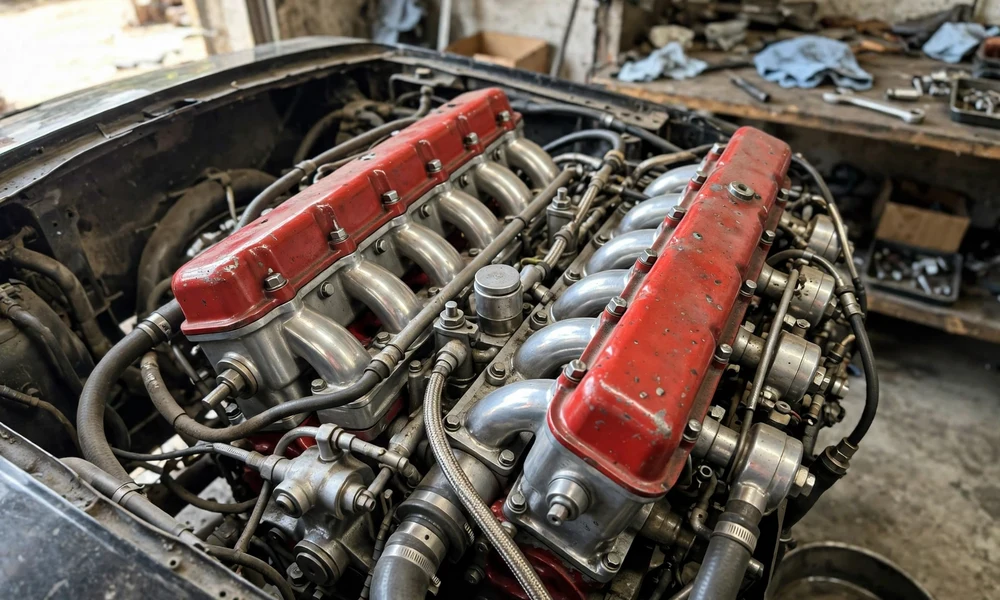
Another rarity is the engine. The V12 versus V8 hypercar engines debate is old, but the vintage cars settle it in their own way: the great V12s of the 1960s and 1990s — Ferrari’s Colombo V12, Lamborghini’s Bizzarrini V12 — are now irreplaceable artefacts, built by hand in numbers that will never be repeated, and their sound alone is part of what collectors are buying.
Why the Price Keeps Climbing
Three forces push vintage hypercar prices upward. The first is supply: the cars are not being made, and every year there are fewer available. The second is demand: a growing class of wealthy collectors, many of whom grew up with posters of these cars on their bedroom walls, now has the money to buy the real thing. The third is the investment case: for two decades, the best vintage hypercars have appreciated faster than most traditional investments. In the end, a vintage hypercar is expensive for the same reason a great painting is expensive: it is rare, it is beautiful, it carries a story, and there will never be another one like it.