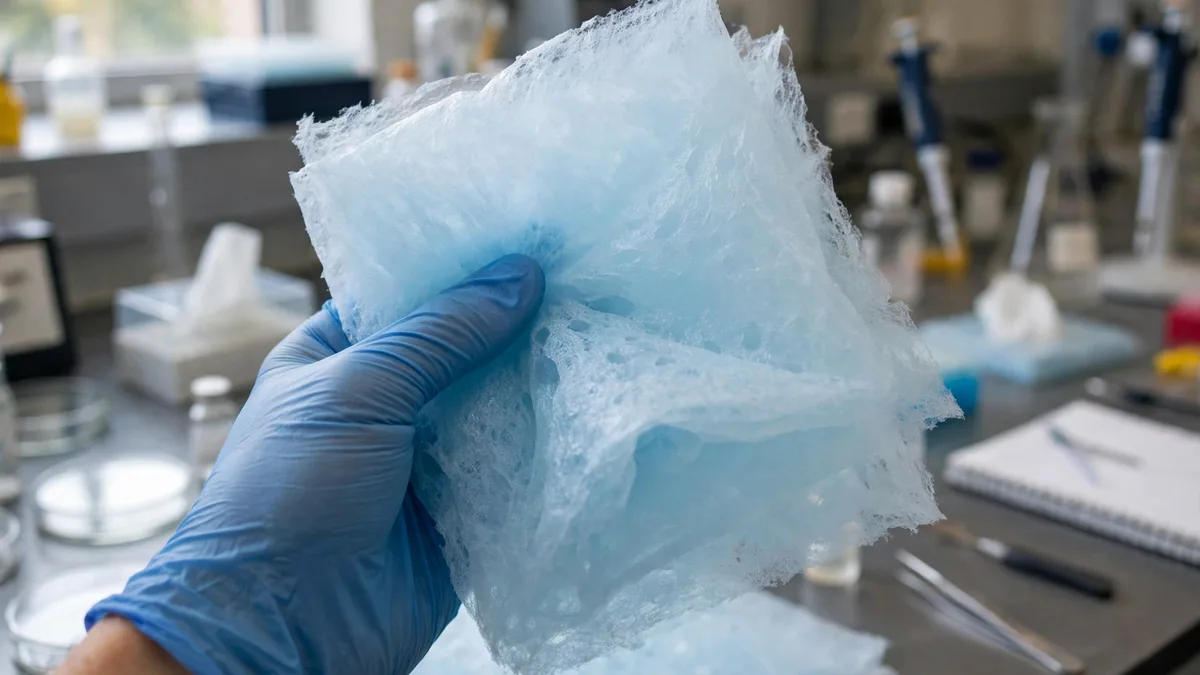
Hold a piece of aerogel in your hand and your brain refuses to believe what your eyes are seeing. It looks like a shard of frozen smoke, pale blue and almost transparent, so light it feels like holding nothing at all. Set it on a flower and the flower does not bend. Hold a flame under it and the top stays cool enough to touch. It is the lightest solid material ever made, and it insulates better than almost anything else on Earth.
And yet a blanket of aerogel insulation can cost more per square metre than a good carpet, and a roll of it can cost more than the pipes it is wrapped around. Aerogel is not expensive because it is fashionable. It is expensive because making it is a slow, delicate and energy-hungry process that turns ordinary sand into a solid made almost entirely of air, and because almost nothing else can do what it does in the space it does it in. This is why it costs so much.
Why It Costs So Much
Reason 1: It is almost entirely air
Aerogel is a gel with the liquid removed and replaced by air, leaving a solid skeleton of silica that is up to 99.8 percent empty space. That structure is the whole secret: air trapped in tiny pores cannot move, so heat cannot travel through it, and the solid skeleton is so thin that it barely conducts heat either. The gel must be formed, aged, and dried without collapsing, and the drying step is the hardest part of all. If the liquid inside the gel evaporates normally, surface tension crushes the structure flat. Instead the gel is dried with supercritical carbon dioxide, which behaves like both a liquid and a gas and leaves the skeleton standing. That one step needs high-pressure vessels, precise control and days of careful work.
Reason 2: The drying process is slow and costly
Supercritical drying is the bottleneck of aerogel production. The gel is placed in a pressure vessel, the vessel is filled with carbon dioxide, and the temperature and pressure are raised until the carbon dioxide becomes supercritical and can wash the liquid out of the gel without collapsing it. The process takes hours or days, uses a great deal of energy, and needs vessels rated for high pressure, all for a product that weighs almost nothing. The performance figures behind the material are laid out in the aerogel insulation specifications, and the drying is the reason those figures come at a premium.
Reason 3: Pure aerogel is fragile, so it must be reinforced
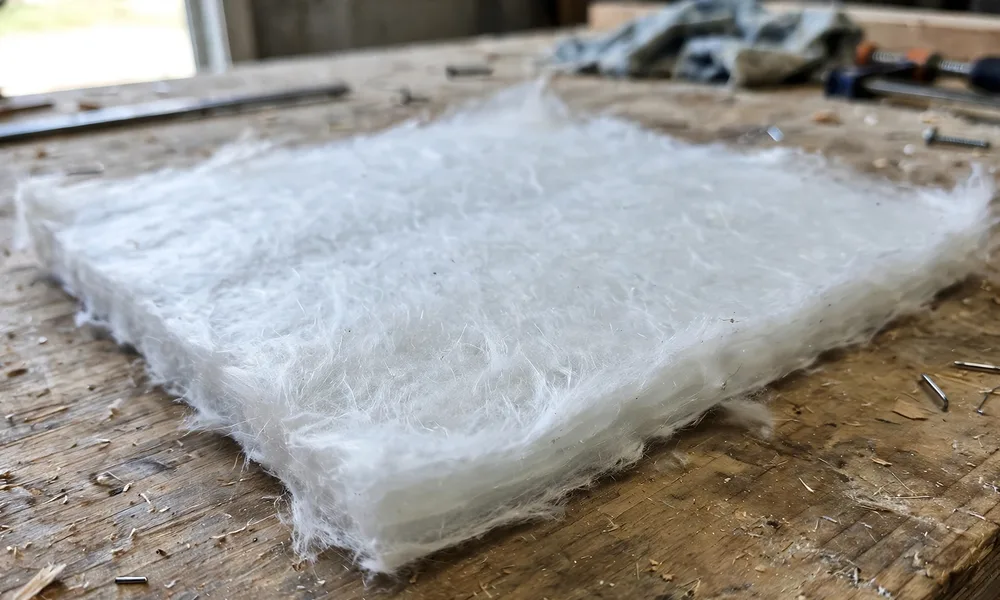
A block of pure silica aerogel is beautiful and almost useless as insulation on its own, because it is brittle and crumbles at a touch. To make a product that can be cut, wrapped and installed, the aerogel is infused into a fibre blanket, usually glass or polymer fibre, which gives it strength while keeping most of its insulating power. Making that composite is a second manufacturing process, with its own machines, quality checks and waste, and it must be done without crushing the delicate aerogel structure inside the fibres.
Reason 4: A little goes a long way, but it still costs a lot
Aerogel insulates so well that a layer a few millimetres thick can do the work of centimetres of ordinary insulation, which is exactly why it is used where space is tight: on offshore platforms, in refineries, inside spacecraft and in thin walls. That thinness is its selling point, and it is also the reason the price per square metre looks shocking. A buyer is not paying for bulk, they are paying for performance in a space where nothing else fits.
Reason 5: The market is small and specialised
Aerogel is not made in the volumes of fibreglass or foam. The world has only a handful of large aerogel plants, and their output goes to industries that need the best insulation money can buy: oil and gas, aerospace, electric vehicles and high-end construction. Small production runs mean high unit costs, because the cost of the factory, the research and the quality testing is spread across a small amount of product. Aerogel is a specialist product for specialist jobs, and it is priced like one.
Reason 6: It must be installed with care
The last reason is the human one. Aerogel blankets must be cut, fitted and sealed by people who understand the material, because a gap, a compression or a tear can spoil the insulation in that spot. Installers wear gloves and masks, since the fine dust is an irritant, and they measure twice before cutting, because the blanket is too expensive to waste. The price of aerogel is not just the price of the blanket, it is the price of the whole careful process of getting it onto the pipe and keeping it there. The same story of a costly advanced material shows up in why carbon nanotube composite costs so much, while the lightweight structures that aerogel often insulates are covered in the honeycomb core specifications.

Aerogel Insulation at a Glance
| Specification | Detail |
|---|---|
| Material | Silica aerogel in a fibre blanket |
| Density | Around 3 to 150 kilograms per cubic metre |
| Air content | Up to 99.8 percent air by volume |
| Thermal conductivity | Around 0.013 to 0.020 watts per metre-kelvin |
| Thickness needed | A few millimetres can replace centimetres of wool |
| Production | Supercritical drying with carbon dioxide |
| Main uses | Pipes, offshore platforms, spacecraft, vehicles |
| Main advantage | Best insulation per thickness of any solid |
| Main drawback | Expensive, fragile, dusty to handle |
What Does It Cost?
As rough estimates, aerogel insulation blankets typically cost around $40 to $100 (estimate) per square metre, depending on thickness and grade, against a few dollars per square metre for ordinary mineral wool. A roll for a refinery pipe run can cost thousands of dollars (estimate), and a full industrial installation can run into the tens of thousands, with skilled fitting adding a large share. Those figures are estimates, not quotes, and the real number depends on the grade, the thickness and the supplier. The price looks steep until it is compared with the alternative: a thicker, heavier insulation that needs more space, more steel to hold it, and more labour to install.
A Rare Fact
Aerogel holds a string of world records, including the lightest solid material ever made, and it has flown in space. NASA has used aerogel to catch dust from a comet, because the ghostly material can slow a speeding particle to a stop without destroying it, and to insulate the rovers that explored Mars, where nights are bitterly cold and every gram counts.
Aerogel insulation is a strange and wonderful material: a solid made of air, lighter than a feather, that can stop heat better than anything else ever made. It costs so much because it is hard to dry without collapsing, fragile until it is reinforced, made in small volumes, and installed by careful hands. Pay for all of that, and a few millimetres of frozen smoke will do the work of a thick blanket of wool; settle for less, and you will need the space, the steel and the weight that aerogel was invented to save.


