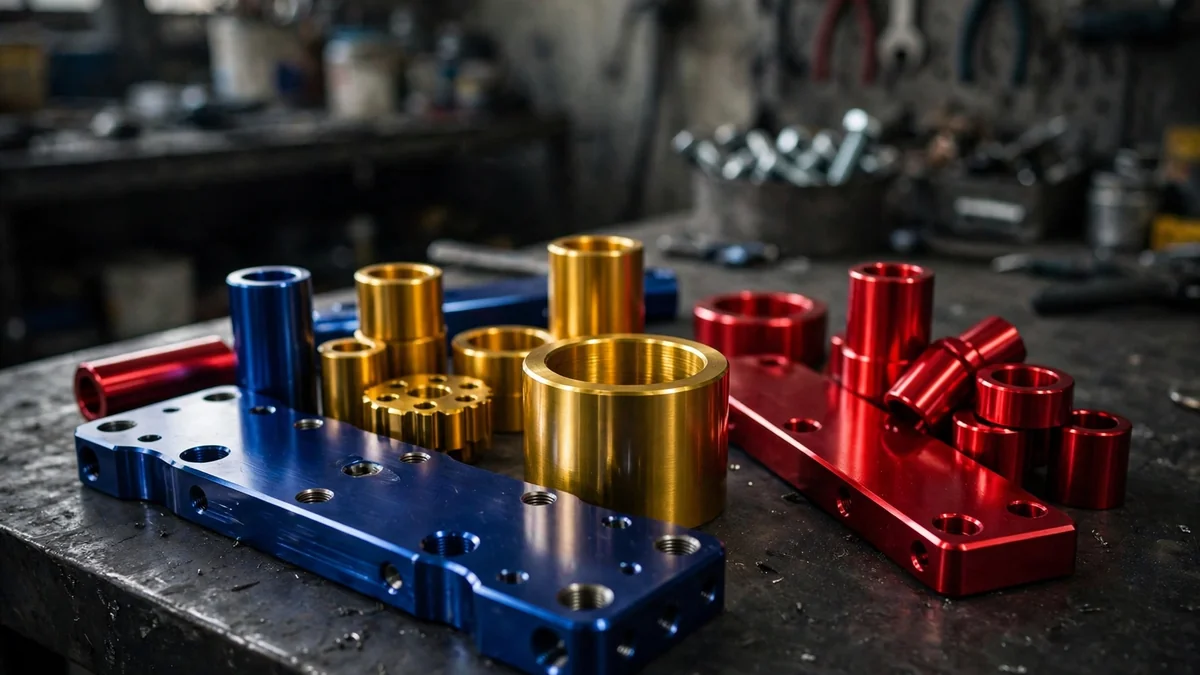
Hold a piece of anodised aluminium in your hand and it feels wrong in the best possible way. It is light as aluminium should be, but the surface is hard, cool and jewel-bright, a deep blue or gold or red that looks dyed into the metal rather than painted onto it. Because that is exactly what it is. Anodising does not coat aluminium. It grows a layer of ceramic out of the metal itself, a skin of aluminium oxide that is part of the part, and that skin is why a humble metal that comes out of the ground as dull grey rock ends up wearing colours that never fade, scratch or peel.
The strange thing is that the process is not new or secret. It has been used for a century, and the chemistry is taught in schools. What is expensive is doing it well, at scale, on parts that must look perfect and survive years of handling. The colour is the last step, and it is the step that can destroy everything before it.
How Anodised Aluminium Is Made
Anodising is an electrochemical process, which means electricity does the work. The aluminium part becomes one electrode in a bath of acid, and current flowing through it converts the surface of the metal into aluminium oxide, a ceramic that is far harder than the aluminium beneath it. The oxide grows in tiny pores, like a microscopic honeycomb, and those pores can be filled with dye before they are sealed shut. The result is colour locked inside ceramic, which is why it cannot peel off the way paint can.
Step 1: Machining the part to perfection
Before anything is anodised, the part is machined, polished or bead-blasted to its final shape. A scratch, a machining mark or an uneven finish will show through the colour, sometimes more clearly than before. The precision cutting that shapes these parts is the same craft that makes precision CNC machining one of the most demanding processes in engineering.
Step 2: Cleaning, and cleaning again
The part is washed in a series of chemical baths to strip away every trace of oil, grease and handling marks. Even the oil from a fingerprint can block the anodising and leave a pale patch in the finished colour. Workers handle parts with gloves from this point on, and the cleaning baths themselves must be kept pure, filtered and monitored.
Step 3: Etching the surface
Next the part is etched in a caustic solution that removes a thin layer of aluminium and leaves a uniform matte surface. The etch time is critical: too short and the finish is patchy, too long and fine details and sharp edges start to dissolve. Either way, this step sets the look of the finished part before a single volt of current flows.
Step 4: The anodising bath
The part is lowered into a bath of sulphuric acid, connected as the anode, and current is passed through it. The oxide layer grows at a controlled rate, usually to a thickness of around 5 to 25 microns, which is thinner than a human hair but hard enough to resist scratches that would gouge bare aluminium. The bath must be kept cold, the acid concentration steady, and the current density exact.
Step 5: Dyeing the pores
Fresh from the bath, the oxide layer is full of open pores, and those pores drink up dye like a sponge. The part is dipped in a dye bath, where the colour soaks into the ceramic. A phone maker that wants every device the same shade of blue needs the dye, the temperature and the timing to be identical every time, and even then the alloy of the aluminium itself can shift the final shade.
Step 6: Sealing the colour in
Finally the part is sealed, usually in hot water or steam, which closes the pores and locks the dye inside the ceramic. The part is rinsed, dried and inspected under bright light, and any part with a streak, a spot or a shade that does not match is rejected. The same unforgiving standard applies to the most visible aluminium on a phone, where a titanium phone frame shows how much work goes into a metal part the user touches every day.

What the Numbers Say
| Specification | Anodised aluminium |
|---|---|
| Base metal | Aluminium alloy, usually 6000 or 7000 series |
| Oxide layer thickness | 5 to 25 microns for decorative anodising |
| Oxide hardness | Harder than bare aluminium, close to ceramic |
| Bath chemistry | Sulphuric acid, kept cold and closely controlled |
| Colour method | Dye absorbed into open oxide pores, then sealed |
| Sealing method | Hot water or steam closes the pores |
| Key weakness | Colour matching between batches; rejects are common |
What It Costs, and Why
Anodising itself is not the most expensive step per part: a small part can be anodised for an estimated few dollars in a large run. The cost comes from everything around it. The part must be machined to a finish that survives close inspection, cleaned and etched without a single handling mark, anodised in a bath that is monitored constantly, dyed to an exact shade, and sealed without a flaw. Each step needs its own tanks, chemicals, waste treatment and skilled operators, and the whole line must be kept running clean. When a part is rejected at the final inspection, the cost of the machining, the anodising and the dye is all lost, and high-value parts are rejected more often because the standard is higher.
Small batches make it worse. A run of a few hundred parts carries the same setup, bath preparation and colour-matching work as a run of a hundred thousand, so the cost per part climbs steeply. The same economics govern the wider world of aluminium parts, and the materials behind anodised aluminium explain why engineers keep choosing it despite the cost.

Why the Price Stays High
Three things keep anodised aluminium expensive. The first is that the finish is only as good as the metal beneath it, so the machining must be perfect and perfect machining is never cheap. The second is that the process is a chain, and a failure at any link scraps the part, so the yield is never one hundred percent and the good parts pay for the bad ones.
There is also an environmental cost that is rarely mentioned. Anodising uses acids and produces waste that must be treated before it can be discharged, and the energy to keep baths cold and run the current adds up. Properly run plants invest heavily in filtration and recycling, and that investment sits in the price of every part.
A Rare Fact
The oxide layer that anodising creates is the same material as sapphire, aluminium oxide, which means the skin of an anodised part is chemically a cousin of a gemstone. It is far too thin to cut as a jewel, but it is the reason a well-anodised part can survive years of keys, coins and daily handling with its colour intact, while a painted part would have worn through in months.