In a small workshop on the edge of town, a motorcycle sits on a lift with no badges, no catalogue number, and no twin anywhere in the world. The tank was shaped by hand over a wooden buck, the frame was welded tube by tube on a jig, and the seat was stitched to fit one rider and one rider only. The owner did not walk into a showroom and choose a colour. He spent two years talking to the builder, arguing about handlebar width, exhaust note, and the exact shade of paint, and the bike that came out of it is the only one of its kind. A custom motorcycle is not expensive because it is fast. Plenty of factory bikes are faster. It is expensive because it is one of one, because it was built by hand for a single person, and because almost every part on it was made, not bought.
Why It Costs So Much
The engine and the mechanical work. The engine is usually rebuilt, often from a donor bike, and the work is far from simple. A builder may strip the engine to its cases, replace the bearings, pistons, and valves, fit new carburettors or a fuel injection system, and tune it on a dynamometer until it runs exactly as the owner wants. The exhaust is often made to order, bent tube by tube and welded by hand, because no catalogue pipe will fit a one-off frame. The suspension, brakes, and wheels are usually upgraded too, with parts sourced from racing suppliers and adapted to fit. A single engine rebuild by a specialist can cost thousands of dollars before the builder has touched the frame, and the tuning alone can take days. The result is a bike that sounds, feels, and rides like nothing else, because nothing else was built this way.
The materials and the finish. Custom bikes use materials that factory bikes rarely justify: hand-laid carbon fibre, machined aluminium, brass, copper, and leather worked by specialists. A set of wheels may be machined from solid billets, a headlight may be a one-off casting, and the paint may be laid down in a dozen coats, flatted and polished between each one until it looks a foot deep. The leather seat is often stitched by a saddler, not a factory, and the grips, pegs, and levers may be machined in the builder’s own shop. Every part is made in a quantity of one, so there is no economy of scale, and the cost of the tooling, the setup, and the builder’s time is carried by a single bike. The materials tell the same story as the frame, and the choice between carbon fibre and titanium matters as much on a motorcycle as it does on a hypercar, because weight and strength decide how the bike rides.

The rarity and the name. A custom motorcycle is worth what the builder’s name is worth. A bike from a builder with a reputation, a history of show wins, and a waiting list will hold its value and may even rise, while a bike from an unknown builder may be worth little more than its parts. The name is the guarantee: the buyer knows the frame is straight, the welds are sound, and the bike will run, because the builder’s livelihood depends on it. That reputation is built over decades, one bike at a time, and it cannot be bought. The wheels carry the same thinking, and the craft of making carbon wheels by hand shows why a single set of wheels can cost as much as a whole factory motorcycle.
The legal and practical costs. A custom motorcycle also has to be legal, and that is harder than it sounds. The bike must pass inspection, meet noise and emissions rules, and be registered and insured, and the paperwork can take months. Some parts, like the frame, may need to be certified, and the builder must keep records of every change. Insurance is expensive, because the bike is a one-off with no catalogue value, and the insurer has to agree a value with the owner before the bike is ever ridden. These costs are invisible to the person admiring the bike at a show, but they are real, and they add thousands to the price. The electric side of the market is growing too, and the best electric motorcycles of 2027 show how far factory bikes have come, which only makes the handbuilt custom stand out more.

What Goes Into a Custom Motorcycle
| Element | What Makes It Expensive |
|---|---|
| Frame and tank | Hand welded and hand shaped, one of one |
| Engine rebuild | Full strip, new internals, dyno tuning |
| Materials | Carbon fibre, billet aluminium, brass, hand leather |
| Labour | 300 to 600 hours per bike, months of work |
| Paint and finish | Many coats, hand flatted and polished |
| Builder reputation | Waiting lists of years, name guarantees value |
What a Custom Motorcycle Costs
A custom motorcycle can cost anywhere from twenty thousand dollars for a simple build based on a donor bike to more than two hundred thousand dollars for a full, ground-up commission from a famous builder. Most serious customs fall in the range of forty to one hundred thousand dollars, and the price depends on the builder, the donor bike, the materials, and the level of finish. The engine rebuild alone can cost five to fifteen thousand dollars, the paint can cost five thousand or more, and the labour, at a specialist rate, can account for half the total. These are estimates based on builder quotes and sale prices, and they vary widely, but the pattern is consistent: the more of the bike that is made by hand, and the more famous the builder, the higher the price. A bike from a builder with a waiting list and a shelf of show trophies will always cost more than the same bike from an unknown shop.
A Rare Fact About Custom Motorcycles
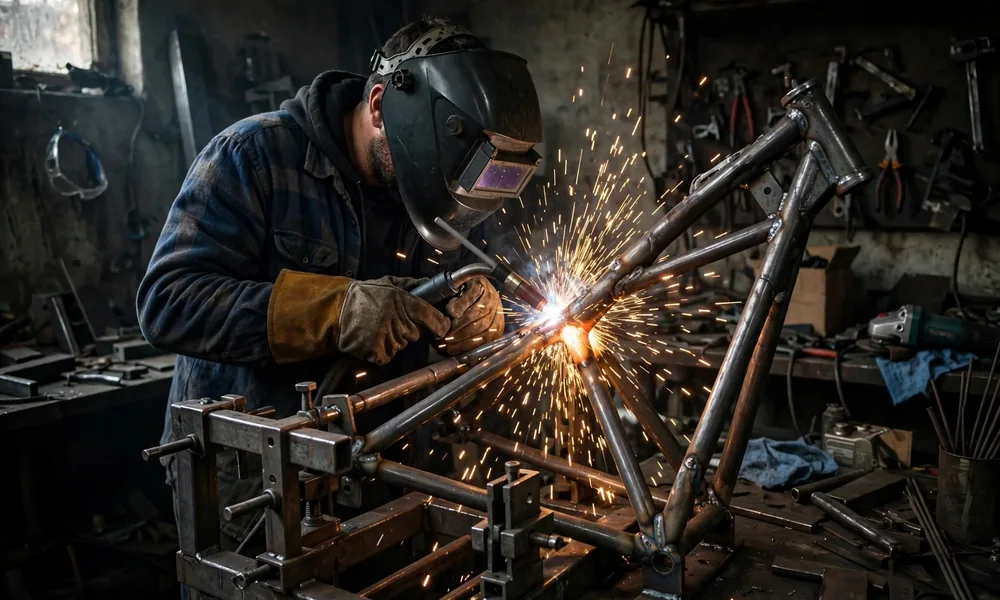
Here is a detail that says everything about this world: some of the most famous custom builders in the world shape their fuel tanks by hand using a technique called wheeling, rolling the metal back and forth over a heavy steel wheel until it curves into shape, and a single tank can take a full day of wheeling before it is ready for the bike. There is no mould, no press, and no shortcut. The builder’s hands and eyes are the only tools, and the tank that comes out is smooth, seamless, and impossible to copy exactly. It is the kind of work that looks simple when you watch it and feels impossible when you try it, and it is the reason a custom motorcycle costs what it does. The bike is not expensive because of what it is. It is expensive because of how it was made, by whom, and for whom, and because there will never be another one quite like it.
A custom motorcycle is expensive because it is a one-off, built by hand, over months, for a single rider, by a person whose name is on the work. The frame was welded for this bike, the tank was shaped for this bike, the seat was stitched for this rider, and the paint was mixed for this owner. No part of it was made for anyone else, and no part of it can be made again in exactly the same way. That is the price, and for the people who commission these bikes, it is not a cost. It is the point.


