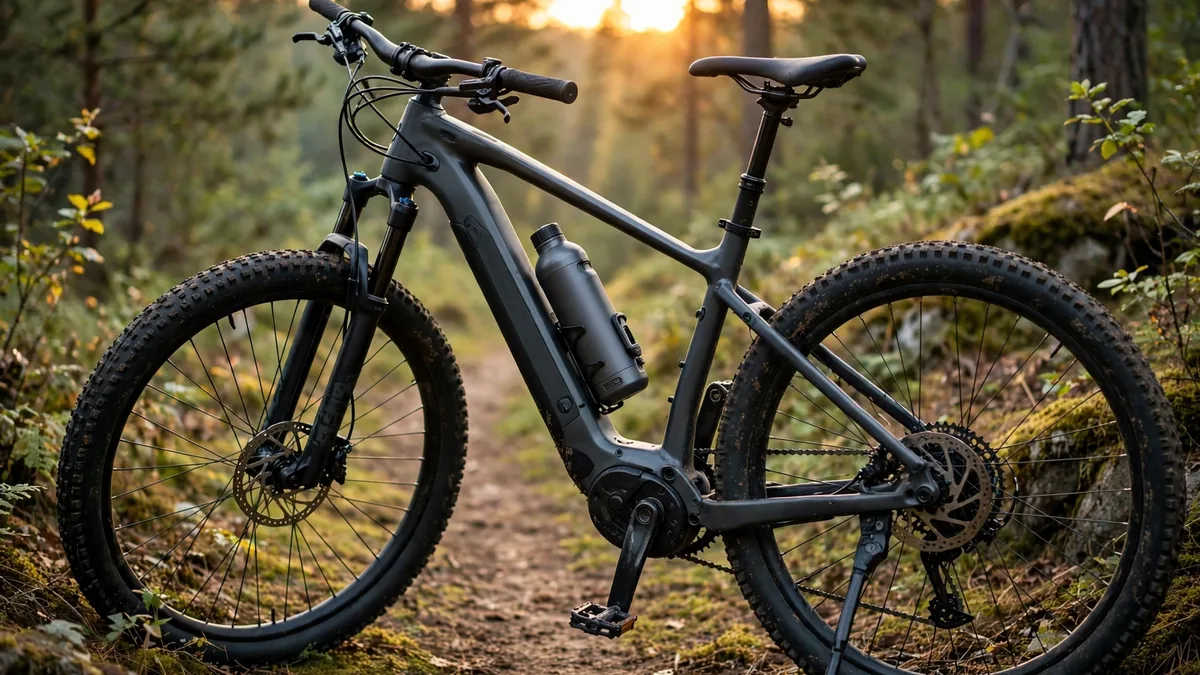
The climb had been going for forty minutes, the gradient had not relented, and the little battery bar on the handlebar display had faded from green to a single blinking red segment. Ahead lay twenty kilometres of rolling hills, a headwind was building, and there was no charger in the bag. The rider thumbed a small button on the top tube, and a second battery — a slim, bottle-shaped pack tucked into the water-bottle cage — woke up. The range estimate on the display jumped by thirty kilometres, the motor hummed back to full assistance, and the ride home was saved by a spare battery that had not existed when the bike left the factory.
That spare battery is an e-bike range extender, and it is one of the most quietly expensive accessories in cycling. A bottle-sized pack holding barely a third of the energy of a main battery can cost almost as much as the main battery itself, and riders pricing one up for the first time usually assume there has been a mistake. There has not — the extender has to be small, light, tough, and safe, and it is made in tiny numbers.
This guide explains where the money goes — the cells, the electronics, the handwork, the testing, and the tiny production runs — and why a bottle of extra range costs what it does.
Why It Costs So Much
The first cost driver is the cells themselves, and the extender uses the most expensive kind. A range extender cannot afford the bulky, lower-density cells that a big main battery can hide inside a down tube, because the pack hangs off a bottle cage on a bicycle that a rider still has to pedal, lift, and steer. So manufacturers buy premium high-energy-density lithium-ion cells — the same grade used in flagship phones — where the price per watt-hour is far higher than in a car battery.
Then comes the electronics, which are far more complicated than the bottle shape suggests. An extender is not a dumb spare battery. It has to hand over its energy to the main battery and the motor controller at exactly the right rate, without ever letting either battery charge the other in a way that damages it. That job falls to a small battery management system, a circuit board packed with sensors and switches that watches temperature, voltage, and current dozens of times a second. A rider who wants to understand how an e-bike range extender works will find that most of the engineering hides in this little board, not in the cells.
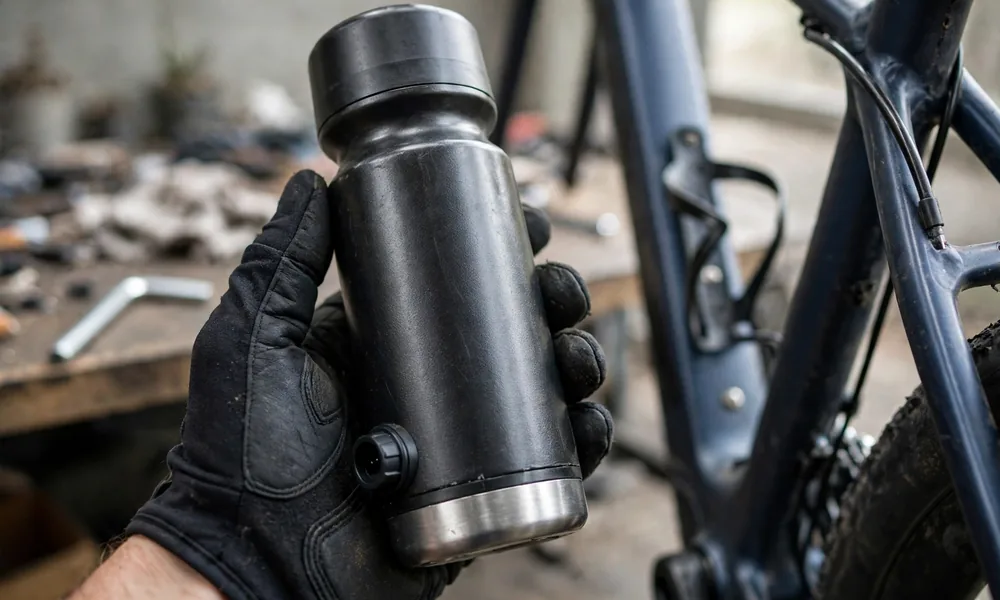
Labour is the third cost, and there is more of it than the simple shape implies. Extender packs are assembled largely by hand: cells are welded into a group with nickel strips, the wiring is routed around a curved housing, seals are fitted, and the whole unit is pressure-tested for water resistance. The housing itself is a precision-moulded shell that has to survive being dropped on a rock and rattled for thousands of kilometres, while still sliding neatly into a standard bottle cage.
Rarity and low volumes do the rest. The e-bike market is huge, but the market for a range extender that fits one specific motor system is tiny — only a fraction of riders will ever buy one. A factory that makes phone batteries can spread its tooling, testing, and certification costs across millions of units; an extender maker spreads the same kinds of costs across a few thousand. Certification is a real expense too: the pack must pass transport safety tests for lithium batteries, including drop, crush, heat, and short-circuit trials, and each test campaign costs money whether the company sells a hundred units or a hundred thousand. The same safety bar applies to the bike’s main power system, which is why how an e-bike battery works matters here too.
Testing is where the price becomes easiest to understand. Before an extender ships, samples are ridden for thousands of kilometres, shaken on vibration rigs, frozen, baked, and dunked. The pack is tested as a system with its motor brand’s bikes, because the controller software has to recognise the extender the instant it is plugged in, and a fault in that handshake can leave a rider stranded.
Cost Breakdown
All prices below are estimates, based on typical retail prices for bottle-style extenders from the major motor brands, and they vary by brand, capacity, and region. They show where the money goes rather than a quote for any specific pack.
| Part of the cost | Estimated share | Estimated amount | Why it costs that much |
|---|---|---|---|
| Premium lithium-ion cells | About 30% | $120–$210 | High-density cells, matched and sorted, with rejects scrapped |
| Battery management system and firmware | About 20% | $80–$140 | Custom board and software for one motor brand’s system |
| Housing, mount, cable, and connector | About 15% | $60–$105 | Precision moulds, weather sealing, and a rugged connector |
| Hand assembly and quality checks | About 15% | $60–$105 | Cell welding, wiring, sealing, and testing by hand |
| Safety certification and testing | About 10% | $40–$70 | Transport, drop, crush, heat, and vibration test campaigns |
| Tooling, support, and warranty | About 10% | $40–$70 | Mould costs spread over small volumes, plus after-sales support |
| Total extender price | 100% | $400–$700 | Typical retail range for a bottle-style extender |
Against that, a spare main battery for the same bike typically costs an estimated $600 to $1,000 and weighs twice as much, but holds roughly twice the energy — so the cost per added kilometre is similar. The extender wins on convenience and weight; the spare battery wins on raw range.
Range Extender Specs
| Spec | Typical figure | What it means |
|---|---|---|
| Capacity | 160–250 Wh | The energy the extender holds, in watt-hours |
| Weight | About 1.0–1.5 kg | The extender plus its mount, ready to ride |
| Added range | About 20–40 km | Extra distance at moderate assistance, depending on terrain and rider |
| Charge time | About 2–3 hours | Time to refill the extender from empty on its own charger |
| Water resistance | Rain and splash proof | Sealed against riding in wet weather, not for submersion |
| Compatibility | One motor brand only | Built to work with a specific motor and controller system |
| Connector life | Thousands of cycles | Designed for repeated plugging in mud, dust, and rain |
Those numbers explain the trade-off in plain terms: the extender adds roughly a third to a half of a typical main battery’s energy, at roughly half the weight of a spare main battery. The detailed figures are worth comparing before buying, and e-bike range extender specs set out capacity, weight, and real-world range side by side.
A Rare Fact
The bottle-battery idea is older than the modern e-bike boom. In the early days of electric bikes, hobbyists hid small battery packs inside water bottles to make their converted bikes look ordinary — a trick called the bottle battery that predates the polished factory extenders by years. The major brands eventually copied the shape, because it solved the hardest problem in e-bike design: where to put extra energy on a bicycle frame that has almost no spare space. The factory extender you can buy today is, in essence, a garage hack that went legitimate — and its price is the price of turning a clever hack into a sealed, certified, warrantied product.


