Twist the throttle on an electric bike and the response is instant, silent and strong — a push that feels like a tailwind you can summon on demand. The thing making that possible is a box bolted to the frame, about the size of a water bottle, and inside it is one of the most carefully managed pieces of engineering on the whole bike.
An e-bike battery works by storing electrical energy in a pack of rechargeable lithium-ion cells and releasing it, on demand, to the motor — while a small computer inside the pack watches every cell, every second, to keep the whole system safe. It is the same basic technology as the battery in a phone or a laptop, scaled up and hardened for life outside, in rain, cold and vibration. The cells do the storing, but it is the management around them that makes an e-bike battery work as a system. This is how it all fits together.
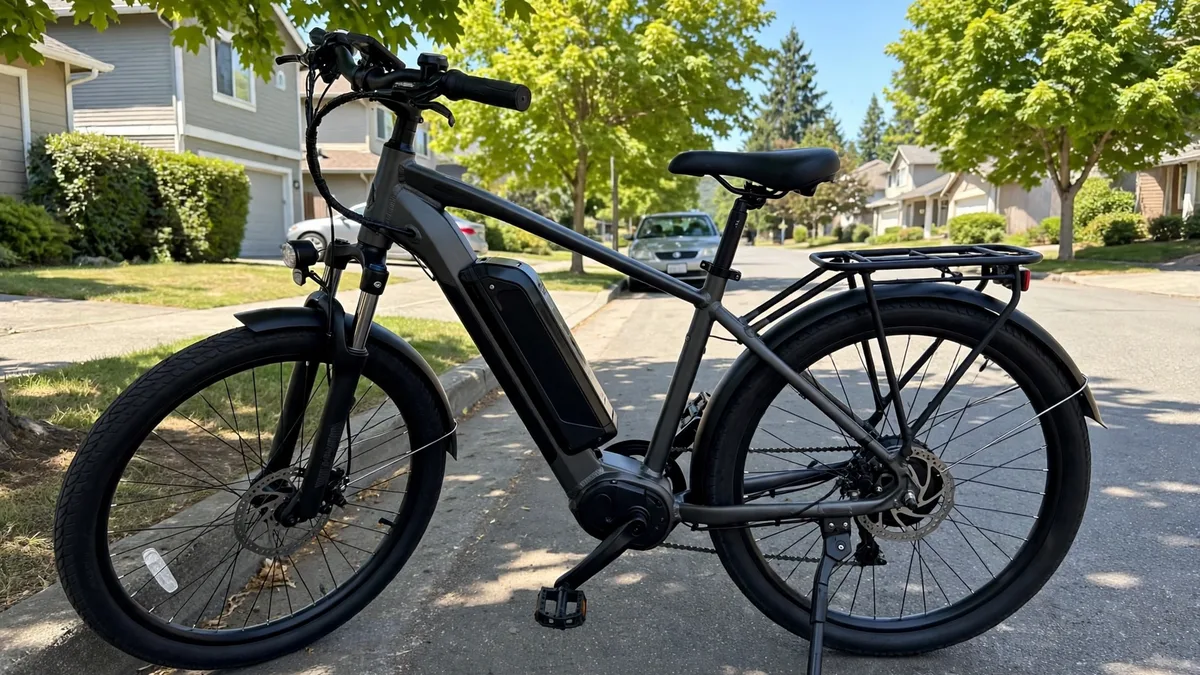
How an E-Bike Battery Works
Step 1: Storing energy in lithium-ion cells
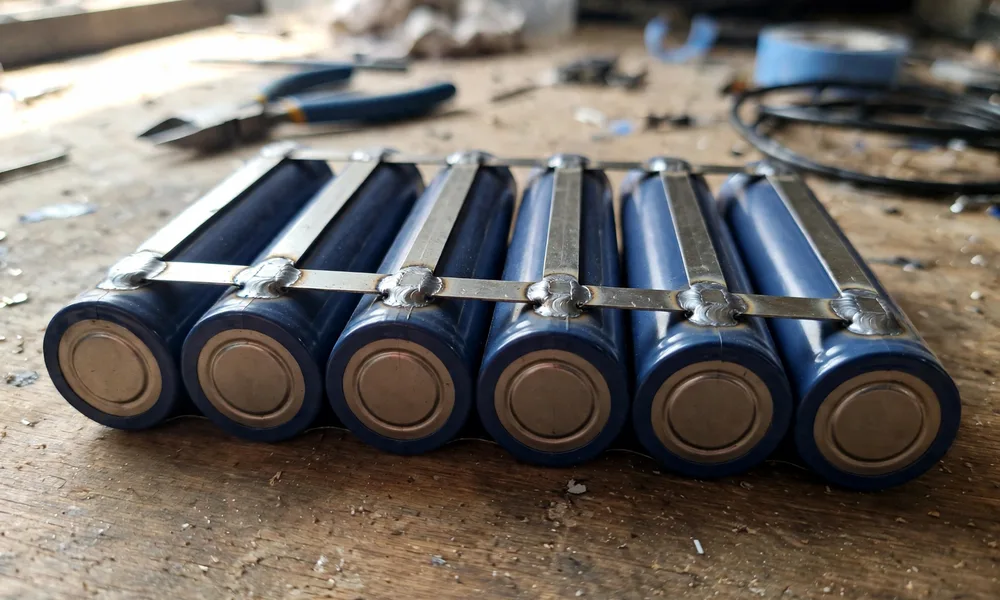
Inside the battery case are dozens of individual cylindrical cells, usually the 18650 or 21700 sizes — small metal cans not much bigger than a AA battery. Each one is a tiny chemical store: when the battery charges, lithium ions move from one electrode to the other and lodge themselves in the graphite; when you ride, they flow back, and that movement of ions pushes electrons around a circuit, which is the electric current that drives the motor. The chemistry is the same family used in electric cars, and the way those cells are arranged and protected is covered in how an EV battery pack is made, where the same principles are scaled up to thousands of cells.
Step 2: Wiring cells in series and parallel
The cells are wired together in groups, and the wiring decides what the battery can do. Cells wired in series add their voltage together — ten cells at 3.6 volts each make a 36-volt pack — while cells wired in parallel add their capacity, so the pack lasts longer. A typical e-bike pack might be ten cells in series and four or five in parallel, giving 36 or 48 volts with enough capacity for a long ride.
Step 3: The battery management system watches everything
The most important part of the pack is not a cell at all — it is the battery management system, or BMS, a small circuit board that monitors every group of cells. The BMS measures voltage, current and temperature many times a second, and it will cut the power if anything goes out of range: a cell overcharging, a cell draining too far, the pack overheating, or a short circuit.
Step 4: Charging, gently and in stages
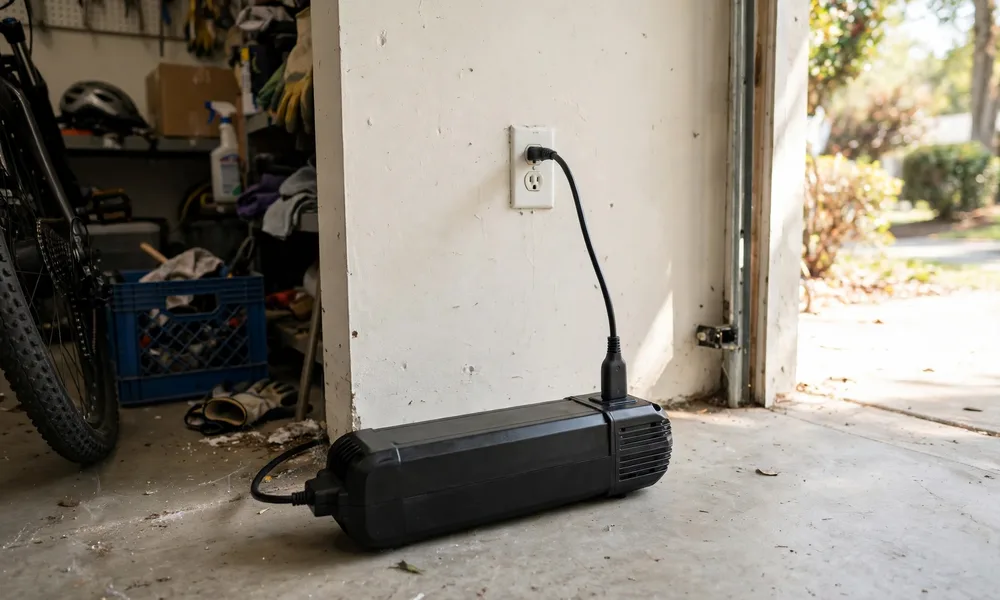
Charging an e-bike battery is not like filling a tank — it happens in stages, and the charger and the BMS negotiate the whole time. First comes a constant-current stage, where the charger pushes a steady flow of energy into the pack and the voltage climbs. Then, as the pack nears full, the charger switches to constant voltage, holding the voltage steady while the current tapers away to almost nothing. The charger talks to the BMS throughout, and if the pack is too hot or too cold, charging slows or stops.
Step 5: Delivering power to the motor
When you pedal, sensors on the bike tell the motor controller how much help to give — a torque sensor measures how hard you are pushing, or a cadence sensor measures how fast you are pedalling. The controller then asks the battery for current, and the battery delivers it through thick cables to the motor, where it becomes torque at the wheel. The harder you pedal, the more current flows, up to the legal limit of the motor. The cells behind the pack, and what their numbers mean for range and life, are laid out in EV battery cell specs explained, where the building blocks of the battery are set out in detail.
Step 6: Staying cool and dry
Batteries dislike heat, cold and water, and an e-bike battery meets all three. Cold is the opposite problem: below freezing, the cells cannot deliver their full power and charging them can damage them, so the BMS limits charging when the pack is cold. The case is sealed against rain and spray, with gaskets around the lid and the connector, because water inside a battery pack is a short circuit waiting to happen.
Step 7: Ageing gracefully, then being recycled
No battery lasts forever. Each charge and discharge wears the cells a little, and after 500 to 1,000 full cycles a typical e-bike battery will hold about 70 to 80 percent of its original capacity — still usable, just with a shorter range. When the range finally becomes too short, the pack should go to a proper recycler, where the lithium, cobalt, nickel and copper inside are recovered and the cells are handled safely. The numbers that decide how long a pack lasts, and how far it will take you, are explained in e-bike battery specs explained, where capacity, voltage and range are set out in plain English.
E-Bike Battery at a Glance
| Specification | Detail |
|---|---|
| Cell type | Lithium-ion, usually 18650 or 21700 cylindrical cells |
| Typical voltage | 36 volts or 48 volts for most e-bikes |
| Typical capacity | 400 to 750 watt-hours; larger cargo bikes up to 1,000 watt-hours |
| Typical range | 40 to 100 kilometres per charge, depending on assist level and terrain |
| Charging time | Three to five hours from empty on a standard charger |
| Cycle life | About 500 to 1,000 full charge cycles before capacity drops to 70 to 80 percent |
| Typical weight | About 2.5 to 4 kilograms for the pack alone |
| Key safety part | Battery management system monitoring voltage, current and temperature |
What Does It Cost?
The battery is the most expensive single part of an e-bike, often a third or more of the bike’s price. As rough estimates, a replacement e-bike battery typically costs around $400 to $900, depending on capacity and brand, while a whole e-bike with a good battery usually sells for $1,500 to $4,000. Those figures are estimates, not quotes — the real number depends on capacity, brand, and whether the pack is bought from the bike maker or a third party.
A Rare Fact
The cylindrical cell inside an e-bike battery is the same size of cell that powers electric cars: the 21700 cell used in many e-bikes is the same format Tesla adopted for its larger battery packs. Your bike and a family saloon can, in a sense, run on the same building block, just in very different numbers — a few dozen cells in the bike, several thousand in the car.
An e-bike battery is easy to take for granted because it just sits there, silent, until you need it. Inside, though, dozens of cells, a vigilant management system and a careful charging routine are working together every second you ride, turning stored chemistry into a tailwind on demand.


