Fold a phone in half and watch what happens at the crease. The screen bends like paper, the two halves meet with a soft click, and the whole device closes flat — no gap, no bulge, no strain. Open it again and the screen is smooth, without a mark where it folded. It feels like magic, and the hinge that makes it possible is the most complicated mechanism ever fitted into a phone.
That hinge is a tiny machine in its own right. Inside a space thinner than a pencil, it carries gears, cams, springs, and plates that must move in perfect synchronisation, hundreds of thousands of times, without wearing out or letting in a grain of dust. If any part of it is a fraction of a millimetre out, the screen creases, the phone wobbles, or the hinge fails — and the phone is ruined.
The hinge is also why a foldable phone costs so much more than an ordinary one. Here is what hides inside that small, hard-working piece of engineering.

Why It Costs So Much
1. The mechanism is astonishingly complex
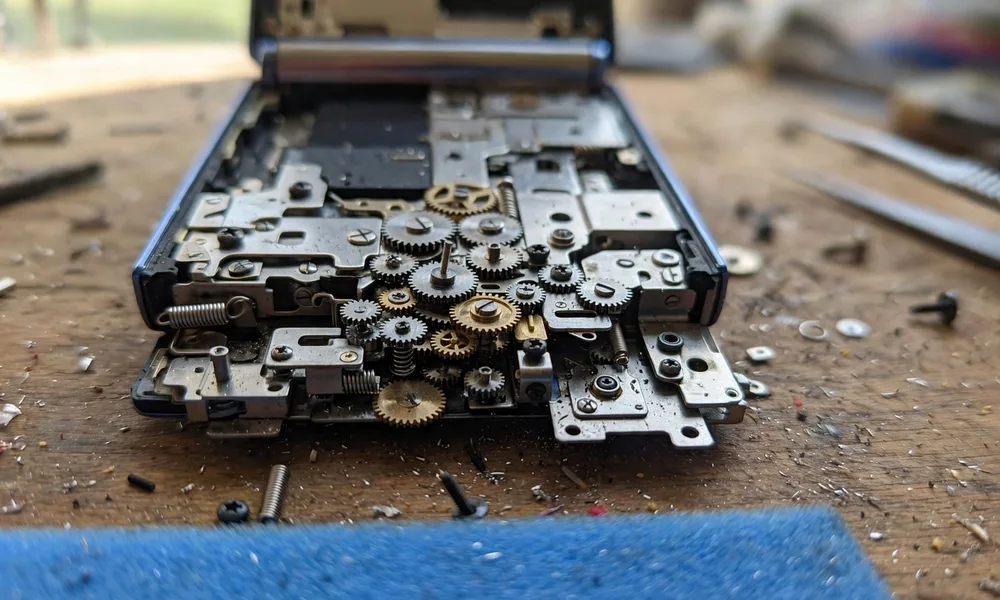
A modern foldable hinge is not a simple pivot like a laptop hinge. It uses a multi-link gear system — sometimes called a waterdrop hinge — that lets the screen fold into a teardrop shape inside the phone instead of creasing sharply. That design needs dozens of tiny parts: gears, linkages, cams, and support plates, each machined to tolerances of a few microns. Assembling them is delicate work done largely by hand or by specialised machines, and the hinge alone can contain more parts than the rest of the phone’s frame combined.
2. The materials must be both strong and tiny
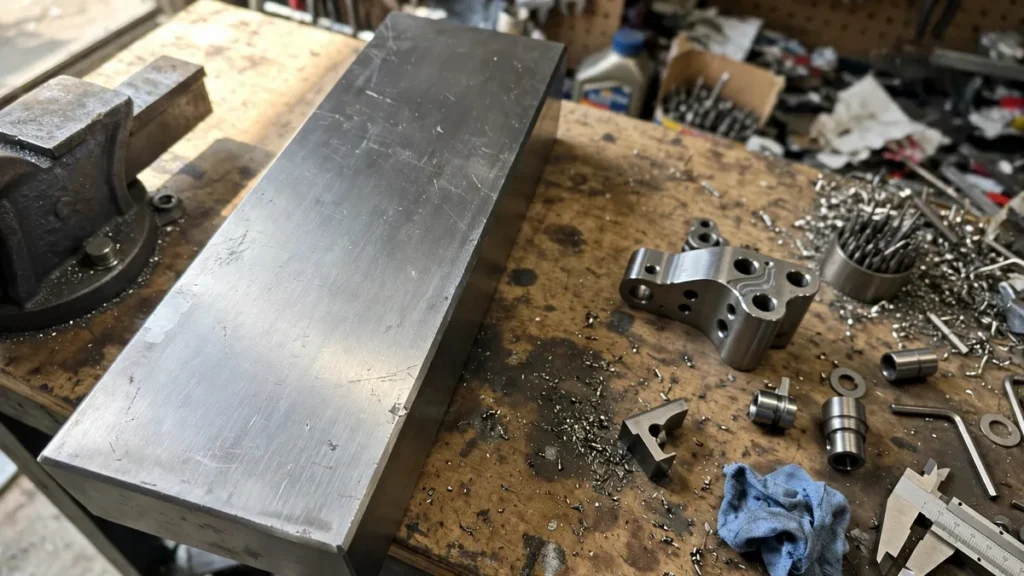
Hinge parts are made from high-strength stainless steel, titanium alloys, and special amorphous metals that can flex without breaking. These materials are expensive, hard to machine at such a small scale, and unforgiving of error. A gear the size of a grain of rice must be cut perfectly, hardened, and polished, or it will wear out after a few thousand folds. The way the hinge is built, from the first gear to the final assembly, is described in how foldable phone hinge is made, and the precision on display is closer to watchmaking than phone manufacturing.
3. It must survive hundreds of thousands of folds
Phone makers promise that a foldable will survive 200,000 folds or more — roughly a hundred opens a day for five years. To prove it, hinges are folded by robots around the clock, in heat, cold, and dust, while engineers watch for wear, looseness, or screen damage. Designing a hinge that passes that test takes years of prototypes, and each failed prototype costs time and money. The display it protects is just as demanding, as covered in foldable display materials engineering, where ultra-thin glass and flexible layers bend without breaking.
4. Dust is the enemy, and sealing is hard
A hinge is full of moving parts with tiny gaps, and dust is its worst enemy. A single grain caught in a gear can jam the mechanism or scratch the screen from the inside. Engineers fit brushes, seals, and covers to keep particles out, and some hinges use a sweeper mechanism that clears debris with every fold. Sealing a moving joint against dust while keeping it thin, smooth, and reliable is one of the hardest problems in the design, and it adds parts, cost, and testing to every unit.
5. The yield is low and the testing is endless
Many hinges fail inspection. A gear that is slightly out of tolerance, a spring with the wrong tension, or a plate that sits a fraction too high will make the phone fold unevenly or leave a visible crease. Those units are reworked or scrapped, and the cost of the failures is carried by the hinges that pass. Each finished phone is then folded and unfolded by machines before it leaves the factory, and the hinge is checked again by hand. That level of testing is rare in phones, and it is priced into every foldable sold.
6. The hinge shares its cost with the whole phone
The hinge does not work alone. It must match the flexible display, the frame, the batteries split across two halves, and the cables that cross the fold a hundred thousand times without breaking. Every one of those parts is custom, low-volume, and expensive, and the hinge sits at the centre of them all. Even the camera, another jewel of miniaturised engineering in the same phone, shows the same economics, as explored in why smartphone camera lens is so expensive, where tiny parts and tight tolerances set the price.
Foldable Phone Hinge Specs
| Specification | Typical range |
|---|---|
| Hinge type | Multi-link waterdrop hinge with synchronised gears |
| Fold rating | About 200,000 to 400,000 folds in manufacturer testing |
| Part count | About 30 to 60 individual parts in a modern hinge assembly |
| Hinge thickness | About 6 to 11 mm when the phone is closed, depending on model |
| Materials | Stainless steel, titanium alloy, and amorphous metal gears |
| Tolerance | About plus or minus 0.01 mm on critical gear and cam surfaces |
| Fold angle | Opens to about 180 degrees and holds at angles from about 75 to 115 degrees |
| Weight | About 15 to 30 grams for the hinge assembly alone |
What Does a Foldable Phone Hinge Cost?
The hinge is one of the most expensive components in a foldable phone. The hinge assembly is estimated to cost a phone maker roughly $40 to $100 per unit, depending on design and volume, compared with a few dollars for an ordinary phone hinge. A flagship foldable phone is estimated to cost roughly $1,200 to $1,800 at retail, with the hinge, the flexible display, and the split batteries accounting for much of the premium over a conventional phone. All prices are estimates only and vary widely by maker, model, and volume, but the pattern is clear: the hinge is a large part of why foldables cost what they do.
A Rare Fact
The first foldable phones folded with a visible gap, like a book that would not close flat, because the screen could only bend in a simple curve. The waterdrop hinge changed that by letting the display curl into a teardrop inside the phone, so the two halves meet flush when closed. That one idea — giving the screen somewhere to go — is what turned foldables from fragile curiosities into phones people could use every day, and it took years of prototypes to get right.

A foldable phone hinge is a watchmaker’s mechanism hiding inside a telephone: dozens of tiny parts, cut from rare metals to impossible tolerances, tested hundreds of thousands of times, and sealed against the dust of everyday life. It is expensive because there is no cheap way to build it — and every time the phone folds flat with a soft click, it proves the money was well spent.